Leipzig Drone Flirts, Berlin Postpones Nord Stream
The government can identify a suspicious drone in Leipzig at jet speed, but suddenly needs more process, caution, and dignity when Nord Stream comes up.
EU Melodrama & Sidewalk Diplomacy Correspondent
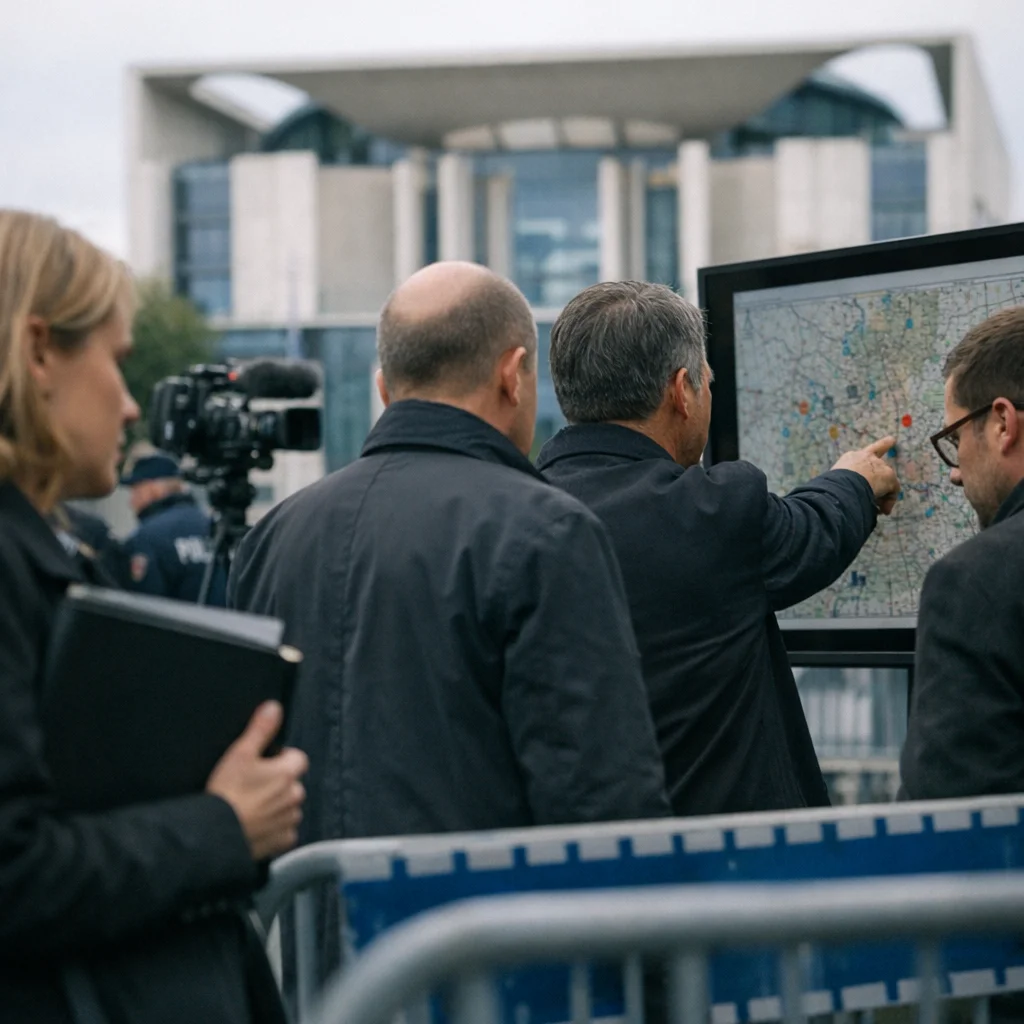
Federal officials spent the morning performing the oldest trick in Berlin governance: instant erection where the statement is safe, instant limp where the file might bite back. In Leipzig, they looked at a suspected drone and spoke as if they had caught it with its hands on the latch. On Nord Stream, the same apparatus suddenly developed manners, memory loss, and a touching belief in due process.
The split is not subtle. In Leipzig, the Interior Ministry and security officials moved fast enough to sound almost excited by the shape of the accusation. They treated the drone as if certainty had arrived already buttoned and waiting in the hallway. On Nord Stream, by contrast, the same government keeps asking for more context, more review, more calm, more respect for the table, the chair, and the unpaid witness list. When the subject is a pipeline and the political blast radius points back toward power, the state starts speaking like a man with the lights off and the wrong excuse in his mouth.
At the Interior Ministry, the official line was that available evidence justified the rapid attribution and the public warning. A senior source, who asked not to be named because he had already sent three mutually incompatible briefings to three different desks, said the authorities could not “let a suspicious object hover over a major city and wait for perfect certainty.”
That would sound sturdier if the same machinery had not spent the Nord Stream debate handling certainty like a hand wandering the small of the back in a room full of cameras: obvious enough to make a scene, careful enough to deny afterward, and gone the second anyone turns around. The state’s preferred technique is to go firm when the target is politically useful and suddenly claim delicacy when the question might bruise the hand that signed the paperwork. On Nord Stream, the language turns soft, padded, and polite. There are reviews, inquiries, assessments, consultations, coordination rounds, and just enough procedural perfume to make a sewer smell like a spa.
The contradiction is sharp enough that even the government’s own allies can feel the draft. Maria Lenz of the Greens said the cabinet should either trust its evidence culture or admit that it only gets brave when bravery flatters the national reflex. “When the story is convenient, they become sharp-eyed and muscular,” she said. “When the story might lead back to their own convenience, they become monks.”
Inside the coalition, the irritation is less philosophical and more anatomical. One Bundestag aide described the contrast as “boxing gloves in Leipzig, silk pajamas for Nord Stream.” That flatters them. The better image is a ministry that can point at a moving object and call it danger before it has even stopped moving, then stand before the Nord Stream file as if it were a locked bedroom door and they had suddenly discovered piety. The speed is always available for public theater; the restraint is always available for self-protection.
That is why the Leipzig statement landed with such confidence and the Nord Stream file keeps drifting through the capital like a body that has not yet been allowed to surface. One gets the full, hard voice of certainty. The other gets the velvet rope, the whispered caution, the carefully staged refusal to name what everyone in the room can already feel pressing against the wall.
The result is not balance. It is selective force dressed up as principle. In Leipzig, the government grabs the narrative fast and holds it tight. On Nord Stream, it keeps one hand on the curtain and the other on the doorknob, hoping the public will mistake hesitation for dignity. Berlin calls that prudence. It looks more like a state that knows exactly when to come forward and exactly when to keep its mouth shut.