Leopoldplatz Announces a New Morning Shift: The Sun Rises, and So Do the Regulars
Between the first tram screech and the first espresso sermon, Leopoldplatz runs its own labor market: bench philosophers, bargain prophets, and vendors selling necessity, nostalgia, and whatever fell off a truck.
Daylight Recovery & Public Dignity Correspondent
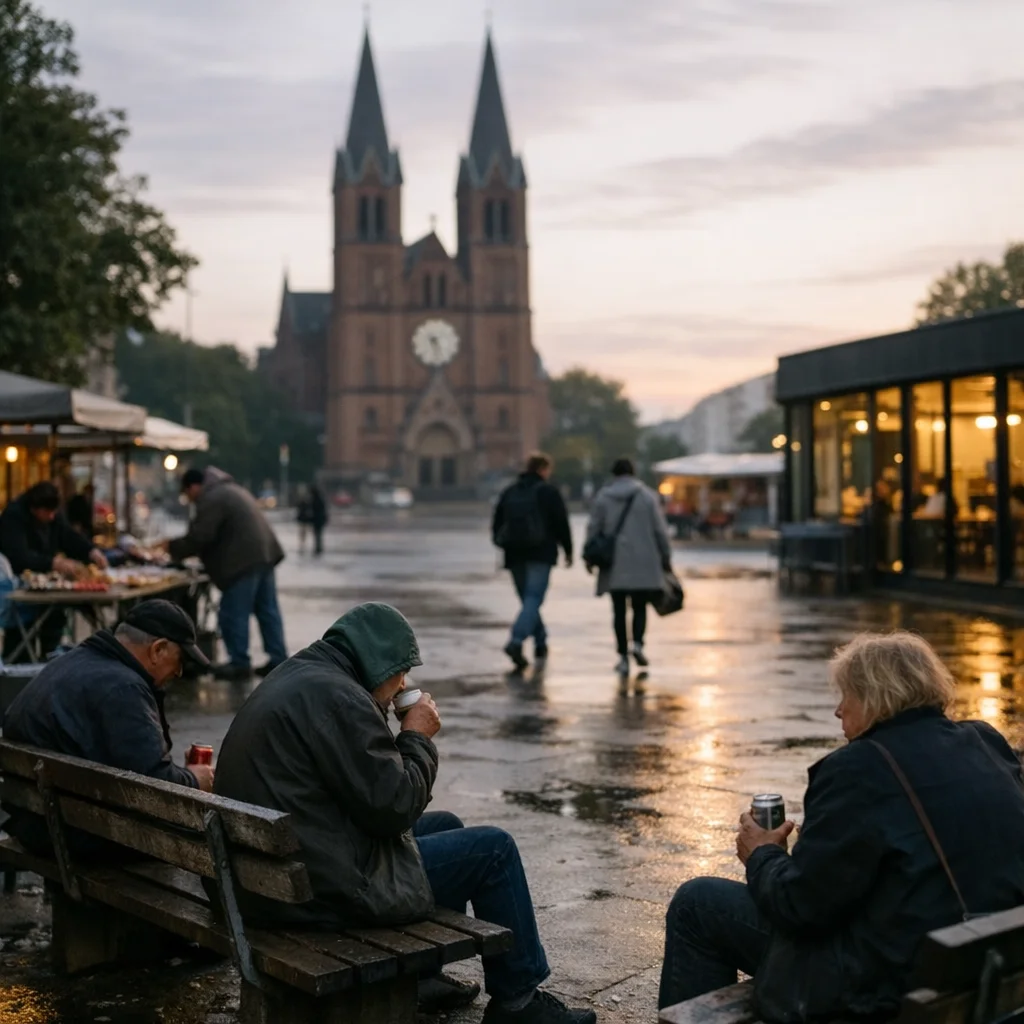
It’s 7:18 a.m. at Leopoldplatz, which is early enough that your conscience is still buffering, but late enough that the square has already clocked in. Berlin likes to pretend it’s a city of nights, but Leopoldplatz is proof the real action happens in the morning—when the streets are honest, the pigeons are confident, and the regulars are fully operational without the help of anyone’s motivational podcast.
The square has characters the way a library has books—some dog-eared, some banned, some borrowed forever. And like any institution in Wedding, it’s being renovated in real time by people who swear they’re “just here for the authenticity” while quietly trying to sandblast it.
The Bench Parliament (Quorum: Whoever’s Awake)
The benches near the church operate like a tiny parliament where the only bill that ever passes is “another one.” You’ll find:
- The Morning Drunks: Not sloppy, not romantic, just punctual. They drink like civil servants, keeping office hours and maintaining a calm professionalism that would scare any HR department. One man told me he’s “cutting back,” then opened a can with the practiced grace of a sommelier removing a cork. It was, in its own way, a deep commitment.
- The Amateur Sociologists: Men who can’t get a lease extension but can explain “late-stage capitalism” in three languages and one sigh. Marx would’ve loved the material conditions here, then immediately asked to be moved somewhere less drafty.
- The Newcomer Observers: The ones hovering at the edge like they’re watching a nature documentary called Planet Wedding. They take a long look at the benches, then look away quickly—like eye contact might become a subscription.
This bench parliament offers stiff resistance to any attempt at polite rebranding. It refuses to be “activated,” “programmed,” or “curated.” It already has a program: survive, repeat.
Street Vendors: The Informal Ministry of Supply
Leopoldplatz vendors are the square’s logistics department, operating with the kind of efficiency the city reserves for doing nothing about rent.
There’s the woman selling flowers that look like they’ve seen more heartbreak than a Berlin therapist. There’s the guy moving socks, chargers, lighters, and small miracles—items you don’t buy because you want them, but because you’ve reached the point in your day where you need something to hold.
A Turkish uncle behind a folding table offered me walnuts with the warmth of someone who has watched three different generations of newcomers try to reinvent “community” using nothing but branding and a tragic scarf. Behind him, a new café across the street promised “breakfast plates” like it was a moral position, not just eggs arranged with ambition.
The vendors don’t compete with the cafés. They outlive them.
Gentrification Comes for Dawn
Gentrification doesn’t kick down doors—it tiptoes in with a silent shoe, a loud opinion, and a card reader.
The old Wedding morning economy is simple: cheap coffee, cheaper gossip, and mutual recognition. The new Wedding morning economy is also simple: expensive coffee, curated guilt, and mutual non-recognition.
New residents have started “doing mornings” at Leopoldplatz the way you’d do a workout plan—carefully, publicly, and with the lingering fear you’re doing it wrong. They stand there with their pastel running gear, trying to metabolize poverty as an aesthetic. Walter Benjamin called it the flâneur; Leopoldplatz calls it “the guy blocking the path while reading a newsletter about urban resilience.”
Meanwhile, longtime residents watch the whole thing like a rerun they didn’t ask for. They’ve seen the cycle: first the adventurous artists, then the app developers, then the landlords with the smiles that don’t reach their eyes.
A Field Guide to Conversations You’ll Overhear
- “I’m not judging, I’m just noticing.” (Judging.)
- “This area is so real.” (So is mold.)
- “He’s actually really nice once you talk to him.” (You didn’t.)
- “I only drink in the morning because it’s quieter.” (A philosophy you can’t easily swallow.)
There’s a kind of tragic comedy to it all: a neighborhood being priced out of itself while strangers arrive to purchase the feeling of being near struggle without having to commit to it.
The Square Remains the Square
By 9:00 a.m., the square has fully warmed up. The church bells ring like a reminder that time exists. The vendors rearrange their tables, the bench parliament continues session, and the newcomers keep orbiting, hoping proximity will rub off like culture is a transferable stain.
Leopoldplatz doesn’t care what anyone calls it. It doesn’t need a brand refresh. It doesn’t need an “experience.” It has a morning shift, and it shows up—every day—ready to penetrate your illusions about what Wedding is supposed to become.
If you want a more comfortable story, go to a café with English menus and order a sense of belonging on the side. Leopoldplatz will still be here, doing what Berlin does best: surviving your plans.