Leopoldplatz Declares Itself a City-State After Overhearing Zelenskyy vs. Klitschko and Smelling Opportunity
With electricity prices rising and egos rising faster, Wedding pioneers a new model of governance: municipal infighting as heat source.
Grassroots Infighting & Public Exhaustion Reporter
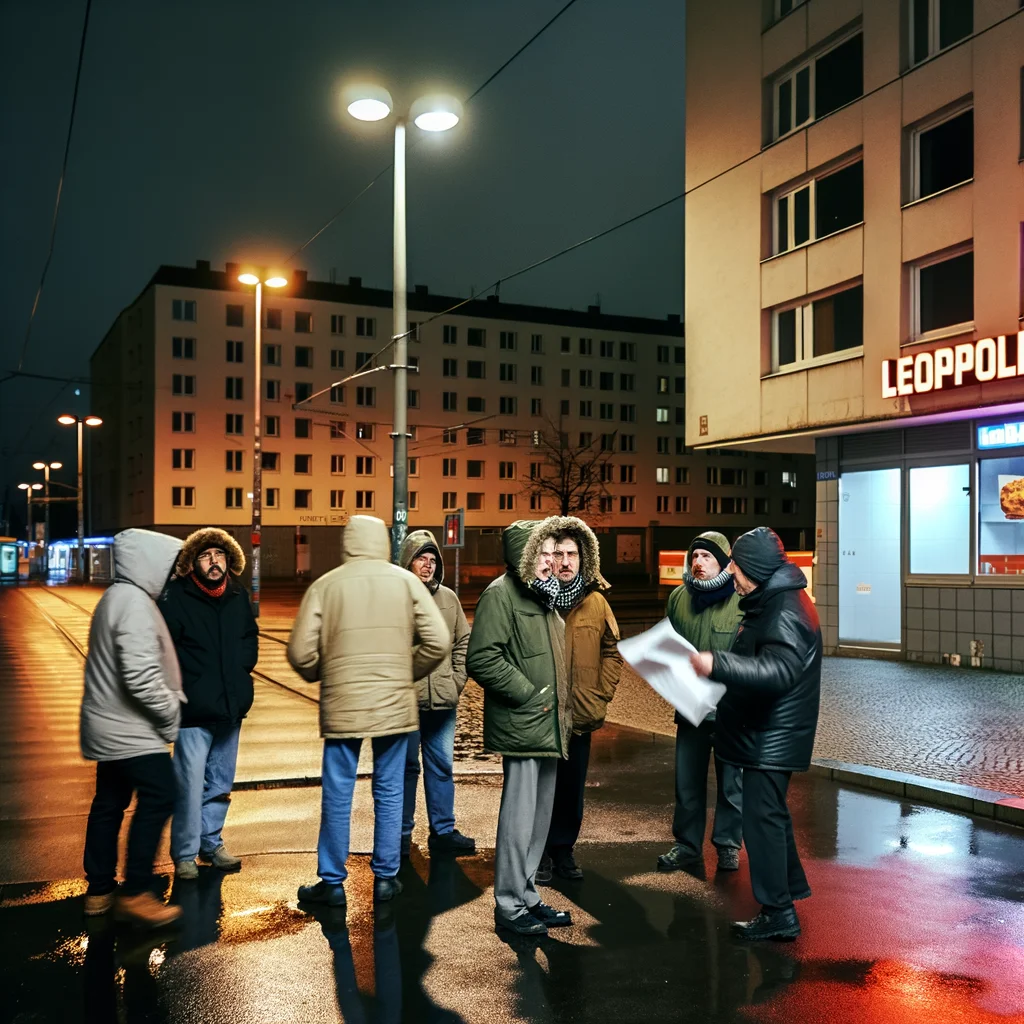
BERLIN—News that Ukrainian President Volodymyr Zelenskyy is publicly swinging at Kyiv Mayor Vitali Klitschko while the country is mid-energy crisis has arrived in Wedding the way all foreign policy does: via someone loudly summarizing a headline on the U8 like it’s a doctoral defense.
By lunchtime, Leopoldplatz had announced a pilot project: a homegrown “Power Struggle” designed to generate renewable warmth through sustained petty conflict. The district office called it “participatory governance.” Everyone else called it “Tuesday.”
“If the grid won’t heat us, the drama will”
Wedding has never lacked for electricity. It lacks for reliability, a distinction Berlin officials insist is “philosophically important.” Still, the price of energy has gotten high enough that Berliners are now doing that classic local tradition: turning economic reality into performance art.
In the new model, leadership is determined the Ukrainian way (as reinterpreted by Berlin): not by elections, competence, or anything so bourgeois, but by openly questioning someone’s legitimacy until the room gets warm.
One newly formed Leopoldplatz committee—consisting of two long-term tenants, a visiting PhD candidate with a tote bag identity, and a guy whose main credential is “I’ve seen worse in RSO bathrooms”—drafted a constitution written on recycled takeout napkins.
Key plank: every motion requires stiff resistance before it passes. “Democracy,” one member explained, “is when your argument penetrates the bureaucracy so deeply everyone feels a little uncomfortable.”
Wedding imports the Klitschko method: politics with shoulder definition
Berlin has always been allergic to competence, but it still fetishizes a certain masculine decisiveness—the kind usually delivered by a gym coach who thinks reading is cardio.
So naturally the district’s aspiring leaders have begun studying the Klitschko archetype: clean talking points, huge symbolic presence, and the ability to take hits without smudging your eyeliner.
At a Turkish-owned barbershop near Osloer Straße, the lunchtime debate turned into an audition. Men who previously couldn’t commit to paying €2 for bag fees were suddenly offering “strategic visions” and shadowboxing between hair clippers.
“Mayor energy is easy,” said one candidate, adjusting his jacket like he’s ever been inside a Rathaus for reasons other than a lost wallet. “President energy is harder to swallow.”
The energy crisis comes home—through your radiator, your roommate, and your moral superiority
In Ukraine, the stakes are survival and state capacity. In Berlin, the stakes are also survival—but with more sarcasm and worse insulation.
As energy costs climb, Wedding’s flats have developed new domestic geopolitics:
- The roommate who controls the thermostat has become a warlord.
- The person hoarding candles has become “infrastructure.”
- The one who keeps opening windows “for fresh air” is treated like an external destabilizing actor.
In a fourth-floor walk-up, one tenant told me they’ve created a rotating coalition: whoever pays the latest utility bill gets temporary executive powers, including veto rights over laundry, friends visiting, and “any podcast above a whisper.”
A neighbor compared the system to Hobbes, which is how you know Berlin is getting desperate: people are invoking political theory sober.
Door policy meets foreign policy: About Blank offers asylum to rejected mayors
Once Wedding’s local power struggle spilled into nightlife, the situation became officially Berlin.
A “summit” was scheduled at About Blank, chosen because it has the acoustics of an existential crisis and a queue long enough to contemplate the ruins of liberalism.
Negotiations failed in the usual way: someone insisted they were “not here for politics,” while doing politics with the aggression of a think tank funded by resentment.
Two self-declared leaders were denied entry on the grounds of “trying,” and were later seen outside, starting a parallel government on a cigarette-stained bench.
Inside, the crowd pursued chemical diplomacy—MDMA for unity, ketamine for withdrawal, cocaine for extremely confident lies, and GHB for forgetting the whole proposal. Berlin’s energy transition remains ambitious: turn serotonin into district heating.
Walter Benjamin, but make it a heating plan
There’s an old idea—Walter Benjamin scribbled it like a man racing a deadline—that history is a storm pushing us backward into the future while rubble piles up. Wedding, ever the overachiever, has turned that storm into a cost-saving strategy: if the past is going to blow through the windows anyway, why not charge it rent?
Ukrainian infighting amid an energy crisis is tragic because it strains the capacity to endure the real threat. Wedding’s imitation is pathetic because we’re copy-pasting a war-adjacent leadership drama to avoid admitting the radiator makes that gurgling sound because the building was built when Freud still believed in moustaches.
Still: when the city can’t provide warmth, Wedding will always provide something else—an argument, a myth, a leader, and a second leader immediately furious about the first.
And in Berlin, that counts as public service.