Leopoldplatz Launches “Trump Wrangler” Pilot: EU Soft Power vs. China Hardware, Decided by One Broken Megaphone
After watching Brussels and Beijing argue over who can manage Trump, Wedding tried the obvious Berlin solution: form a task force, buy nothing, and negotiate everything on the street.
EU Melodrama & Sidewalk Diplomacy Correspondent
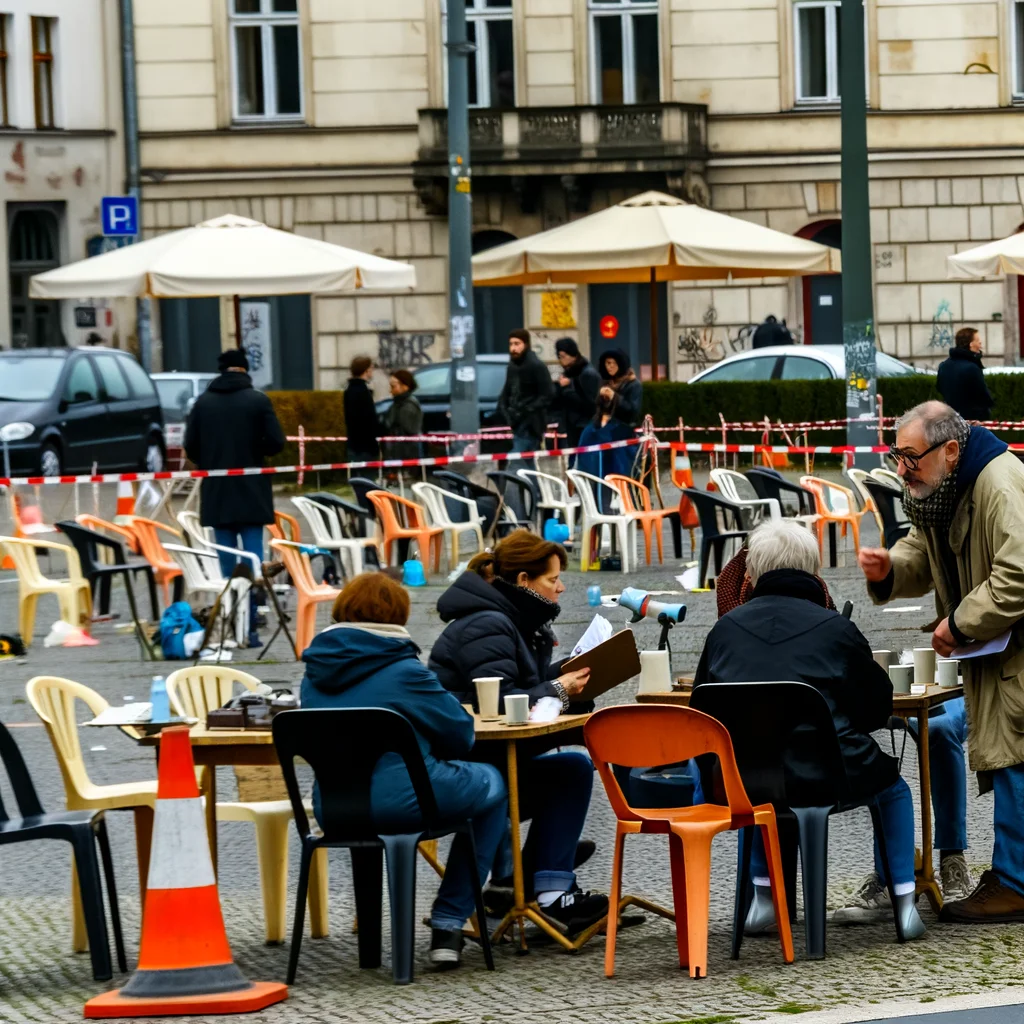
Berlin watched the headline like it watches all international crises: with fierce certainty, zero leverage, and a reusable cup.
The world’s newest parlour game—China or the EU: who can get Trump under control?—finally arrived in Wedding, where residents correctly assumed this was a municipal issue and immediately made it worse in a highly organized way.
The “Trump Wrangler” Pilot (Because Every Problem Is a Pilot)
On Tuesday morning at Leopoldplatz, an ad-hoc coalition of retirees, freelance consultants, and one guy who “studied conflict mediation” on a podcast unveiled a pilot program to contain the unstoppable force of Trump-style politics: big personality, loud soundbites, and an allergic reaction to nuance.
The plan split along predictable lines:
- The EU approach: establish 14 working groups, achieve unanimous consensus, and celebrate “progress” by scheduling a follow-up.
- The China approach: build a control room, install cameras, lay cables, and quietly assume everyone will comply because the system is sturdier than their opinions.
Both strategies failed within 27 minutes, a new neighborhood record previously held by “let’s share the sidewalk.”
EU Soft Power Meets the Reality of a Sidewalk Argument
The EU delegation—three well-meaning Germans with laminated agendas and one French guy performing sincerity like it was postwar cinema—attempted soft power. They assembled a circle and introduced something called a “values-based listening framework.”
It sounded tasteful, like a Walter Benjamin essay performed by people who refuse to tip. It was also impossible to swallow for the crowd, mainly because it asked Wedding residents to do their least favorite thing: accept that another person might finish a sentence.
Within minutes, the group produced:
- A consensus that everyone was “concerned.”
- A strongly worded flip-chart title.
- A minority report accusing the flip chart of centering whiteness.
The soft power became soft-serve.
China Hardware Meets German Procurement
Meanwhile, the “China hardware” faction tried to be efficient: erect a simple fence line, route foot traffic, reduce disorder, and generally demonstrate what infrastructure looks like when you stop explaining it and just do it.
Unfortunately, they had purchased their materials in Berlin.
A fencing delivery was postponed due to “a short internal coordination,” which experts translate as: someone took the wrong U-Bahn, became a philosopher about it, and went home. The backup plan involved borrowed traffic cones, two bungee cords, and a Turkish shop owner who calmly asked why everyone looked like they were auditioning for a dystopia with no budget.
This is where China learned an important European lesson: nothing penetrates German bureaucracy—not even competence.
Wedding’s Turkish Businesses Host the Peace Talks (Because They Always Do)
As tensions rose, diplomacy returned to the true United Nations of Wedding: the street-facing businesses.
A Turkish café became the de facto summit site—plastic chairs, small glasses of tea, and a level of pragmatic patience Brussels can only dream of. In a scene that would make Freud write a second book about fathers, several self-appointed policy geniuses attempted to lecture a man who runs a daily operation with margins thinner than the EU’s backbone.
His contribution to the debate:
- “So, who is paying?”
An elegantly violent question. The kind of realism Marx would have appreciated before being quoted by people who don’t pay rent on time.
Trump’s Gravity Field: Everyone Becomes the Main Character
The problem with “getting Trump in hand,” whether by Brussels consensus or Beijing concrete, is that Trump doesn’t enter a room. He reprograms it.
In Wedding, that meant even normal people started speaking like unpaid pundits. A mother with a stroller briefly adopted cable-news cadence. A man who has never voted announced he was “deep-diving geopolitics.” Someone yelled “FAKE” at a parking enforcement officer, which felt less like satire and more like Berlin finally finding its preferred love language: public humiliation.
A philosopher-type compared the crowd to Hobbes’ state of nature, then immediately asked if anyone had a spare charger—proving civilization is mostly accessories.
The Winner: Nobody (Which Is Berlin’s Favorite Outcome)
By late afternoon, both approaches converged on Berlin’s real ideology: delay.
The EU side voted to commission a report about whether controlling Trump is even desirable. The China side drafted a project timeline and lost it in an email thread with 38 people and no subject line.
In the end, a random resident offered the most effective solution:
- “Just ignore him.”
Everyone rejected that proposal as unrealistic, immoral, and, most importantly, bad for conversational foreplay. Because in Wedding, outrage isn’t just politics—it’s the one thing people can still afford to feel in public, loudly, with stiff resistance to any actual action.
Berlin will continue asking whether China or the EU can manage Trump.
Wedding, as usual, will keep proving a third possibility: neither—because a neighborhood can’t even manage a meeting.