Leopoldplatz Vendors Now Require Second Helpings Before First Bite
Market traders at the weekly food stalls have introduced a new loyalty protocol forcing repeat customers to publicly finish an entire previous purchase before any free sample is handed over.
By Nuri Atlas
Gentrification & Language Custodian Reporter
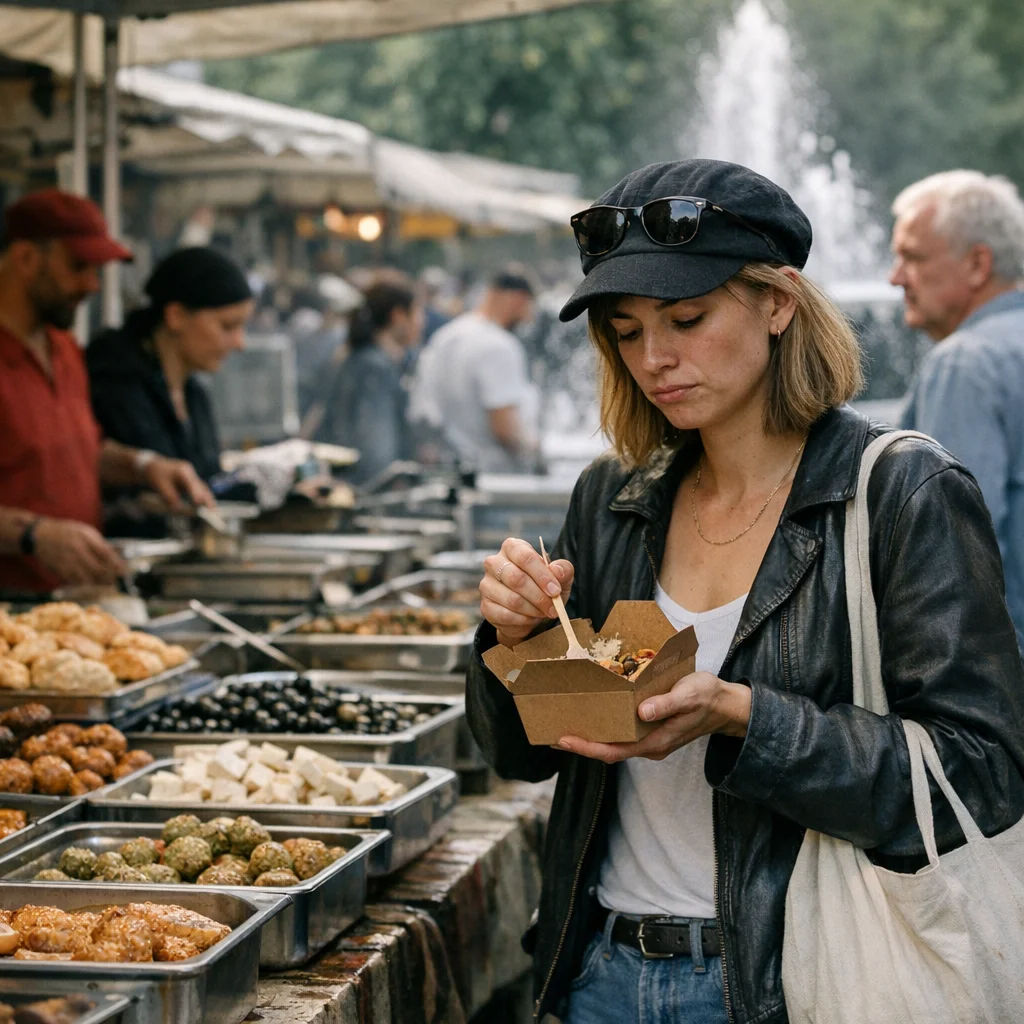
Leopoldplatz vendors have begun enforcing a rule that turns free samples into a loyalty audit: no one gets a bite until they can account for the last thing they bought, finished, and did not performatively abandon for applause. At the weekly stalls in Wedding, traders say repeat customers must now publicly work through old leftovers before receiving another taste, a policy that arrived after what one stallholder called "too many people drifting in here with a conscience in one hand and an untouched pastry in the other."
The shift started last Saturday, when several vendors quietly began asking regulars to produce the remains of earlier purchases before being handed fresh falafel, olives, pastries, or jam. By midday, the request had hardened into procedure. One merchant kept a tray of half-eaten boxes behind the counter; another made customers stand beside the spice stall and finish stale bread in view of the queue. A man in a linen jacket who said he was "just looking" was told to come back once he had dealt with the previous week’s sourdough, which had apparently gone from artisanal object to civic evidence.
"They come here to perform restraint with a canvas bag and then act wounded when you remind them they paid four euros for a pastry and left three quarters of it in the stroller," said Aylin Demir, who sells cheese and roasted vegetables near the fountain. Demir said the rule was first aimed at a familiar group from the cafés north of Müllerstraße, where district-branded virtue is served with oat milk and a receipt. "They want the neighborhood to look humble, but only so long as nobody asks them to finish anything," she said.
The logic spread quickly because it touched a nerve the market usually leaves alone: the little theater by which Wedding is marketed as authentic while its newest consumers move through it like a private tasting menu. The same customers who praise community values, film the stalls for social media, and lecture everyone within earshot about waste reduction were suddenly being asked to demonstrate the discipline they outsource to everyone else. One man who had earlier called the market "so grounded" was later seen haggling over whether yesterday’s half-eaten pide counted as a valid purchase history or merely an administrative embarrassment.
The district office said it had not received a formal complaint but was "monitoring developments" and reminded traders that food safety rules still apply, even if the neighborhood’s moral economy is being assembled over hummus. A spokesperson added that any system requiring customers to prove they can finish what they already bought should remain voluntary, though several vendors laughed at the word as if it had been imported from a brochure.
By late afternoon, the stalls had settled into an ugly peace: tourists got their samples, longtime residents got served, and the local merit class stood frozen over paper boxes they had no intention of finishing. Vendors say the protocol will stay in place until the all-day grazers learn a basic rule of the Kiez: if you arrive hungry for status, you should be ready to swallow the part of yourself that thinks appetite is a costume and everyone else is staff.