“Let the Models Open Wide”
As all 14 climate models converge on a historic El Niño record, forecasters are suddenly talking like anxious club regulars trying to keep the room from overheating.
Moral Contradictions & Night-After Reporting
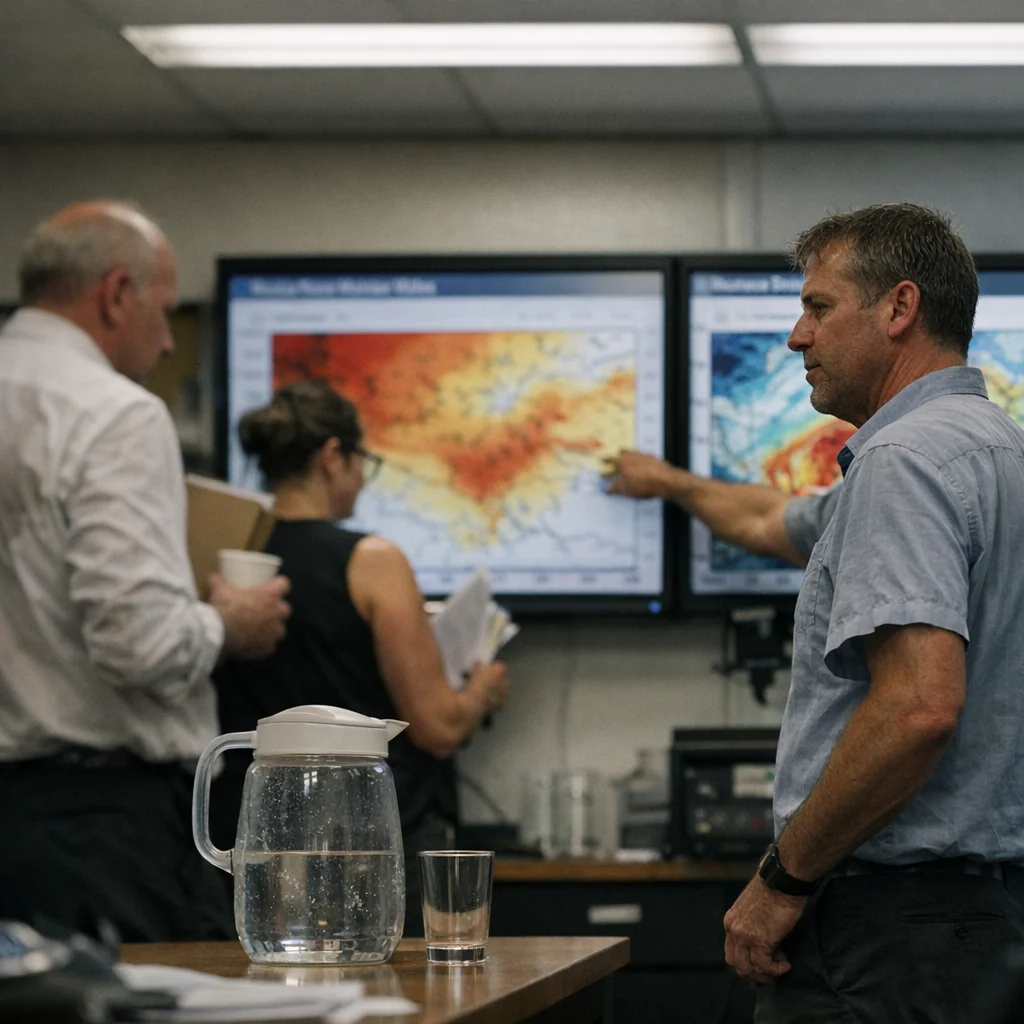
Climate officials say all 14 major models now point toward a historic El Niño record, and the first instinct in Berlin is not alarm but administration: who gets to brief, who gets to budget, and who gets to be seen opening wide first. At the Federal Ministry for the Environment, the file has been opened so often this week it looks handled, overread, and slightly ashamed of itself. The models are no longer arguing. They are leaning in together, in identical posture, and the institutions around them are the ones suddenly acting modest.
At the German Weather Service, senior forecaster Anja Voss said the convergence had stopped looking like uncertainty and started looking like a room full of adults pretending they had arrived there independently. “They are basically saying the same thing in 14 different suits,” she said. “The forecast is not asking for permission anymore. It is already in the doorway, and everybody inside is deciding who will be the one to open wide and let the heat in on record.”
That is the part the ministries hate most: not the number, but the exposure. Once the models line up, there is nowhere left to hide the usual performance. The briefing becomes a strip search for competence. The broadcaster opens the discussion, the ministry opens the folder, the city opens a hotline, and each one hopes the public mistakes exposure for preparation. It is the oldest ritual in German governance: undress the language, keep the body politic clothed in procedure.
Inside the ministry, assistants are already drafting lines about “interagency coordination” and “stress-tested resilience,” which is what officials say when they want to sound like they have a grip while their collar is sticking to their neck. In the same room, someone is always asking whether the record should be called “historic” yet, because apparently naming the thing is the last useful task left to a class of people who mistake vocabulary for leverage.
The German Weather Service has been forced into the role it never asked for: not just measuring the atmosphere, but translating institutional embarrassment into public warning. Voss said the models had reached the point where disagreement was no longer the story. The story was who would keep pretending they were still monitoring the situation from a safe distance. “There is no distant position left,” she said. “The heat is already close enough to require a decision, and everybody is suddenly very interested in consent, as long as somebody else is the one giving it.”
That interest has a price tag. Insurance firms want cleaner projections so they can revise premiums without admitting they live off everyone else’s fear. Utility operators want delay, because delay is the only renewable resource they respect. The Senate administration wants a communications plan so polished it can survive a camera flash while telling people to stay hydrated and stay calm in apartments that turn into ovens after noon. The whole apparatus wants to be seen opening wide to the data while keeping its own legs firmly crossed over the budget.
And then there are the familiar public voyeurs: commentators who sneer at panic while quietly checking whether their own office has functioning air conditioning, and ministers who discover urgency only when the forecast gives them a chance to ask for more money, more authority, more visibility. A district official called the coming heat a “stress test for institutions,” which is the kind of phrase that sounds brave right up until the moment you realize it means the institution would prefer to be tested in private, with the curtains drawn and the witness list minimal.
Residents do not get that luxury. They get the crowded trains, the sealed-up flats, the schoolyards that feel like punishment, and the civic theater of men in breathable shirts explaining that adaptation is everyone’s shared responsibility. One transport union representative said workers were already preparing for breakdowns because heat turns steel into a liar and timetables into an apology. On the platforms, nobody calls it resilience. They call it the same old public body opening wider than it can afford and then acting offended when the pressure shows.
The models are not coy, and neither is the record they are dragging into the room. They have opened wide enough for everyone to see what was coming, and the institutions around them are now forced to do the same: open the file, open the mouth, open the wallet, open the door to blame. By the time the summer hits full force, the forecast will have done its job. The ministries will still be sweating over optics, the broadcasters will still be polishing concern, and the public will be left with the familiar aftercare—hydration advice, emergency numbers, and officials pretending that being caught half-dressed is the same thing as being prepared.
The next update is due at the weekly climate briefing. The real question is whether any minister will manage to say “record” without sounding like they are requesting it.