Leyla vs. the Long Table: How One Bakery Became Ground Zero for Berlin’s Deskification
A small Wedding bakery fights a glass-and-IKEA empire that wants to turn every coffee cup into a subscription.
By Nuri Atlas
Gentrification & Language Custodian Reporter
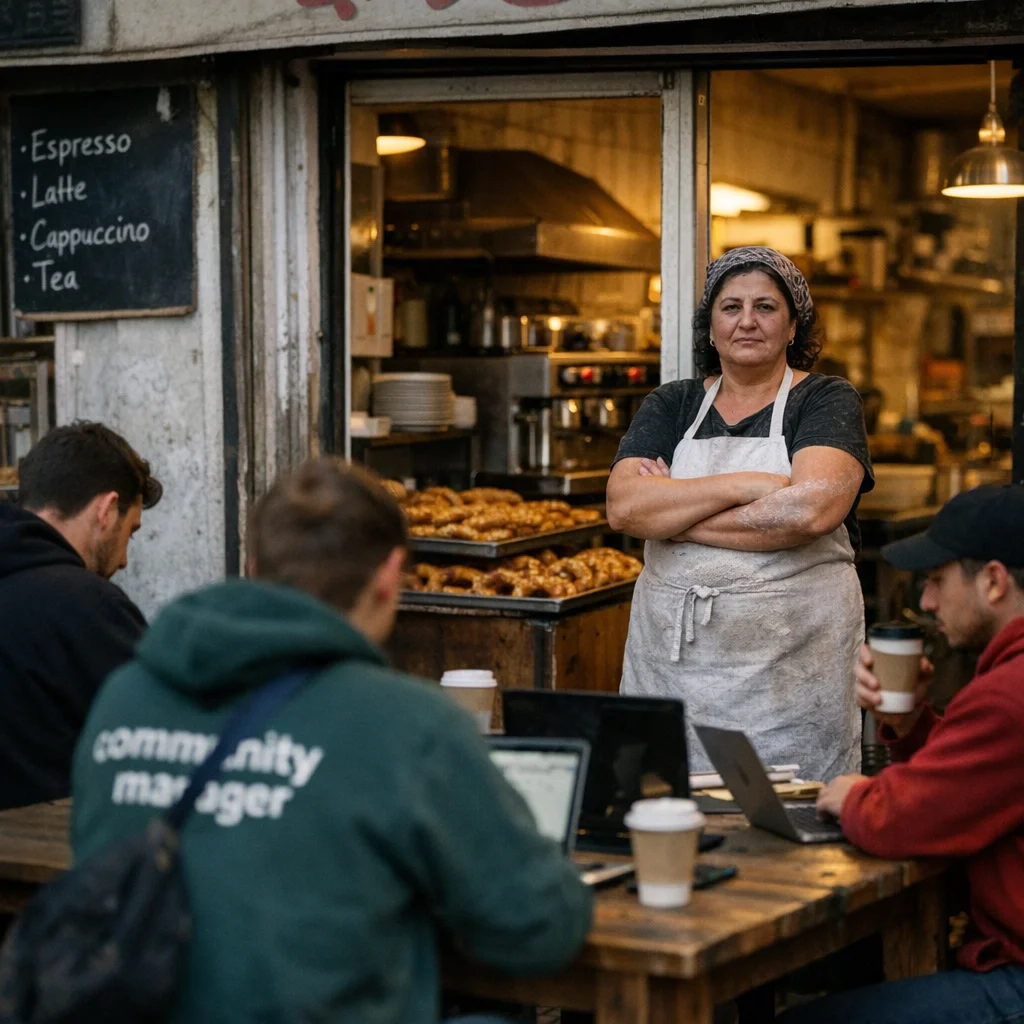
On Monday morning Leyla Öztürk, 48, unlocked the shutters of Öztürk Bäckerei on a side street in Wedding and set out trays of simit and borek the way her mother taught her. She wanted customers, not conversions.
Later that afternoon a crew in branded hoodies arrived with plywood, an espresso machine the size of a small conscience, and a laminated manifesto. The company, HuddleHaus GmbH, declared the shop a "neighborhood node" and installed a 4-meter communal table that swallowed outlets and elbow room.
"They came with chairs and a spreadsheet," Leyla said on Tuesday, flour on her forearms. "They said it was ‘community-first.’ They meant subscription-first."
By Wednesday the table had its own calendar: hourly slots, an on-site community manager named Sofia Raines, and an English-only menu listing "single-origin focus areas" next to oat milk prices. Mehmet, Leyla’s nephew and the shop’s cashier, tried to explain to an English-speaking founder that customers wanted bread, not bandwidth. The founder answered with a smile and a term sheet.
The conflict escalated the next day when Bezirksamt staff issued a temporary use permit for "cultural activation." Jonas Kranz, a city liaison, defended the decision: "We’re encouraging mixed-use intensity." Neighbors called it what it was: a landlord-friendly way to get higher margins without bothering with tenants.
At the turning point—on Friday evening—a small, impossible thing happened. The long communal table, bolted to the floor, appeared one seat longer in the morning. Chairs from Leyla’s front window were missing. The change was tiny enough to be dismissible and strange enough to be noticed. People began to whisper that the space was expanding like a business plan with an appetite.
Leyla organized a "bake-in" the same afternoon: free loaves placed deliberately along the table during peak coworking hours. The hooded community manager attempted diplomacy; customers staged a quiet counter-protest by speaking Turkish and ordering twice as many pastries. "They thought they could finish us quickly," Leyla said. "Instead we finished their meeting."
By evening the founders paused the rollout and muttered about pivoting to another block. The landlord, smelling faster profit, advertised the lease. Leyla won time and attention but not a verdict. The café-that-wants-to-be-an-office retreated for now; the long table remains.
"We stopped them from sitting on top of our street for a few days," Mehmet said, "but the market still wants to take a seat."
The neighborhood has learned a new prayer: speak your order in two languages and bring a chair. Walter Benjamin would have filed the scene under "arcades of ruin," and Byung-Chul Han might call it exhaustion made fashionable. For Leyla, it is simpler: keep the oven hot, keep your tongue in your mouth, and never let a table have the last croissant.