Lidl’s ‘Boxer and Socks’ Multi-Packs Are the District’s Cheapest Way to Look Like You Still Have a Life
The discount chain sells the fantasy of practical masculinity and domestic order—until you notice who is buying identical underwear, bathware, and tools to postpone embarrassment for another week.
Gentrification & Moral Performance Correspondent
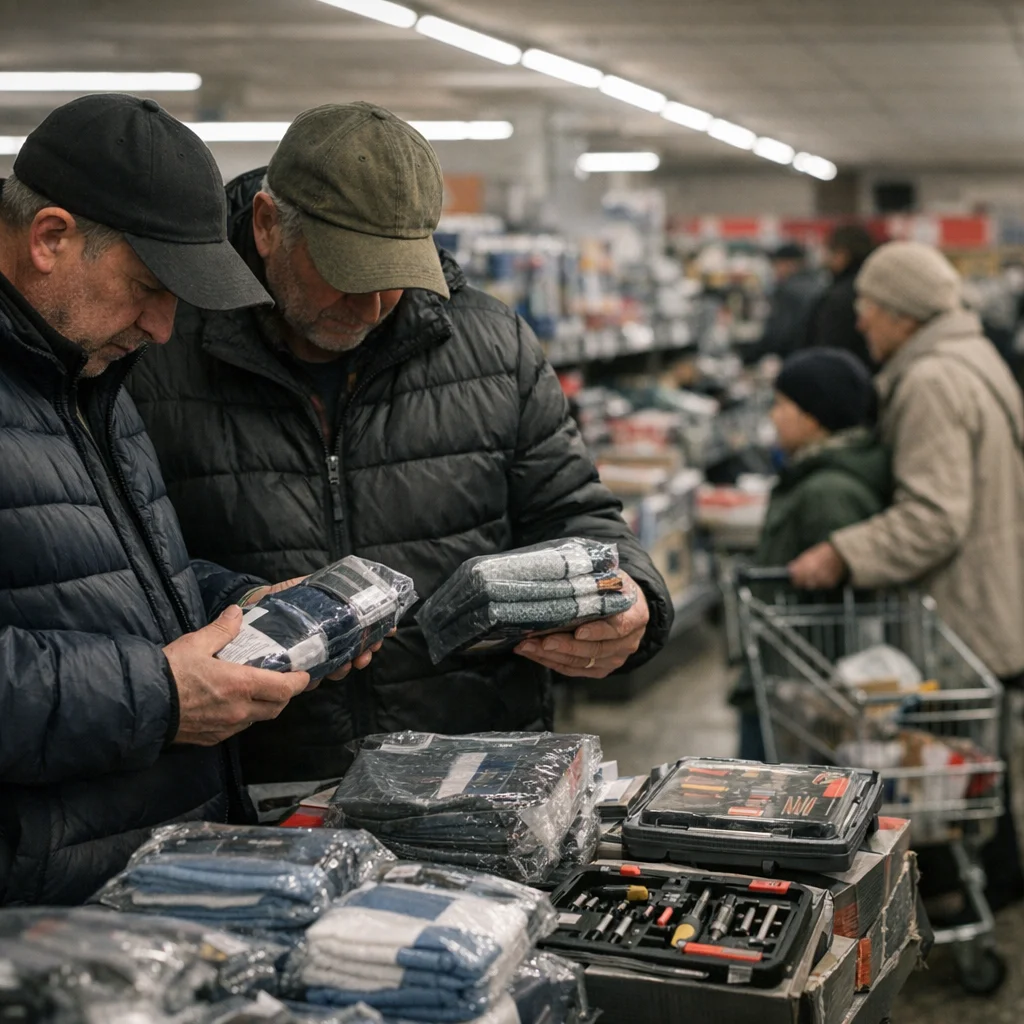
Lidl’s bargain aisle in Wedding is a municipal confessional with refrigeration. The lighting is aggressive, the floor is always slightly sticky, and the men drifting past the boxer shorts look like they’ve been assembled from missed shifts, rent notices, and bad decisions made at the wrong end of the U6. By ten-thirty, the baskets are already full of the same cheap resurrection kit: underwear, towels, and a screwdriver set bought with the solemnity of someone trying to negotiate with fate using a loyalty card.
This is not shopping. This is damage control performed in public.
The store’s little theater is brutally simple. Three-pack boxers. Two bath towels. A tool kit with bits so flimsy they look apologetic. The packaging says practical masculinity, but the real product is a more marketable version of despair: a man who can still afford to pretend he is one purchase away from becoming functional again. He is not buying underwear. He is buying the fantasy that his life has not yet been reduced to a landlord’s spreadsheet, a Jobcenter appointment, and a sink that smells faintly of old coins and defeat.
A man in a faded FC Union cap was standing in front of the socks like they had personally insulted him.
“Everything in the flat is starting to look like it lost a fight,” said Murat K., 38, a courier from Seestraße, holding up a towel bundle as if it were evidence in a case he was already losing. “You get the boxers, the towels, maybe a drill if the shelf falls off again. It’s cheaper than fixing your whole month.” He laughed in that dry, embarrassed way men laugh when they are trying to keep the humiliation from sliding down their throat.
That is the real welfare policy in this city: buy enough fabric to cover the rot, enough hardware to postpone the confession, and enough detergent to make poverty smell like effort. The politicians call it resilience when they need a word for social breakdown that doesn’t sound like negligence. The landlord calls it “normal wear and tear” while charging a one-room flat in Wedding like it has parquet floors in Mitte and a view of the republic’s conscience. And the Jobcenter, that glorious altar of administrative chastity, will happily ask a man to prove he is searching for work while he is already working two humiliations just to stay dry.
Outside, the U6 keeps dragging in faces that look overcooked by the commute. Inside, the men keep touching the same cheap waistbands with the same private desperation. They are not admiring the fabric; they are checking whether the elastic still believes in them. The socks are folded like little amnesties. The towels promise absorption. The tool kit whispers that if the flat cannot be saved, at least the evidence can be nailed back into place.
By noon, one basket near the checkout had become a little museum of male postponement: underwear to cover shame, towels to soak up the spill, tools to shut the cupboard before the mold gets a vote. A grandmother with a shopping trolley and a look that could strip paint took one glance at the men’s aisle and snorted.
“They always buy the same things when they’re pretending to be in control,” she said, not bothering to lower her voice. “First the boxers, then the drill, then they go home and act like the wall is the problem.”
She was right, of course. The wall is never the problem. The wall is just where the rent pressure lands when it’s finished dressing itself up as personal failure.
Lidl is not selling masculinity here so much as a short-term ceasefire with it. The chain understands the local theology perfectly: if you can get a man to believe new underwear equals renewal, he may delay rebellion, renovation, or breakdown long enough to come back next week and do it again. In Wedding, that is what passes for hope—fluorescent, shrink-wrapped, and priced to move before the shame starts sweating through the seams.