Lust, Consent, and the Späti Checkout
Wedding’s corner stores are adding a mandatory age-check screen that asks customers to confirm they are sober, single, and prepared for consequences before the beer door unlocks.
By Arda Kismet
Kiez Mischief & Access Economy Correspondent
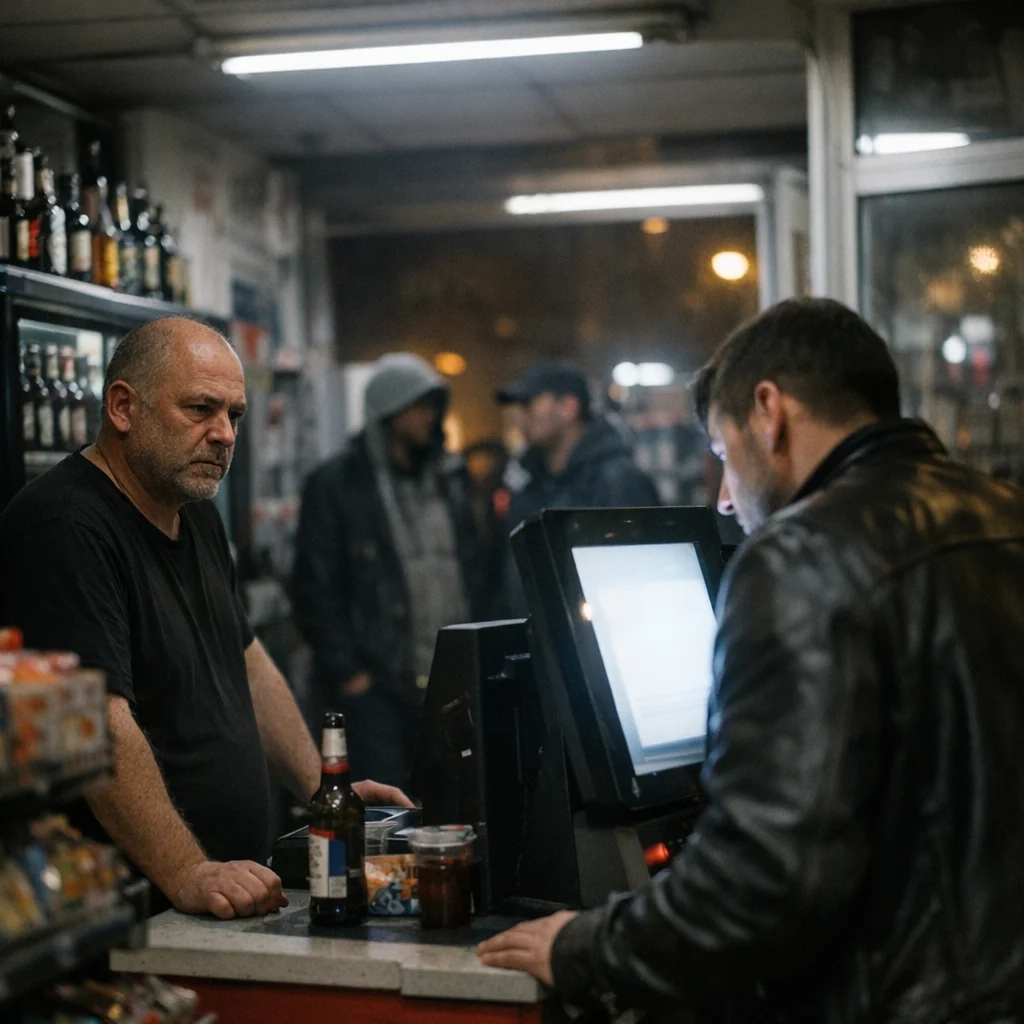
By Monday evening, the checkout at a Wedding Späti on Müllerstraße had stopped pretending to be a fridge and started acting like a gate with a libido and a municipal badge. Before the beer door would unlock, customers had to tap through a new age-check screen that demanded they confirm they were sober, single, and prepared for consequences. Then it held them there under a face scan, as if the machine were checking whether their appetite belonged to them or to the city’s newest little morality desk.
The system was installed after repeated pressure from the wholesaler and the district’s retail safety unit, which wanted “responsible vending” after complaints about intoxicated arguments, late-night flirting, and one man who tried to negotiate a six-pack like it was alimony. Store owner Cem Yılmaz said the point was simple: the beer door should not open for people who are already three drinks deep in their own excuses. “If you want the cold one, you can answer the question first,” he said. “The machine is less cruel than the customers.”
The customers, naturally, hate being treated like applicants for a controlled substance with a dating history. Several men in leather jackets and expensive sneakers stood outside pretending to smoke while the verification cycle ran, as if their dignity were waiting in the alley for approval from a bored clerk. One regular, who asked not to be named because he had once described himself on a podcast as “emotionally transparent,” said the prompt felt “like being undressed by an app built by my ex and a district inspector.” Another complained that the system was “surveillance dressed up as care,” which is a remarkable sentence for a city where every self-declared libertine is already being tracked by his own ego, his own messages, and the last bar tab he cannot afford.
The machine’s rules are almost elegant in their cruelty. If the customer says they are not single, it asks whether they are buying for someone else or just lying to the door. If they answer “for myself,” it suggests water and prints a line about “self-control being cheaper than regret.” If they answer “for a friend,” the receipt adds that friends usually do not arrive this late, this sweaty, and this desperate to be believed. The cashier, standing behind the counter with the patience of someone who has seen every version of public weakness, only has to glance up while the screen does the shaming. It is the closest thing the neighborhood has to consent enforcement: not romance, not morality, just a stubborn refusal to let a thirsty man skip the part where he says what he wants out loud.
That has created a new queue hierarchy. The older Turkish men, who know the staff by name and do not arrive pretending that a cold bottle after work is some tragic philosophical event, clear the screen in one attempt and move on with their lives. The self-described libertines do not. One local activist complained that the setup “pathologizes desire,” then spent ten minutes trying to appeal a failed single-status declaration because his phone was dead, his pride was leaking, and the machine would not let him keep his preferred fiction. Another customer, after three failed face scans, muttered that the system was “humiliating.” That was true, but only in the way a mirror is humiliating when it refuses to flatter a man who has built his whole evening around being desired by nobody and visible to everyone.
The district office described the rollout as a “voluntary pilot with possible consumer-protection value,” which is the sort of language public servants use when they want to sound humane while outsourcing discipline to a screen. The trade association said it was monitoring the situation, as if the real danger were not the drunken argument but the possibility that retail might briefly remember the customer is not royalty. No one is being forced to use the beer fridge, a spokesperson added, which is technically true in the same way a locked bedroom is technically optional.
Yılmaz says he may expand the system to cigarettes next month, because apparently the neighborhood has not yet exhausted its appetite for being asked to confess before being served. For now, the line outside the Späti is longer, the men are quieter, and every beep at the register sounds less like permission than a verdict: yes, you may have the cold thing, but only after you admit you came in here hungry for more than beer.