Möhrchen in a Cup, Majesty on Paid Leave
When the heat hits, the zoo’s ice treats for animals become a public lesson in soft power: the real work is done by keepers, PR staff, and donors who want to look humane without touching anything unpleasant.
Moral Contradictions & Night-After Reporting
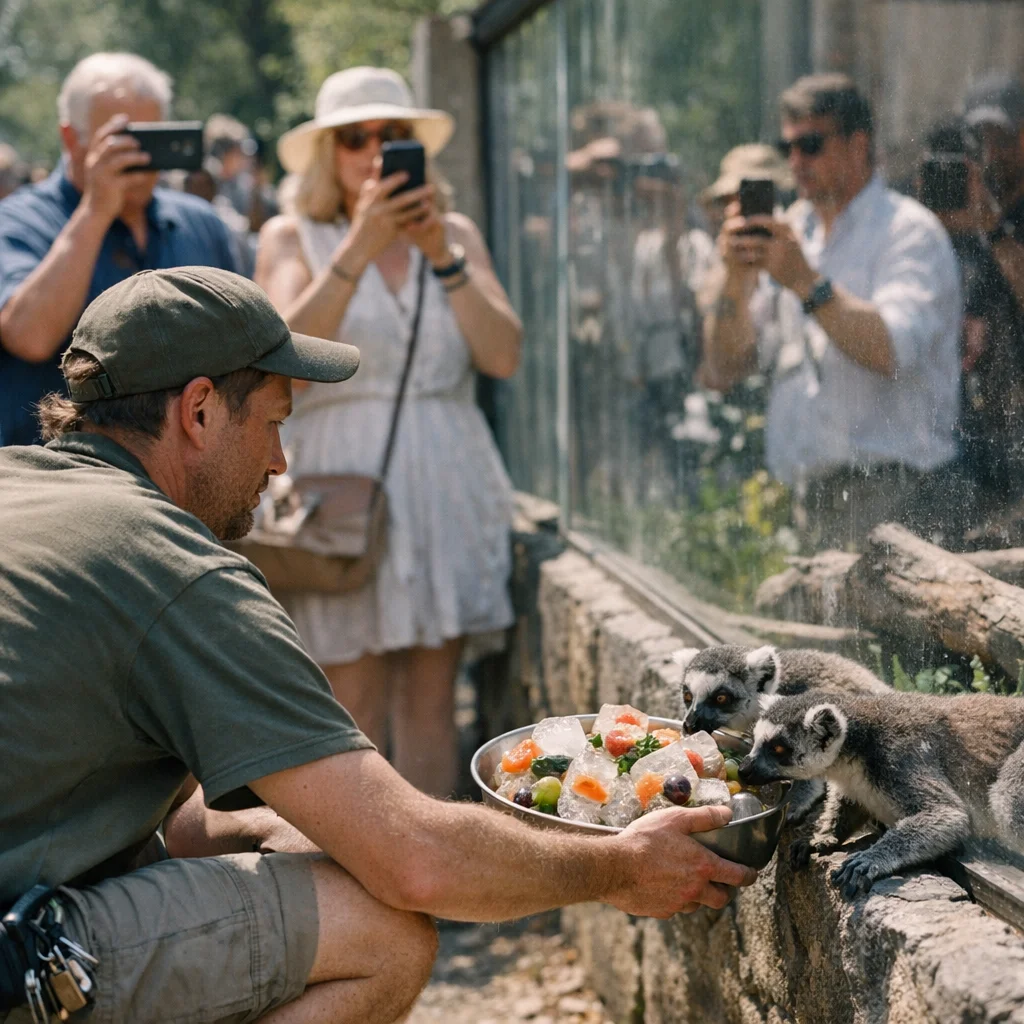
The Zoologischer Garten in Berlin rolled out its summer relief program with the usual civic smirk: a little frozen fruit here, a few chilled vegetables there, and suddenly the city’s softer predators get to call themselves humane. Keepers handed out ice-laced snacks to elephants, primates, and other expensive mouths while the surrounding human species stood around in the sun, pretending the scene was about care rather than the public laundering of class guilt.
The treats were the predictable basics — fruit, vegetables, ice, enrichment items arranged to suggest dignity inside a paid enclosure. The marketing, however, was doing the real feeding. The zoo’s communications people were out in force, ready to translate captivity into wellness language for anyone with a tote bag, a donor badge, or an appetite for moral selfies. In Berlin, every institution eventually learns the same trick: if you say “conservation” in a calm voice, people stop noticing the chain-link reality underneath.
By late morning, the crowd around the enclosures had the usual cross-section of bourgeois conscience. Parents hoisted children up to the glass with the tender efficiency of people passing on a family inheritance of looking instead of understanding. A startup couple in coordinated beige filmed the feeding with the blank reverence of people who think empathy is a lighting choice. Two museum-adjacent women discussed the animals in the tone usually reserved for ceramic restoration. One man from the donor circuit — linen blazer, sunburnt neck, the faintly slippery expression of someone who has never met a budget he couldn’t outsource — called it “important public work,” which is what rich Berliners say when they want their vanity to sound like governance.
The zoo, like a spoiled imperial relic in a municipal brochure, was not merely sweating. It was being curated. The heat did what heat always does: it stripped the varnish off the scene and left the machinery visible. Behind the cute ice blocks and the animal-caretaking theater stood the familiar Berlin ecosystem of sponsorship language, press phrasing, and city-adjacent self-congratulation — the small army of communications staff, development people, and cultural freelancers who keep turning discomfort into brand value. Nothing moves in this town without someone in a black T-shirt drafting a line about community impact.
“It’s amazing how many people come here to feel nurturing without having to be near anything messy,” said Katrin Voss, a keeper who requested anonymity because her colleagues would roast her for sounding like a grant application with a pulse. “They love the frosted fruit, the close-up photos, the idea of care. They do not love the labor: cleaning, hauling, checking, repeating, getting stared at like you’re part of the enclosure too.”
That is the city’s preferred arrangement. Berlin loves suffering when it is staged at a safe distance and annotated by a press release. It loves animals in heat, tenants in crisis, underpaid workers, overstretched museums, exhausted public services — so long as all of it can be framed as an opportunity for someone more polished to appear compassionate beside the wreckage. The institution gets a little halo. The donor gets a warm throat to swallow his conscience with. The communications office gets a clean quote. And the actual people doing the labor get to remain invisible, which is the oldest civic fetish in the capital: touch the result, never the work.
The zoo said the feedings would continue as temperatures rise. Of course they will. In Berlin, every summer needs its little sacrament of class innocence. The animals get ice. The visitors get absolution. The city gets to admire itself in the glass and call the reflection care.