Müllerstraße Tech Bros Finally Bring “Blockchain” to Wedding, Accidentally Spend Two Days on Cocaine Explaining It to a Confused Tea Shop
Locals thought it was a new kind of loyalty card; the pitch deck insisted it was “trustless,” which in Wedding is just called “a Tuesday.”.
Gentrification Detritus & Day-After Reporting
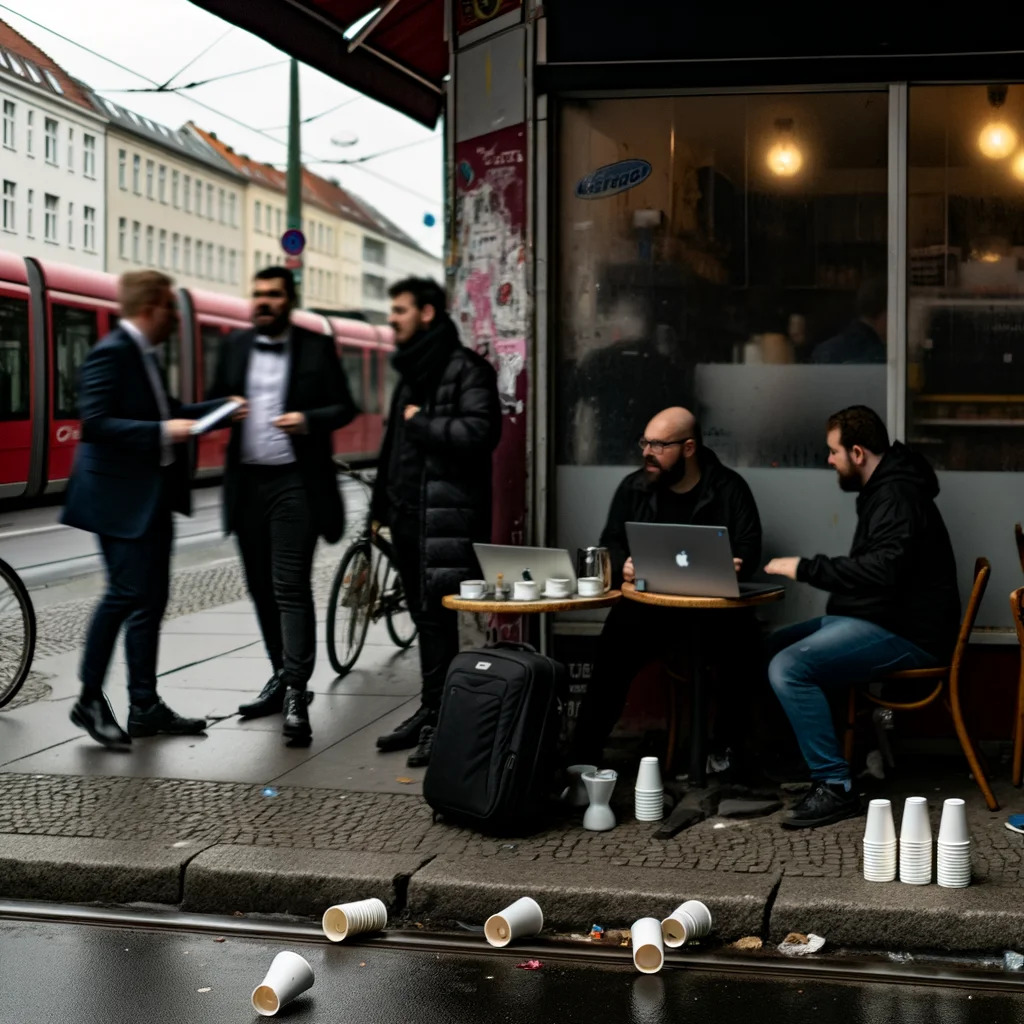
A revolutionary technology, bravely entering a room where people make eye contact
On Saturday night (and by “night” I mean whatever godforsaken time the sun was rising and nobody had agreed to stop), three self-styled innovators drifted up Müllerstraße like drifting confetti from a demo day that never got funding.
They were dressed in Berlin’s ceremonial blackout uniform—clean sneakers, dead eyes, an optimism that suggested they hadn’t paid their own utility bill in years. One introduced himself as “Timo, but on-chain,” which is how you know civilization is not making it.
Their target: a small Turkish tea shop where regulars argue, smoke, snack, and solve problems at a rate no product manager has ever achieved with a scrum board.
Their plan: “bring blockchain adoption to Wedding.” Their backup plan: cocaine and talking faster.
Tokenizing trust, one lukewarm metaphor at a time
Inside, the pitch began the way all bad Berlin seductions do: aggressively, abstractly, and with a promise that things will get “decentralized” soon.
“We’re creating community-owned value through immutable social proof,” one said, performing a deep dive into nothingness.
A regular nodded the way you nod when a drunk cousin tells you he’s “moving into music.” A shop uncle refilled the tea without consenting to the concept.
They proposed “TeaCoin,” a token that would reward “engagement” (meaning: being physically present, which is what the shop has done since before tech was a personality disorder). Users could stake TeaCoin to “earn yield” and “access perks.”
A customer asked what the perks were.
The answer: “discounted tea, but dynamic.”
This is the first time I’ve seen a man in his sixties express moral nausea purely through eyebrow geometry.
Wedding meets Web3, and neither consents to the foreplay
A small crowd gathered—half out of curiosity, half because the word “coin” still hits in a city that treats cash like a religion and invoices like modern poetry.
The innovators showed diagrams—concentric circles of suffering with arrows pointing to “mass adoption,” like a Kierkegaard staircase where each step is another reason to lie.
One bro attempted a seductive analogy: “Imagine trust, but without needing a central authority.”
A Turkish dad laughed so hard tea nearly exited his nose and said, in perfect US English somehow, “My cousin is already trustless. We did it years ago. No app.”
The team then tried to penetrate the crowd’s skepticism with the classic Berlin toolset: confidence, jargon, and uppers.
Unfortunately, the room had already seen every form of counterfeit prestige—limited-edition sneakers, ‘ethical’ rent hikes, and people who talk like LinkedIn posts while sweating like an installation art piece.
A harsh audit performed by a man holding prayer beads
The brutal part was watching how quickly Wedding performed an unsolicited due diligence process.
Questions arrived:
- “If the internet dies, do we still have tea?”
- “If you lose your phone, do you lose your friends?”
- “Why is this a solution instead of a cry for attention?”
They fumbled answers with the stiff confidence of men who confuse spreadsheets for consent.
The tea shop owner then introduced an unfixable variable: math.
He asked how fees work. They explained “gas,” a concept that sounded suspiciously like BVG delays, but more expensive and less accountable. Then he calculated their whole scheme’s margins out loud and finished with a gentle line worthy of Wittgenstein: “If it cannot be used here, maybe it does not mean what you think it means.”
Two seconds of silence later, somebody put on a phone playlist: distorted, minimal, German-sounding sadness. The bros, having been rejected by economics, tried pivoting to nightlife culture they’d seen on TikTok.
When in Berlin, reach for the coping tools
With the confidence of men who’ve never been cut off, they suggested a “Token-Gated After-Hours Experience.” You know, an “exclusive” event in a city where exclusivity is mostly just standing outside for long enough.
They referenced Tresor as if it’s a product partnership waiting to happen. They tried name-dropping Kater Blau with the trembling reverence of tourists asking where to buy authenticity.
Their pupils did what Berlin stimulants do best: expand the universe until your ideas feel important again.
Meanwhile, the tea shop remained committed to its own boring, stable technology: social pressure and hot water.
Resolution: A handshake protocol called ‘be normal’
Around dawn, after hours of loud explanation, the uncles delivered Wedding’s verdict: the boys weren’t dangerous, just terminally offline in the worst way.
The compromise they were offered was perfect:
- Put the laptop away.
- Drink tea like an adult.
- If you want to invest in the neighborhood, pay rent on time and tip the guy sweeping outside.
In other words: stop trying to tokenize warmth. This city has plenty of cold already.
As they left, one bro muttered, “They don’t understand disruption.”
No, my friend. They understood it. They just didn’t want it touching their tea.
Wedding will adopt your blockchain the moment it helps with something real—like splitting a tab at 8 a.m., emotionally surviving Monday daylight, or tracking who stole your lighter. Until then, your biggest use case is giving strangers a reason to talk about you while you talk over them.