Madame Bovary at the Bürgeramt: Pretty People Skip the Queue
Wedding’s civil registry has begun letting applicants with “high presentation value” book priority slots, so the pretty get serviced first and the rest get told to be patient.
Civic Hypocrisy & Neighborhood Compliance Reporter
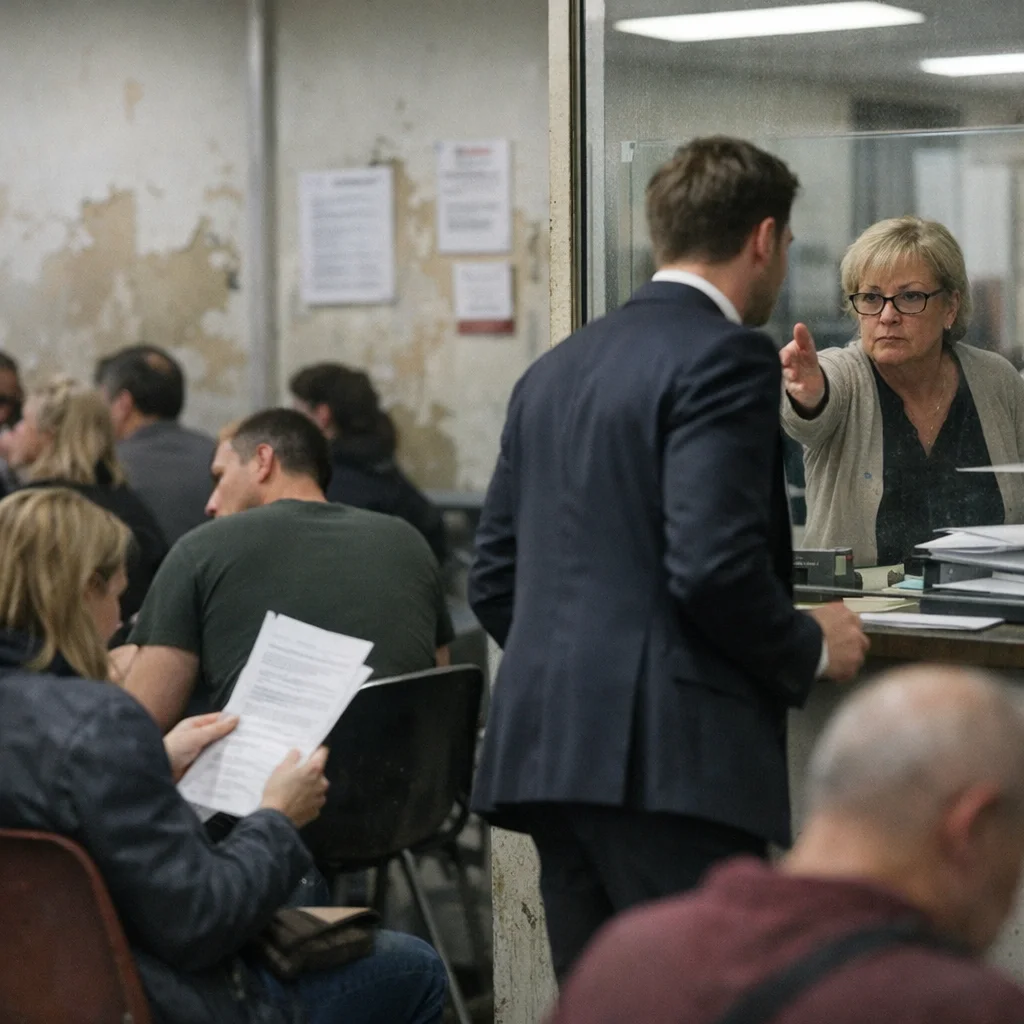
The queue with the velvet rope
I went to the Wedding civil registry expecting the usual municipal punishment: fluorescent lighting, dead plants, and a waiting line so old it looked entitled to its own postal code. Instead, the office had instituted what staff, with the straight face of minor tyrants, called “presentation intake.” That is the new local doctrine: if you arrive looking polished enough to be wanted, you are allowed to be handled first. If you arrive looking rushed, broke, or visibly in need, you can sit down and wait until the office is done being admired.
The procedure is not posted on the wall. Of course it isn’t. Shame would require paperwork. But inside the Bürgeramt, the rule was obvious within minutes. A clerk would glance up, assess the cut of a coat, the smoothness of a face, the degree of expensive calm, and then wave certain applicants toward a side counter with the same proprietary tenderness a club bouncer uses on people he wants to sleep with or sell a favor to. The rest were left in the plastic chairs, documents in hand, watching the favored glide through the room like they had been personally invited into a private booth.
One staff member, who agreed to speak only because anonymity is the last thing standing between public service and a lawsuit, described the system as “priority handling.” She said it the way people describe a hand on the lower back: technically guidance, spiritually coercion. “We’re told to move the smoothest cases along,” she said. “High presentation. Low friction. People who don’t need much explanation. People who know how to present themselves.”
That, in local administrative language, is the entire trick. Not urgency. Not need. Not who has been waiting longest. Presentation. The city has taken the oldest transaction in the world — access granted to the person who looks easiest to please — and given it a stamp, a number, and a laminated slogan about efficiency. It is a civic spread-legs move in sensible shoes: the office opens itself widest for the people already practiced at being received.
The favored applicants were not hard to spot. They arrived with clean lines, soft voices, and the kind of controlled composure that money buys after it has exhausted all other forms of self-respect. Designer coats. Tidy sneakers. Hair that looked as if it had never once been disappointed by public transport. They did not so much ask for service as recline into the possibility of it. One man in a charcoal overcoat leaned on the counter with the relaxed entitlement of someone used to being let in early, everywhere, for reasons nobody dares write down.
Meanwhile, the people in the chairs were being disciplined into patience. A woman who had taken the day off work to sort her child’s documents kept checking the clock as if she could intimidate it. An older man from the neighborhood, still carrying a paper folder from the bakery where he had stopped before coming in, was told to wait because the desk was “currently processing easier appointments.” Easier. As if the office were running a dating app for civil administration and had decided some faces simply pair better with the system.
The district office, naturally, did not deny the arrangement. It called the procedure “streamlined triage,” which is what bureaucrats say when they want to make favoritism sound like a disinfectant. Triage is supposed to rank need. Here it ranks who can be handled without emotional residue. The registry has become a velvet rope with a stamp pad. The favored get taken in quickly, kept smooth, and sent out looking relieved. The rest are left to develop character in the waiting room, where the chairs are hard enough to qualify as moral instruction.
There is a special humiliation reserved for the city’s polished moralists, the ones who talk about dignity as long as it does not interrupt their booking slots. These are the same people who arrive wrapped in calm, tote bags, and progressive vocabulary, then accept preferential treatment with the serene expression of someone being complimented for their ethics while one hand is already on the door. They are not embarrassed. They are reassured. The office has confirmed what they already suspect: in Berlin, looking effortless is a form of leverage.
What makes the system so obscene is not that it is hidden, but that it is dressed up as neutral. No greasy bribe, no brown envelope, no old-fashioned corruption with the decency to know itself. This is cleaner than that. This is bureaucracy doing a slow, tasteful striptease for the beautiful and the well-composed, while everyone else gets told to keep their documents ready and their dignity folded small.
By late morning the waiting room had settled into that special municipal mood: silent resentment, dry lips, and the recognition that the people at the front were not merely being served but favored in a way that felt bodily. They were being welcomed. The rest were being managed. You could see it in the clerks’ hands — the quicker shuffle, the softer voice, the extra patience reserved for those who looked like they might complain elegantly.
Residents say they want written criteria, which is adorable. Written criteria are for systems that still believe in themselves. This one runs on presentation, compliance, and the ancient administrative fantasy that the right face can make any queue feel consensual. Until someone forces the district office to explain why beauty, polish, and social ease now count as civic urgency, the line will keep functioning as intended: a public service with its legs open for the people least in need of mercy.