Mammoth Lust, Breitenbach Edition
New finds in Saxony-Anhalt suggest Ice Age hunters were not just chasing meat but status, rivalry, and the right to be the one everyone came home with.
Gentrification & Small-Time Power Correspondent
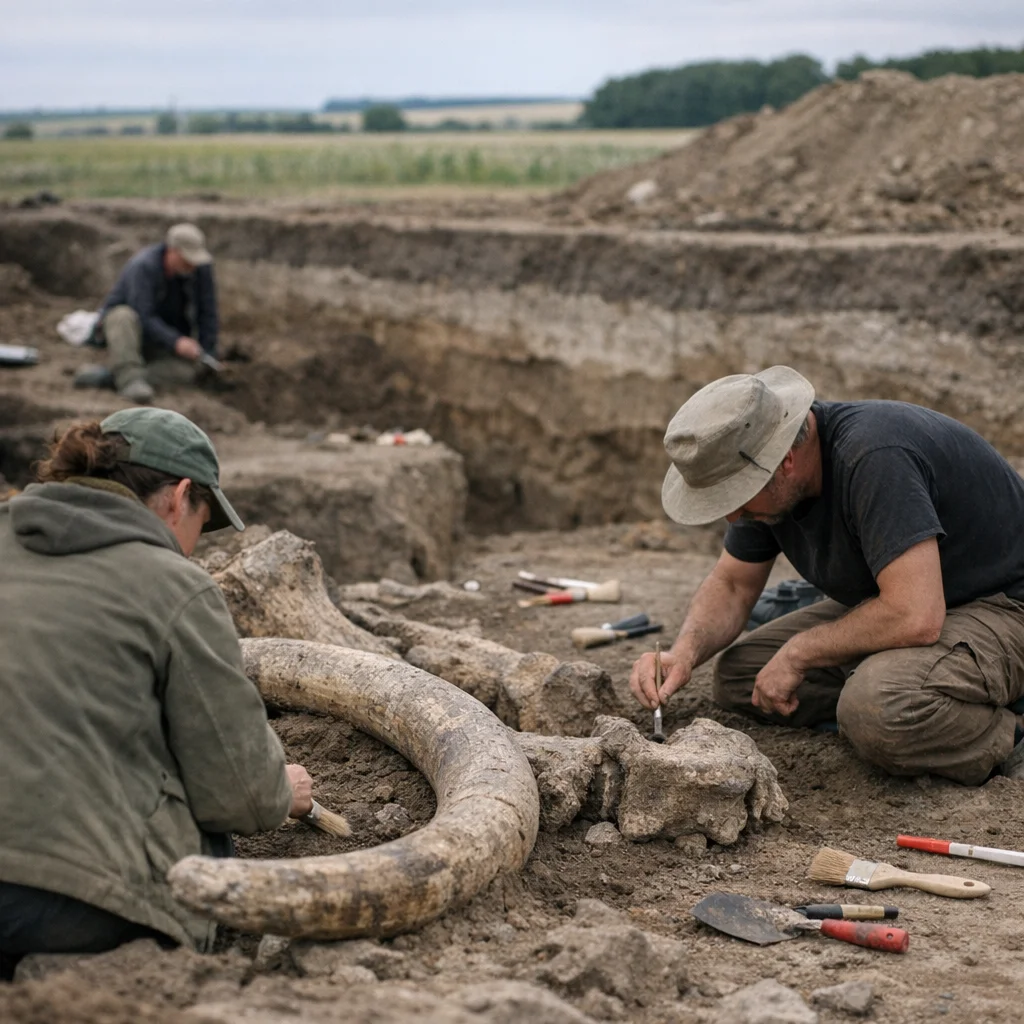
Archaeologists at Breitenbach in Saxony-Anhalt say the pits do not read like a pantry so much as a courtship arena with better bones. The mammoths were not merely food. They were the proof, the prop, and the body everyone gathered around while a few men tried to convince the camp that force was the same thing as desirability.
The latest finds suggest repeated, organized killing of large animals, with the biggest carcasses carrying the most social value. In practical terms, that meant the hunt worked like a mating display with sharper tools: one hunter got to arrive smeared in effort, another got to hand out praise, and the rest of the group got to watch the usual little hierarchy of appetite and approval play itself out in the dirt.
"The animal was only the first layer," said Dr. Lena Mertens, an archaeologist involved in the excavation. "The real performance was who got noticed, who got to stand nearest the kill, and who could turn a dead mammoth into evidence that they were worth wanting." She said the pits suggest the camp understood very well that prestige and selection were doing half the work.
That makes Breitenbach feel less like prehistory and more like a blueprint for institutions that still reward the same old hormonal fraud in cleaner clothes. Universities call it merit. Heritage offices call it interpretation. Men call it leadership. In every case, the same peacock logic survives: make a mess, claim authorship, and hope somebody confuses domination with charisma.
The excavation team says the remains point to repeated, organized events rather than one-off scavenging, which only makes the social choreography uglier. Somebody planned the hunt. Somebody took the front position. Somebody got to be seen as the one who could bring back the biggest prize. The others, no doubt, were expected to clap politely, swallow their envy, and pretend the whole thing was a communal achievement instead of a contest with better public relations.
A representative from the regional heritage office said the findings will be folded into a public lecture series this autumn, where the crowd is expected to include school groups, local history fans, and the familiar men who hear "prehistoric success" and immediately start polishing their own sagging legend. The office said further analysis will focus on butcher marks, pit structure, and the "clear pattern of elite display," which is bureaucratic language for the ancient fact that some people will always turn a kill into a stage.
The Breitenbach pits leave a simple, humiliating conclusion. Once men learned they could make themselves look chosen by bringing back something enormous and dead, they built entire status systems around the trick. The mammoth is gone. The posture remains. And the camp still knows exactly who came back showing off.