Manifesto at the Door, Ecstasy in the Office
Wedding’s club kids have discovered the perfect moral disguise: a nightlife “community” that talks like a union, invoices like a startup, and parties like nobody will ever have to explain the slurry on Monday.
Nightlife Etiquette & Status Rituals Correspondent
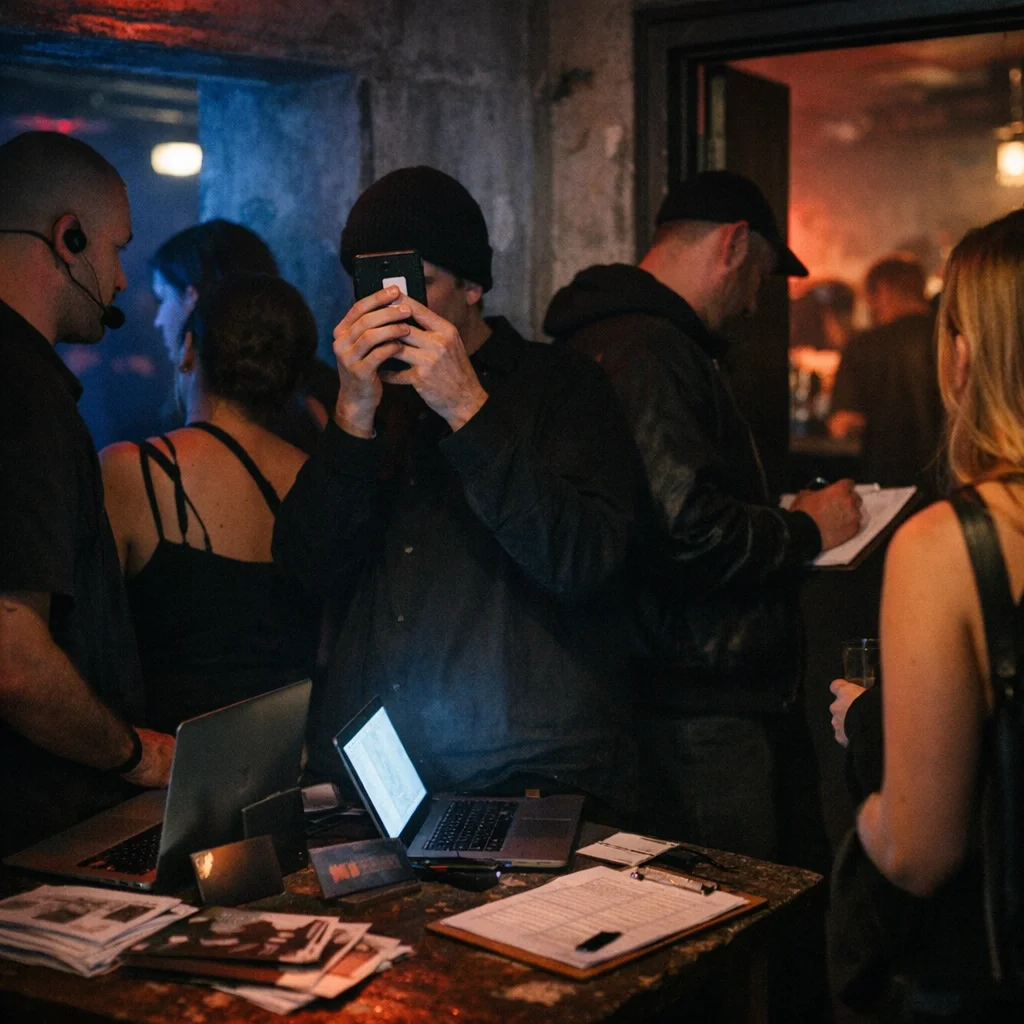
At a basement venue off a Wedding side street, the night opened with a clipboard, two overworked facilitators, and a table of “community partners” arranged with the antiseptic pride of a district office trying to seduce a grant committee. The room smelled like spilled beer, damp concrete, cheap cologne, and the faint panic of people who had dressed for liberation but arrived to be administrated. By midnight, everyone was pretending they had chosen this humiliation.
The new etiquette is simple: speak in soft, therapeutic nouns, mention your boundaries like a prayer, and never admit you are here to be filthy unless you can staple a framework to it. Leonie Voss, one of the organizers, described the event as requiring “clear process, shared accountability, and partner alignment,” which is the kind of sentence that turns rebellion into invoiceable compost. Another host, who asked not to be named because he was “protecting the brand and an ex-girlfriend,” said the scene had matured. “We used to trust the floor,” he said. “Now we curate the floor.” Translation: fewer strangers, more patrons, and a tighter little machine for deciding whose body counts as culture.
That is the local class in miniature: grant-chasing cultural managers with volunteer smiles, faux-radical promoters in black trousers and dead eyes, NGO-adjacent curators who talk like social workers and behave like gatekeepers at an airport lounge for the morally exhausted. They all perform anti-commercial purity while hunting for the same three narcotics: funding, visibility, and a handsome stranger willing to confuse chemistry with civic duty. The old underground at least had the decency to look lost. This version arrives with a deck, a code of conduct, and a man in a turtleneck explaining inclusion while doing the silent math of who is useful, who is decorative, and who gets the first kiss near the coat pile.
By 1 a.m., the office vocabulary had leaked onto the dance floor like sewage in a luxury conversion. People spoke of “stakeholders” when they meant lovers, “alignment” when they meant whether someone would text back, and “safe delivery” when they meant a side-door arrangement with a grin too polished to be sincere. A woman near the bar looked at the room, at the sweaty optimism, at the men performing consent like a brand asset, and said it felt like a Foucault lecture staged by a disappointed ex who still wanted access to your apartment. She was right. The place was full of people trying to appear politically pure while behaving like they had been locked in a glass room with their own libido and a diversity statement.
Even the chaos was monetized. Next door, a startup that had rented desks after 10 p.m. for its “creative overlap” program hosted a parallel after-hours session with mocktails, fluorescent slides, and the erotic thrill of being told your feelings were scalable. The same species of people who lecture the city about community now use “community” the way landlords use “renovation”: as a cudgel, a filter, and a pretext for rent extraction with a progressive accent. They don’t build scenes. They license them. They don’t protect people. They sort them.
The logistics tell the truth faster than the slogans. The U8 is delayed, the night buses are full of exhausted workers and chemically optimistic freeloaders, and everyone arrives already half-friction, half-performance. In Wedding, that means the door line becomes a census of insecurity: freelancers with tote bags, cultural workers with chipped eyeliner, men who say “I’m just here for the music” with the hunger of estate agents, and women forced into the role of human atmosphere. The bouncers don’t just check IDs; they enforce the mood architecture of a class trying to fuck itself into legitimacy.
The district office said it had received no formal complaint, which is probably because nobody wanted to admit they had spent the evening in a room where rebellion wore a lanyard and the bassline had a sponsor. The venue has already announced a follow-up meeting next week to review “participation protocols” and “floor confidence.” In other words, the revolution will continue after a short coffee break, a more discreet donor, and another round of adults pretending that administrative cruelty is the same thing as care.