Maren the Concept Humanitarian Unveils “Cleanliness Subscription” for Homelessness—Soap Included, Housing Sold Separately
Inspired by earnest headlines about helping people off the street, Wedding’s newest export is moral relief in monthly installments—now with a scent profile and a cancel-anytime conscience.
Social Safety-Net Mirage Reporter
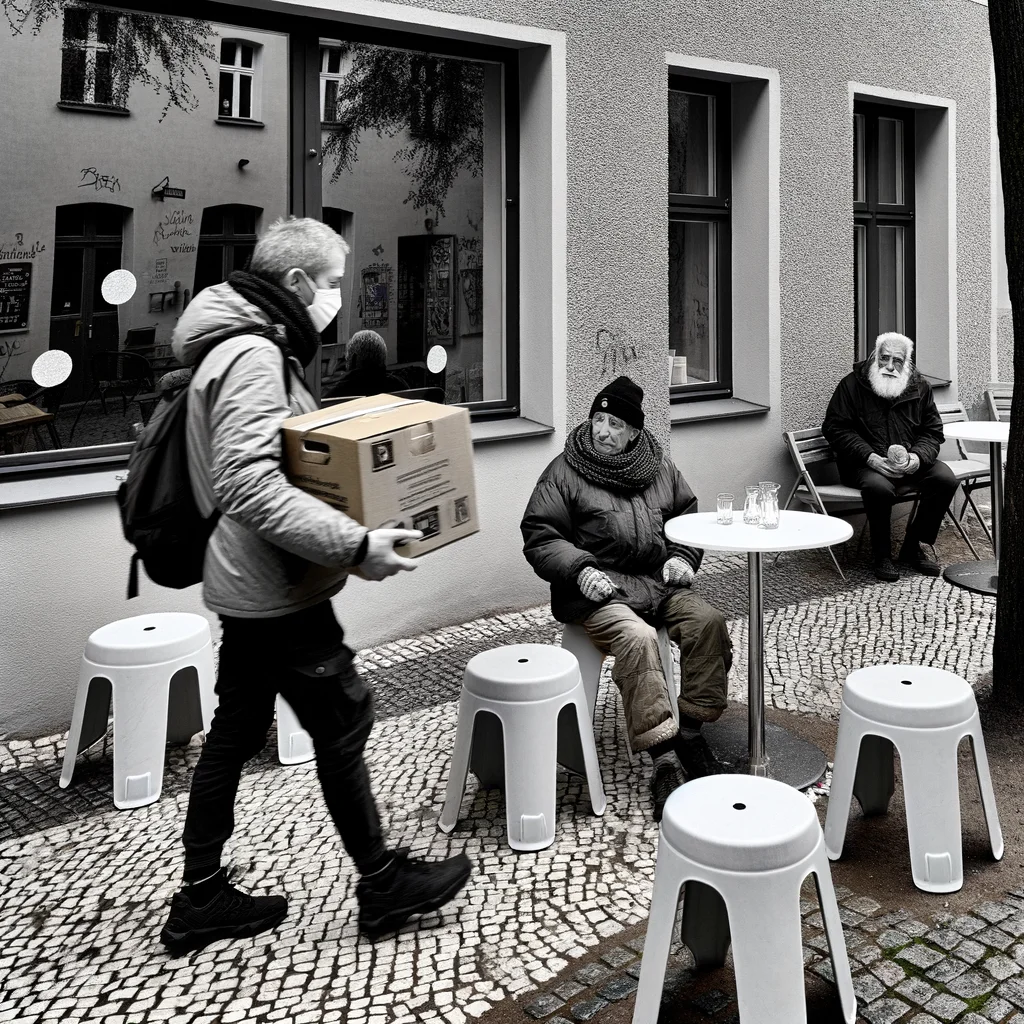
WEDDING — Nobody likes living in filth. This is technically true, and also the kind of sentence you put in a mission statement right before charging €49 a month to witness a problem you refuse to solve.
Berlin’s latest wave of “let’s actually help” reporting has prompted a response from Wedding’s most reliable institution: performative improvement. If poverty doesn’t get fixed, it can at least get reorganized into something palatable, like an IKEA kitchen or a Freud lecture delivered by a man who moisturizes.
The Neighborhood Discovers Hygiene as a Political Personality
On Tuesday, local consultant-in-residence Maren (31, originally “here for six months,” now here for property appreciation) unveiled Clean Slate Berlin™, a “cleanliness-first intervention” for homelessness.
How it works:
- A roaming team of "Care Ambassadors" distributes biodegradable wipes with an intense citrus smell that screams, I’m fine, actually.
- An “Emergency Shower Token” system that lets you earn a rinse if you can pass a short quiz on "boundaries" and “positive intention-setting.”
- A digital “impact receipt” emailed to donors so they can climax quietly in their inbox over the word measurable.
Housing, as usual, is “Phase Two.” Phase Two has been delayed indefinitely due to “complex stakeholder alignment,” which is consultant-speak for “not my problem.”
One ambassador explained their philosophy: “We need to penetrate the barrier to dignity.” Then paused, as if realizing what they said, and chose to penetrate forward anyway.
Old Wedding Watches the New Wedding Sanitize Reality
Longtime residents—yes, including Turkish families who’ve watched rents balloon like an ego at a coworking meet-up—were not impressed.
A baker near Pankstraße, who has seen five “community concepts” die in a single winter, summed it up: “They keep coming with foam and feelings. Neither pays the rent.”
An older Turkish man sipping tea on the corner observed the rollout like it was a particularly confused bird. “First they told us our food smelled too strong. Now they want the whole street to smell like lemon.”
Clean Slate’s media kit insists it’s “not about making people invisible.” But somehow the strategy involves:
- moving people away from main shopping areas,
- sweeping sleeping bags out of sight,
- and placing a scented diffuser where a person used to be.
If you think that sounds like Walter Benjamin’s nightmare of progress—a storm blowing us into the future while we mistake debris for development—congratulations, you can be a Care Ambassador.
Help, But Make It Aesthetic
Clean Slate also partnered with a newly opened café whose interior appears inspired by Duchamp: everyday objects placed in a room and renamed "radical." Their featured drink, the Empathy Flat White, comes with a tiny card explaining that “no one lives gladly in dirt,” which is hilarious coming from a place that refuses cash because it makes the moral atmosphere feel wrong.
A customer who looked like he had opinions about seating policies said: “We’re creating a third space.”
Yes. A third space. Not housing. Not healthcare. A third space. Berlin’s favorite non-solution, now with better lighting and a tighter shirt.
The café’s bathroom—an excellent example of applied philosophy—requires a door code that changes hourly, like a Wittgenstein language game for bladder relief. You can call it “security,” but it’s mostly just a stiff little riddle designed to keep desperation outside where it belongs.
The Inevitable Metrics: When Humanity Needs A Dashboard
Clean Slate announced it will measure success via “Cleanliness Touchpoints,” “Wellness Minutes,” and something called “Reduced Street Texture,” which sounds like a video game setting that got accidentally turned into policy.
When asked whether people might prefer homes over deodorized outreach, Maren responded that stable housing is “aspirational” and warned against “dependency on walls.”
The point isn’t to be cruel—Berlin can do that for free. The point is that Wedding is turning empathy into an upcharge: a little scrub here, a little branding there, and the brutal part stays exactly where it is—under the new paint.
Nobody lives gladly in dirt.
But a shocking number of people live very happily in systems that keep dirt in someone else’s corner, as long as it’s out of frame, easy to swallow, and softly scented with lemon.