Matthias Nawrat Wins a Berlin Prize; Wedding Immediately Opens a "Western Horizon" Takeout Counter
Locals say the neighborhood already had enough horizons. Newcomers say the old ones were “problematic” and want them ethically sourced, single-origin, and lighter on consonants.
Arts Economy Coroner (On Probation)
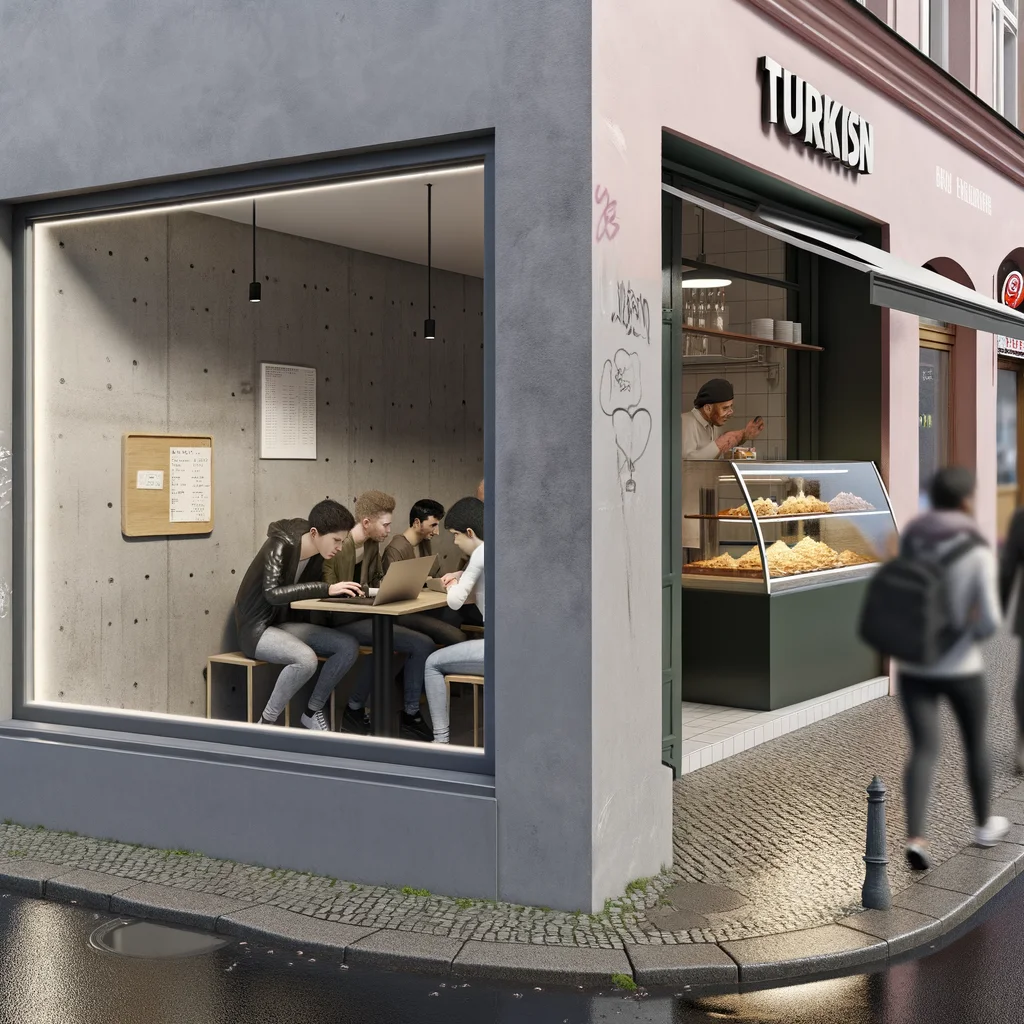
WEDDING — News broke that writer Matthias Nawrat has received the Berliner Literaturpreis because, according to the congratulatory canon, he “tears open the Western horizon.” Within 23 minutes, a pop-up on a side street in Wedding had already put the concept into a cardboard cup and started charging €6.80 for it.
The shop—HORIZON (BOLD), in the kind of concrete-minimal interior that suggests either contemporary art or an unreported fire—promises “an expanded perspective, sustainably harvested.” Staff will not say what the horizon used to look like, only that it needed “work.”
“We didn’t know it was supposed to open”
Longtime residents reacted with the stoic fatigue of people who have seen three different uses for the same storefront and never asked permission.
“Listen, we had horizons already,” said Hülya K., who has lived off Seestraße long enough to remember when ‘concept’ meant the kebery place had extra napkins. “Mine looked straight at the courtyard laundry line. It was fine. Now some guy from a publishing house is telling me my horizon is too narrow and needs better lighting.”
Across the street, a Turkish bakery displayed its own editorial position in the universal language of breakfast: a tray of sesame rings that did not seek approval from literary juries. “Western horizon?” the owner asked, taking a deep dive into a bag of flour. “We are just trying to keep the oven on.”
Gentrification discovers literature is a weapon you can expense
Newer arrivals, many of whom arrived in Wedding the way ideology arrives in Berlin: overconfident and slightly under-dressed for the weather, praised the prize as a sign that “Berlin still values words.”
“I moved here because I needed a district with narrative tension,” said Cole, 32, who described himself as “between countries” and “in dialogue with belonging,” which is what people say when they don’t want to admit they’re subletting. He said Nawrat’s accomplishment felt “validating” and “hard to swallow—in a good way.”
By early afternoon, a co-working office had already hosted a lunchtime seminar called ‘Horizon Stretching: A Practical Workshop’ where participants performed self-reflection into branded notebooks while gently penetrating the idea that reality exists without their commentary.
The award’s cultural impact arrives exactly where you’d expect: your rent
Real estate agents in Wedding were the first to understand the situation with the clarity of Marxists reading a landlord’s email.
A brochure for a freshly renovated Altbau described the unit as “an apartment with an opened Western horizon,” adding: “Ceilings: high. Values: higher. History: removed.” A footnote noted that the horizon itself is “visible upon request” and “subject to availability.”
A neighbor who asked to remain anonymous for fear of being invited to a book club said their building WhatsApp group immediately began arguing over whether opening the horizon would require drilling.
“There’s stiff resistance,” they said, “from people who think ‘perspective’ is just another renovation you’re stuck paying for.”
Literary theory, now in reusable packaging
Berlin cultural institutions, always eager to celebrate art in a way that resembles municipal exercise, leaned into the metaphor.
A volunteer usher at a nearby reading series summarized the new spirit: “Nawrat breaks the frame. It’s like Derrida, but with fewer cigarettes and more grant writing.”
Attendees nodded solemnly, as if this were not the same city that routinely misunderstands Kafka as an administrative training manual.
One audience member asked whether the “Western horizon” being torn open would increase daylight. Another asked if it would “help with anxiety.” Both were told that feelings are welcome, but questions should be “less outcome-based.”
Old Wedding remains, stubbornly, non-symbolic
In the end, the neighborhood’s response to the prize landed where all cultural news lands in Wedding: on the sidewalk, between a stroller, a delivery bike, and someone arguing with their conscience.
Longtime residents kept walking, eyes forward, horizons intact. Newcomers kept “opening” things they hadn’t closed, signing up for more language than they intend to learn. And somewhere inside the polite, overstretched metaphor, the actual achievement—writing good books—was quietly sitting alone, like Walter Benjamin at a party where everyone only wants to discuss the lighting.
Berlin has rewarded an author for cracking open the Western horizon.
Wedding has responded by trying to sublet it.