Mayor TikTok: The Civic Thirst Trap
Candidates are borrowing Mamdani-style walk-and-talk clips to look spontaneous, competent, and emotionally available to voters they would never answer by email.
Civic Hypocrisy & Neighborhood Compliance Reporter
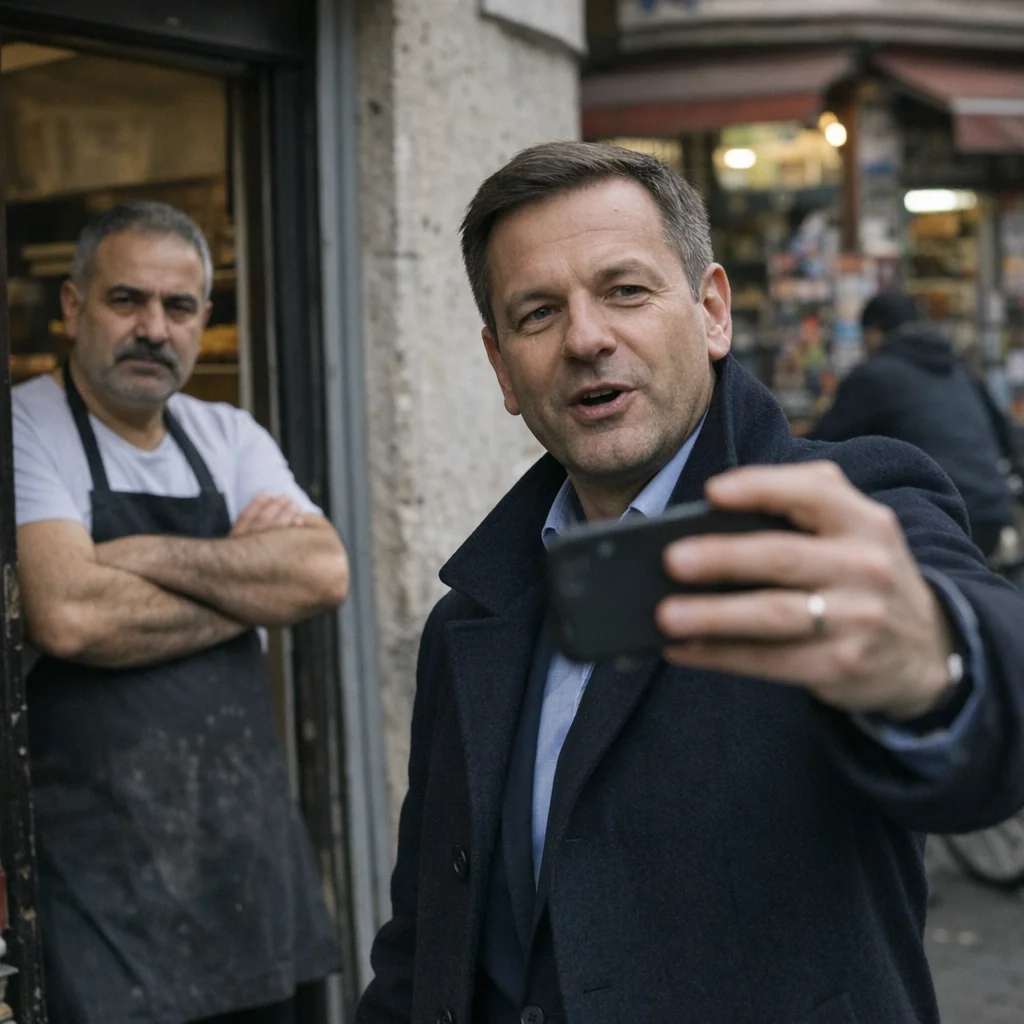
In Wedding, the new mayoral ritual arrived exactly where narcissism meets municipal exhaustion: on the sidewalk, with a phone held at arm’s length and a face trying to look both humble and available. District hopefuls and sitting mayors have begun filming Mamdani-style walk-and-talk clips in front of grocery stores, playgrounds, and half-renovated apartment blocks, hoping the neighborhood will mistake forward motion for consent and a steady gaze for character.
By Monday morning, the performers had already divided into two camps. The first group moved with the practiced desperation of people who have memorized a diversity seminar and still sound like they’re auditioning for an HR complaint. The second group looked like they had been dragged into daylight against their will, blinking like vampires ordered to “show some warmth” while the campaign producer whispered, softly, for them to be more touchable.
At Leopoldplatz, where every bench has heard more public promises than a divorce lawyer, one borough candidate filmed three takes outside a Turkish bakery before being told by the owner, Nuri Demir, that “if you point at my bread one more time like it’s a social issue, I will charge you for the film crew.” Demir later said the politician asked if he could mention the bakery as “community texture,” a phrase so lubricated with consultant slime it should require a warning label and a chaperone. The man wanted the place to make him look open, walkable, and locally responsive; the bakery owner said he looked mostly expensive.
The videos follow a campaign style popularized by Zohran Mamdani, whose walk-and-talk clips turned plain sidewalks into a velvet rope for people who want to feel represented without ever being inconvenienced. In Berlin, the imitation has taken on the spirit of a man learning intimacy from a mirror: all approach, no contact; all reach, no touch; all “I’m listening,” with the mic already pointed back at his own jawline. Some candidates pace past Spätis like they’re in a coming-of-age film. Others stop too often, smile too hard, and make eye contact with the lens in the damp, pleading way of a tenant asking for a rent freeze while his father transfers the money.
What district communications teams keep calling “access” is mostly the performance of being emotionally rentable. The candidate must look spontaneous, but not unpolished; available, but not needy; local, but still expensive enough to govern. The entire format depends on a kind of staged consent: the neighborhood is asked to let itself be used as a backdrop while the politician pretends to be the one doing the giving. It is civic courtship without the honesty to admit it is courtship, and campaign staff love it because it lets them sell hunger as humility.
“People are tired of podium politics,” said one district spokesperson who requested anonymity because he did not want his own video draft discussed at dinner by his ex-wife. “They want authenticity.”
That word, like most campaign words, now means the opposite of itself. The more a candidate tries to look casual, the more she resembles a person being lightly blackmailed by her own media team. The more he tries to sound local, the more he sounds like a startup founder who once rode the U8 and now treats it as field research. Every cue is meant to suggest ease, but the whole operation has the tense shine of a first date arranged by procurement.
A communications adviser in Prenzlauer Berg, speaking on condition of anonymity because she still had a blush filter open on her laptop, said the format “creates intimacy.” It does, in the way a politician does: by narrowing the distance just enough to ask for trust while keeping the exit wide open. Like a bad date, it promises contact, then spends four minutes explaining zoning, mobility, and why the candidate’s relationship with the neighborhood is “very close,” except for all the parts that require an actual answer.
City officials say the trend is spreading to district councils and one ministerial office, where staff are now asked to “look walkable” without actually going anywhere. The next test will come at the ballot box, where voters will decide whether they prefer their leaders upright, mobile, and lying to camera, or seated, formal, and honest about it. Either way, the frame is no longer theirs: by the time the politician finishes his little stroll and asks for reciprocity, the sidewalk has already priced him like any other man performing availability in public, and the neighborhood is free to let him keep walking.