MDMA Can’t Fix Your Outfit: Wedding Club Kids Continue to Dress Like the Laundromat Evicted Them
Anthropologists confirm the look is less “poor” and more “expense-repellent,” assembled from thrift trauma, intentional stains, and the confidence of someone who’s never met a mirror they trusted.
Dancefloor Etiquette & Chemical Sociology Reporter
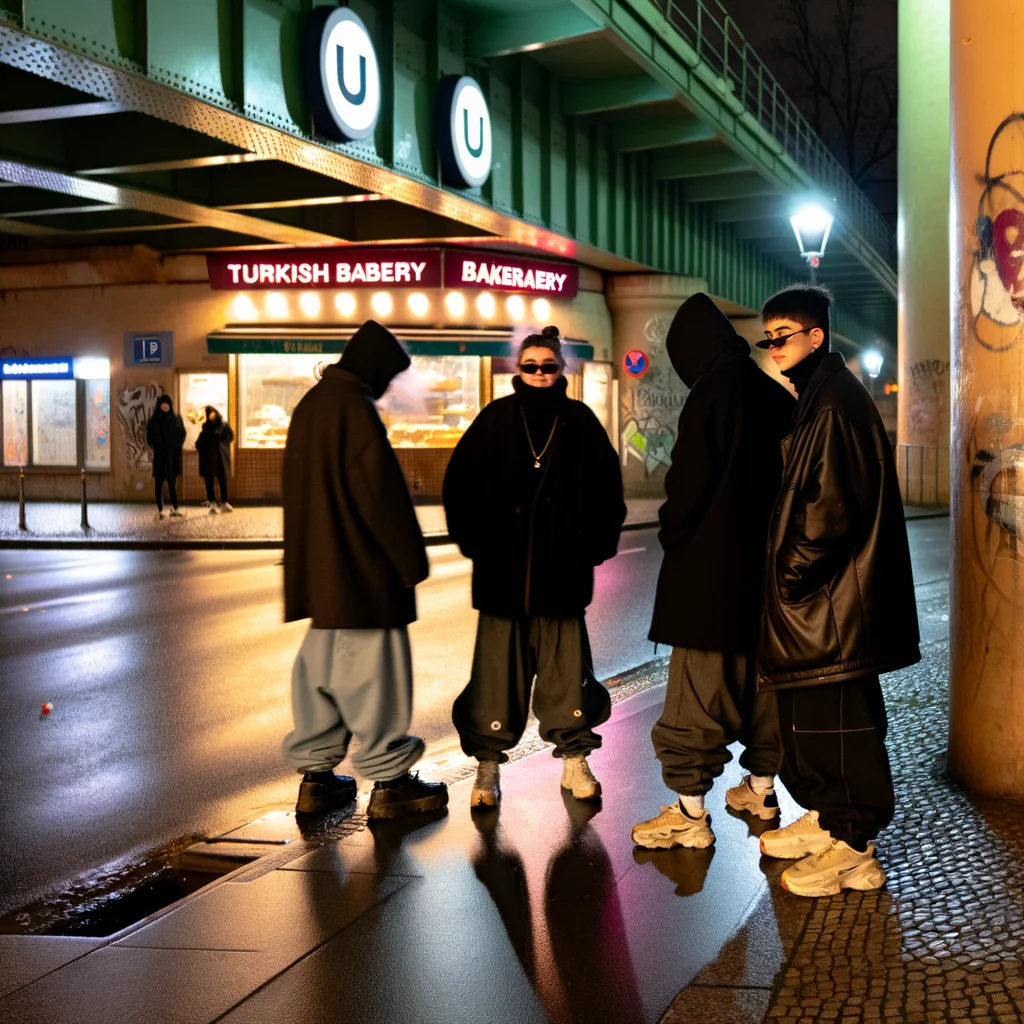
Wedding’s New Uniform: “If It Fits in a U-Bahn Seat Crease, It’s Couture”
WEDDING — Sometime around 3:38 a.m., after the second cigarette that isn’t really a cigarette and the first hug that lasts longer than your childhood, Wedding’s club kids become fashion economists. They look at a functioning coat and treat it like an authoritarian regime: too structured, too confident, too likely to suggest you can be reached.
The dominant silhouette now is “municipal lost-and-found chic,” curated to imply you were raised by a station bench but educated by a resident DJ with an arts grant. Pants that hang like a depressed curtain. Shoes with the resignation of a long-term relationship. Layers engineered to trap warmth, guilt, and at least one questionable memory.
Yes, it’s deliberate. Which is the funniest part. The entire point is to appear as though you’ve slipped through every safety net Berlin keeps boasting about, then posted it as a lifestyle choice.
Wardrobe Components, According to People Who Will Lecture You About Microplastics While Swallowing a Mystery Pill
In interviews conducted near U-Bahn platforms, cigarette piles, and the emotional permafrost between 6 a.m. and breakfast, locals provided a consistent breakdown of the modern Wedding club look:
- The Coat: oversized, black, and suspiciously resilient. Often resembles “stagehand meets abandoned puppet.” Must show stiff resistance to tailoring.
- The Pants: wide enough to smuggle two existential crises and a kebab. If they brush puddles, that’s “texture.”
- The Top: thin enough to create the illusion of fragility; strategically holey to suggest hardship, like a Dior collaboration with poor decision-making.
- The Accessories: a carabiner for keys you’ll lose anyway, a ring you’ll touch when you lie, and sunglasses worn indoors because pupils are private data.
Meanwhile, Wedding’s longtime Turkish businesses—actual craftsmen and people with calluses—watch this all unfold with the haunted calm of someone seeing their life get rebranded.
In one Mehmet Efendi-style tailor shop near the main roads, a man who can hem pants in four minutes described a customer who requested “a sleeve that looks like I escaped.” He said it was hard to swallow, mostly because he realized the customer meant it as a compliment.
It’s Not “Poor,” It’s “Anti-Documentary”
This isn’t cosplay of poverty; it’s poverty filtered through a camera preset and self-forgiveness. Everyone claims their outfit is “from a friend” the way people claim their drugs are “tested.” There is a constant performance of not wanting attention while applying for it with every frayed seam.
Walter Benjamin once wrote about the aura of objects—how authenticity decays under reproduction. In Wedding, that concept has been modernized: you buy mass-produced workwear, destroy it in aesthetically pleasing ways, and then insist it has “history.” Your pants have more invented backstory than your landlord’s renovation receipts.
The look is particularly popular among newcomers who arrived for “community” and quickly discovered community means: two friends, six group chats, and one cashier at the Turkish bakery who still greets you like you’re a temporary rash.
Door Policies Have Created a Black Market for Looking Like You Don’t Need This
Club bouncers didn’t invent the aesthetic, but they have been quietly grading it for years like professors who only teach contempt. Getting in is no longer about looking good; it’s about looking incorruptible.
Nothing says “please accept me” quite like dressing as if you could sleep on the floor and call it a deep dive into “liminality.” The outfit functions as plausible deniability: if you’re rejected, you didn’t care. If you’re admitted, you never wanted it. This is the kind of logic Kafka would recognize instantly, then ask for your wristband as proof of suffering.
And yes, drugs sit at the center of it all like an unpaid consultant. The clothes are chosen to survive:
- spilled beer,
- ash,
- sweat,
- confetti,
- and the moral condensation that forms when you tell yourself this is “healing.”
On MDMA, everyone looks like an orphan of capitalism and feels like a priest of empathy. It’s a perfect system.
Gentrification, But Make It Look Like You Can’t Afford Gentrification
There’s something beautifully cruel about Wedding’s current transformation: rents climb, longtime residents get pushed out, and the people replacing them dress like eviction notices. It’s an entire neighborhood turning into a theatre set where the cast plays “struggling” while quietly expense-reporting their resilience.
Old Wedding knows actual working-class clothing: practical, clean, repaired by someone’s aunt or a Turkish tailor who charges less than a cocktail. New Wedding wears dysfunction like a brand partnership.
One longtime resident described the look as “sad on purpose.” Another asked if this is what art school is for now.
Public Service Advice: If You’re Going to Look Broke, At Least Tip Like You’re Not
This article is not a ban. Wedding would never ban anything—this city can’t even ban traffic.
But if you’re going to dress like the apocalypse is your creative director, consider two modest actions:
- Buy something from the old places, not just the minimalist ones with English menus and emotional daylight.
- Tip. Not because it’s morally correct, but because you are currently a walking dissertation on aestheticized scarcity.
If the outfit says you have nothing, your behavior should not scream you have a fintech job and a two-day recovery plan.
In conclusion: you can dress like the laundromat defeated you. You can dress like your therapist said “embrace imperfection” and you took it as a commandment.
Just don’t act shocked when Wedding notices you’ve been roleplaying poverty with suspiciously clean fingernails.