MDMA Economy Goes Cashless in Wedding — Sellers Swipe PayPal Like Baristas
From handoffs to QR codes: how suppliers and clientele turned a street market into an app-based boutique of risk.
By Lina Paypass
Night Economy & Digital Vice Reporter
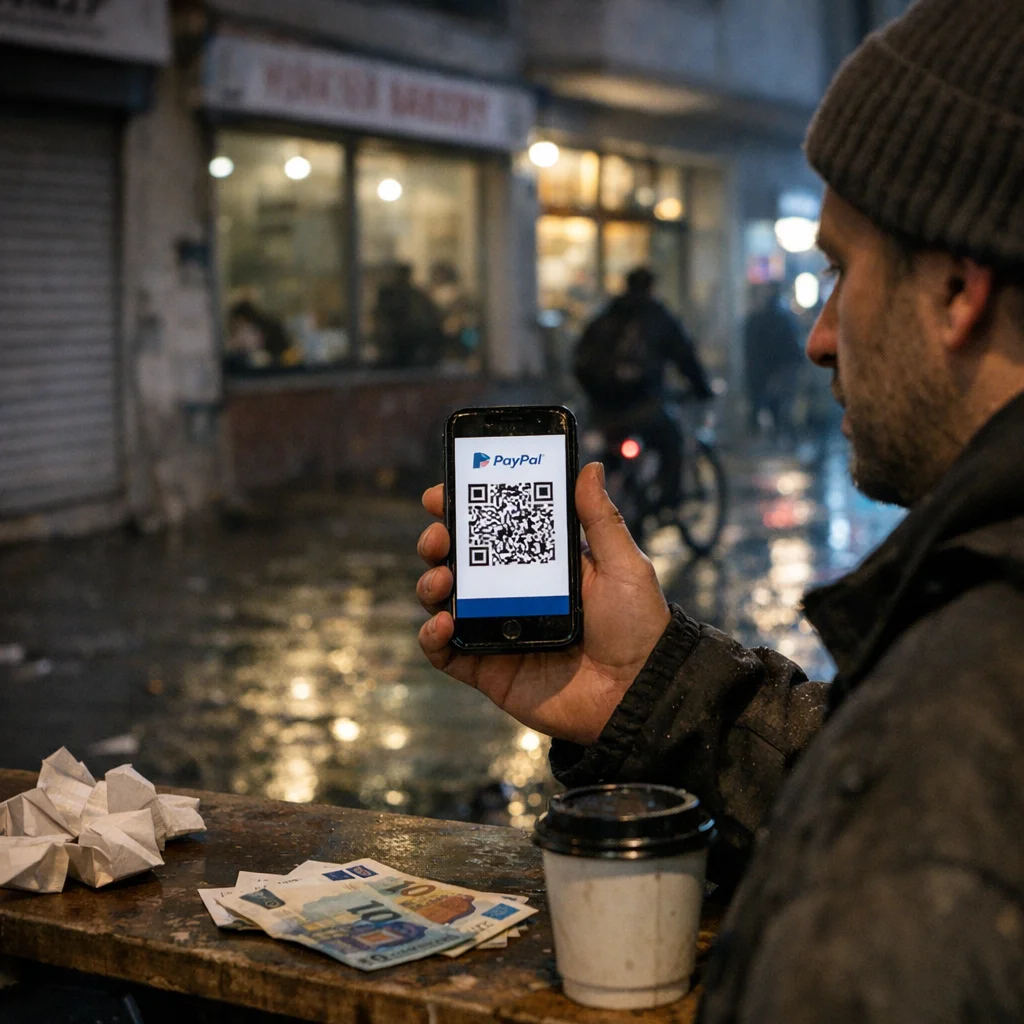
Cash, Coat Pockets, and a New Checkout
On a cold Wednesday near Seestraße, a man who makes his living as a small-time supplier — let's call him Murat — held up his phone, showed a PayPal QR code, and smiled like someone who'd just learned to open a bank account. The cash used to be the ritual: folded bills, furtive glances, a plastic bag passed like contraband. Now the ritual is a notification tone, a green checkmark, and a receipt email that says nothing and reveals everything.
Wedding is changing fast. Turkish bakeries are sculpted into minimalist cafés; landlords advertise “creative studios” like sympathy cards. The same streets that once ran on sweaty notes now hum with NFC beeps and transaction confirmations. It's a gentrified embrace: the market went from tactile to digital, and nobody asked if that was desirable — only how profitable.
Why PayPal? The Economics, Not the Ethics
- Customers want convenience. Expats and younger buyers are used to tapping their phones. Why fold bills when you can click a link from the toilet at 3 a.m.? The market responded.
- Cash is heavy and traceable. Carrying euros invites robbery; carrying receipts invites audits. A QR code is weightless, and a screenshot is deniable.
- Chargebacks are the new risk calculus. Sellers treat PayPal like a lover: useful, tempting, and occasionally vindictive. Fraud disputes are a nuisance, but for many small suppliers the math still works — fees and all.
- Micro-marketing. A PayPal link doubles as CRM. One forwarded invoice and you've got a repeat customer. The turnover is smoother; the margins survive.
Accepting PayPal also signals a bizarre legitimacy. A vendor with a digital checkout looks like a business, not a criminal. It’s the difference between an alleyway handshake and an invoice titled “MDMA — 0.2g.”
How It Works, in the Field
- Pre-orders via ephemeral chat apps. Meet, confirm, scan, transfer. It’s less about trust and more about predictable cash flow.
- “Friends and Family” transfers to avoid fees, or inflated prices to cover the swipe. Sellers learn to penetrate the settings just enough to avoid detection.
- Front businesses and intermediaries. Some vendors route payments through coffee shops or micro-entrepreneurs who accept the receipt and hand over product later — a bureaucratic soft-core that turns one party’s invoice into another party’s profit.
- Payment disputes handled like breakups: lots of messaging, blame, and the occasional fake illness excuse.
The New Risks: Surveillance, Chargebacks, and Moral Crunch
A PayPal receipt is a paper trail in digital skin. While cash disappears under cushions, digital records linger like bad poetry. Sellers worry about data leaks, snitches, and the algorithmic gaze that can turn a small profile into evidence. Yet the alternatives — crypto, ghost apps, cash-only — each have their own friction. For many, the hit of a convenient sale outweighs the slow dread of being in a spreadsheet.
This is where the neighborhood's contradictions show. A Turkish bakery owner who used to gossip with customers over simit now watches strangers scan QR codes outside his shuttered window. "They're taking orders on apps now," he told me, not quite angry, more bewildered. The transformation is less about ethics and more about rent: systems adapt when the invoices arrive.
Payment as Performance Art (and Idea)
Walter Benjamin's flâneur wandered the arcades, mesmerized by commodities. Replace the arcades with a Hellofresh-scented co‑working space and the commodity is now a digital confirmation. Baudrillard would smile: we've gone beyond consumption into the simulation of consent. Even Marx might nod, noting that value now gets abstracted through a third-party API instead of a labor voucher.
Economists call this a lowering of transaction costs. Philosophers call it a Pandora’s box with better UX. Everyone else calls it Tuesday.
What City Policy Forgot to Ask
- Harm reduction is still measured in paper pamphlets and free water, not payment modalities. If people buy via apps, where do outreach teams leave their business cards?
- Law enforcement treats receipts as evidence. The digital age gives prosecutors better phrases and worse metaphors. The result: sellers adapt faster than policy, then complain once they’ve been outrun.
- Landlords and the coffee economy watch politely as money flows through the same rails they invested in. The moral hazard is obvious: when convenience dresses in legitimacy, nicknames become invoice items.
The Intimacy of a Receipt
In a city that rehearses transgression like a civic ritual — after‑hours that bleed into breakfast, bathrooms that become salons — the payment method changes the intimacy of the exchange. A green checkmark is cold but efficient; a folded note was warm and awkward. One grafts trust into code, the other into shoulders that brush in a doorway. Both have consequences. Sometimes progress is hard to swallow.
A Last, Slightly Cynical Thought
When people told us Winterfelsstraße would become boutique, they forgot to mention the boutique would accept digital tips for illegal services. The block has learned to monetize friction: convenience is now monetizable, and so is the secrecy around it. As one veteran of the market put it, with a shrug that could be an economic theory: "Better the beep than the mugging."
Wedding’s new economy moves forward in small, polite beeps. It’s efficient, awkward, and somehow very modern — like marriage, but with better customer support.
Notes: this piece contains a few calibrated double entendres — 'penetrating the settings', 'deep dive into wallets', and 'hard to swallow' — because commerce and desire share a habit of promising more than they deliver.