MDMA-Fueled 'Installation' in Wedding Exposed as Nightly Sex Commune — Curator Calls It 'Participatory Sculpture'
Neighbors found used sheets, a Kulturamt permit, and a gallery invoice; organisers insist it's critical practice, locals call it an elaborate excuse to charge a door fee.
Decadence & Art Abuse Correspondent
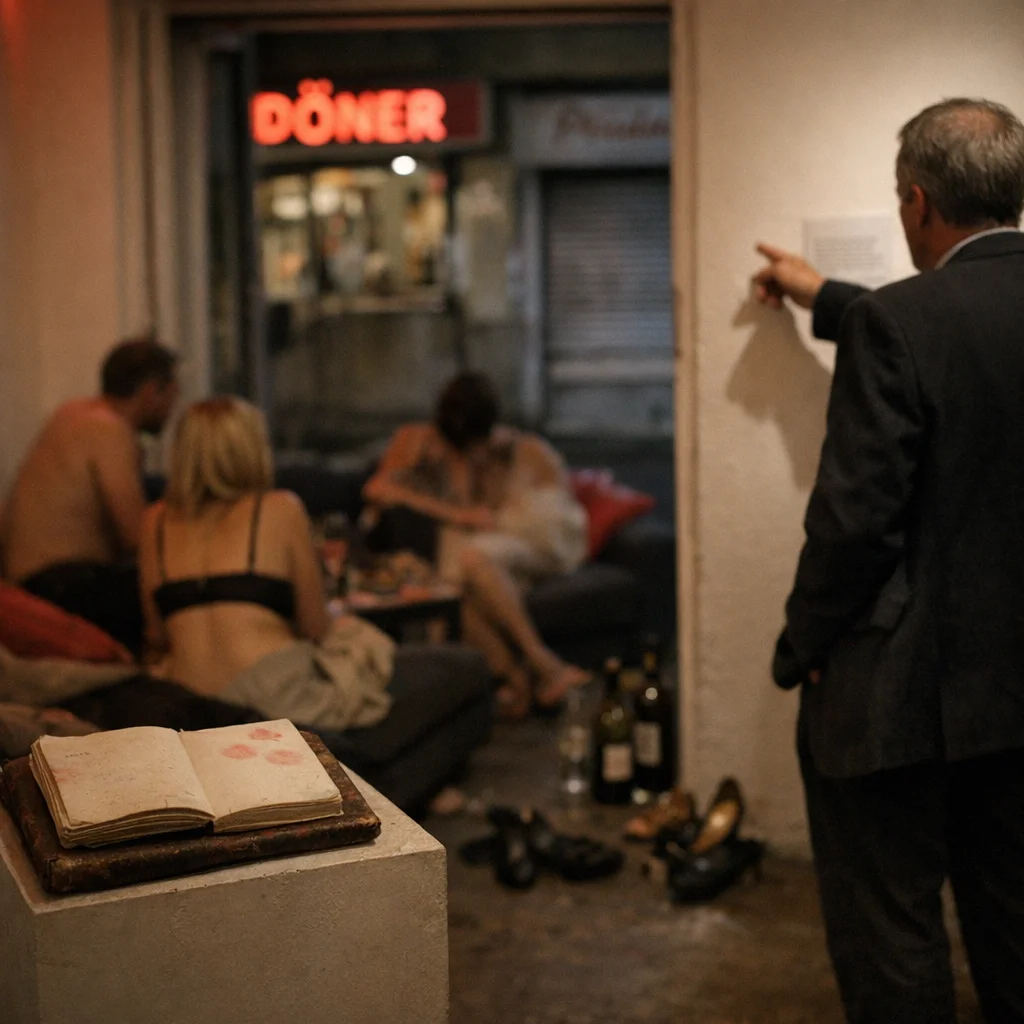
The white cube on Osloer Straße opened last month with the careful language galleries reserve for sins: "experiential," "consent-forward," "a durational inquiry into communal intimacy." By the third night its press release had been replaced by a stack of breakfast receipts and a pile of sheets on the pavement.
What the programme framed as a guided encounter became, after midnight and two bottles of wine, a recurring sex commune that charged an entry fee and an art-tax-style coat check. Curators answered complaints with vocabulary lifted from art school syllabi — Duchamp here, Bataille there — and described the nights as "a participatory sculpture negotiating the boundaries of public and private." Their upstairs invoices described it differently.
Mustafa, who runs the döner counter across the street, says the crowds arrive late, leave early and block his lunch trade: "They come out smelling like incense and performance notes. My customers ask if there will be pepper on their sandwich or only interpretive kissing." He kept his eyes on the permit taped to the gallery window: a Kulturamt stamp that reads "public programming." The city's paper trail, in practice, looks like a shrug with a signature.
Artists and gentrifiers defended the project as radical honesty — an effort to "destigmatize desire" while quietly monetizing it. Leftist manifestos were read aloud between embraces; a small, ironically branded hand-sanitiser station stood sentinel by the couch. A local noise inspector, clued in by a concerned tenant, attempted to apply routine regulations and discovered the nights came with consent waivers and an art-historian to explain the acoustics.
The surreal detail, and the thing that made older neighbors whisper about more than just decency, was the guest ledger. Each morning the leather-bound book would bloom faint lipstick imprints across new pages, though nobody claimed to have seen anyone write their name. The book, like the whole operation, refused easy explanation.
This is what happens when curatorial language meets late-night appetite: theory becomes a night shift, manifesto becomes a business model, and a community space moves from hosting readings to selling entrance to human contact. Someone quoted Foucault; someone else trashed a flyer. The show goes on — for a fee and with a clear aftercare policy.
If art is supposed to reveal uncomfortable truths, Wedding has learned to read the fine print. And if the Kunstwelt wants honesty, it should be ready for the invoice.