“MDMA Is for Consent,” Says Pop‑Up Rave While Blocking the Only Emergency Exit With a Sofa
In a back-lot warehouse near Wedding, party organizers say safety is “a feeling,” then charge €10 extra for the feeling of not looking at a fire extinguisher.
Night-Safety Mythology Reporter
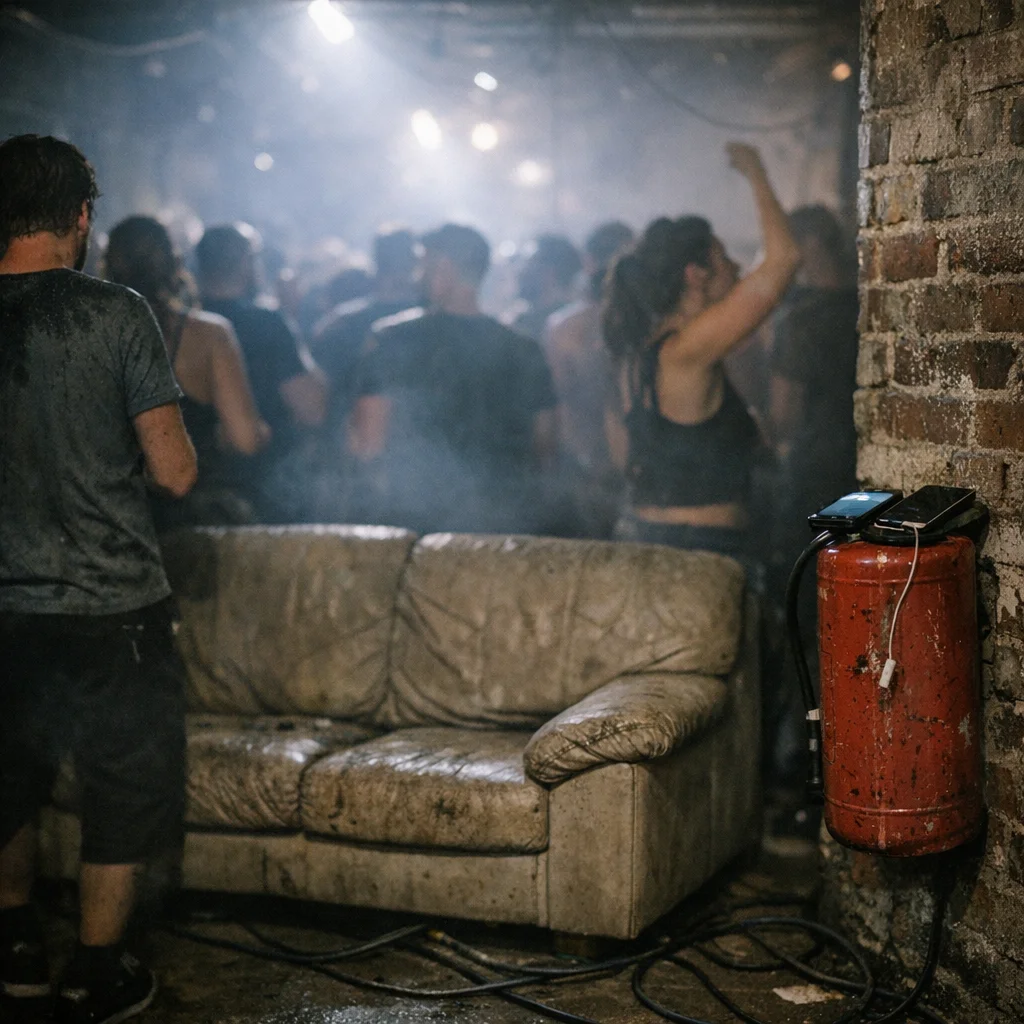
Shortly after midnight, a pop-up rave in a warehouse yard near Wedding achieved what Berlin always promises: collective transcendence, minimal accountability, and an architecture that looked like it was last inspected during the Napoleonic Wars.
The invite said “private gathering,” which in Berlin means “public event with a Telegram link.” Inside, the organizers had curated a full sensory experience: a fog machine that doubled as plausible deniability, a bassline that made your ribs file a complaint, and a single narrow passageway that functioned as both entrance and existential metaphor.
Witnesses say the emergency exit was “temporarily unavailable” because someone had staged a lounge corner in front of it—an upholstered barricade that screamed, relax, the way a drowning hand wave screams relax. A volunteer in a hi-vis vest (the closest thing Berlin has to a legal disclaimer) reassured newcomers that the sofa was “part of the flow.”
The crowd was reportedly rolling on MDMA with the confidence of people who read one infographic about harm reduction and decided they were now epidemiologists. “We’re very conscious,” said a man fanning himself with a zine about mutual aid, before asking if anyone had a bump of anything “clean, like ethically sourced.” Another attendee described the space as “intimate,” which is a polite way of saying strangers were forced into a long-term relationship with each other’s sweat.
Fire Code as Performance Art
The warehouse itself offered classic Berlin minimalism: exposed brick, exposed wiring, and exposed impatience with the concept of exits. The only visible fire extinguisher was used as a phone shelf, because nothing says we’ve got a firm grip on the situation like balancing your €900 device on emergency equipment.
A local building-safety consultant who declined to be identified (translation: he likes his kneecaps) described the layout as “a real Foucault situation—discipline and punish, except everyone volunteered.”
Community Values, Narrow Corridors
Organizers insisted the event was “safer than clubs” because it had a “consent team,” easily identifiable by their serious expressions and the fact that they were constantly squeezing through tight spaces like a human apology. They also offered free water—available somewhere behind the DJ booth, after you completed a long, arduous entry process through bodies, cables, and one guy explaining his breakup like it was a TED Talk.
By morning, attendees spilled out blinking into daylight, proud of surviving another night where the only thing more inflated than the bass was everyone’s belief they’re the responsible one.
Berlin isn’t a city that breaks rules. It’s a city that hosts rules in the corner, offers them a drink, then forgets they exist while grinding all the way into catastrophe—very gently, very politely, and with excellent music.