MDMA Nostalgia Fuels New 'Berghain Waiting Area' Requirement for All New Buildings
City planning decree asks developers to build club-style lobbies — ink stamps, camera-sticker dispensers and velvet ropes — to 'manage urban queues and cohesion', officials say.
Architecture & Nightlife Intersections Reporter
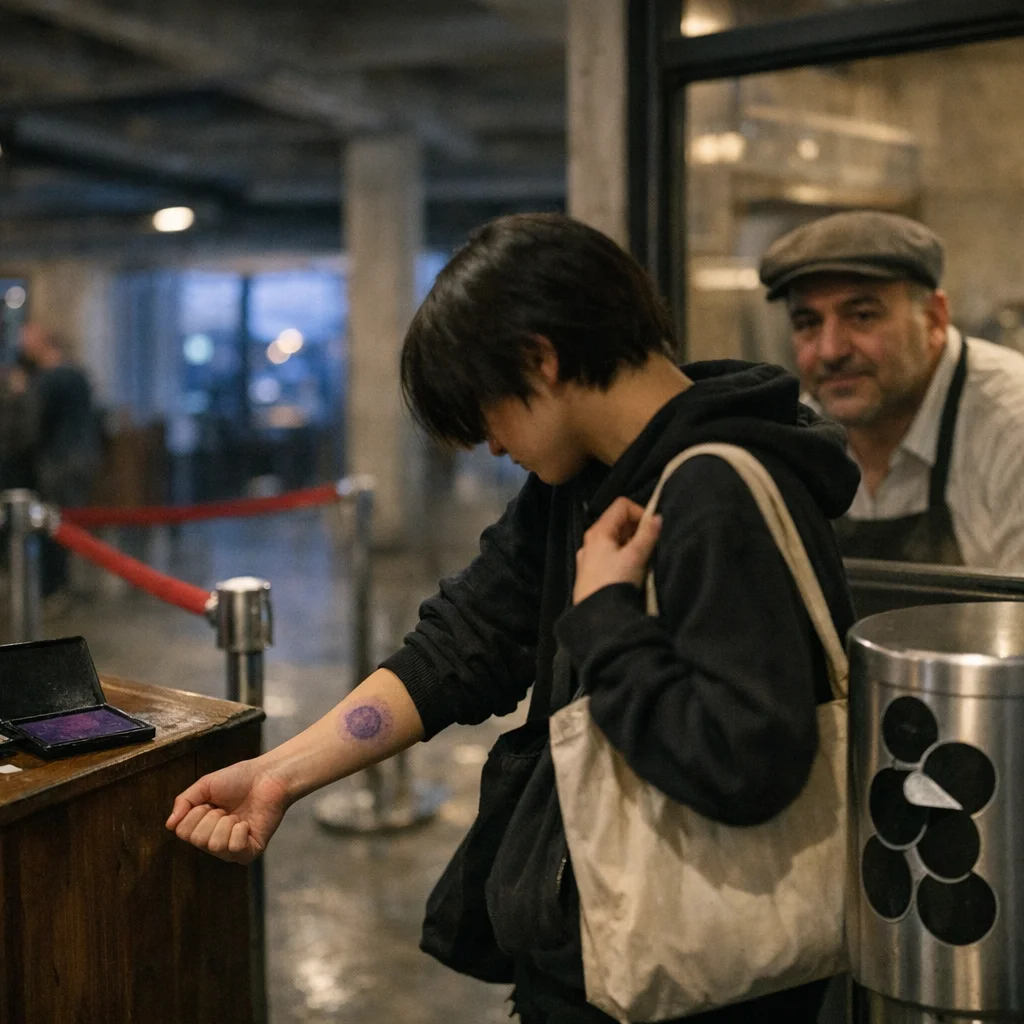
On Thursday, shortly before noon, the Bezirksamt Mitte published a regulation that will require every new residential or commercial building permitted after March 1 to include a designated "waiting area" in the lobby modeled on the city's famous nightclub queue rituals.
The rule, attached to a larger fire-safety and social-design package, lists recommended features: a velvet rope, a single-file queuing lane, a staffed "ink stamp" desk, and a dispenser for adhesive camera-cover stickers next to the concierge. The sample schematic submitted with the decree shows an industrial concrete foyer, high ceiling, and dimmable lights — architecture critics call it "power-plant minimalism for elevators."
"We are not legislating taste," said Claudia Hölz, head of Stadtplanung at Bezirksamt Mitte, in a statement at Reinickendorfer Allee 14. "We are standardizing a ritual the city already performs spontaneously. This is about managing queues, preventing conflicts, and stimulating local commerce." Hölz added the policy was informed by consultations with nightlife operators and an urbanist panel that consulted Walter Benjamin's notes on flânerie for atmospheric guidance.
Local reactions in Wedding were predictably conflicted. Mehmet Kaya, 58, who runs Kaya Bäckerei next door, said he appreciated anything that "keeps people from blocking the doorway at 6 a.m. with their expensive backpacks." He also suspected landlords would use the feature as a selling point: "They'll sell 'authentic waiting' like a balcony."
Sofia Petrov, 29, a barista at Commons (Reinickendorfer Allee 18), called the rule "a performative solution to congestion created by performative residents," noting the irony of a regulatory body formalizing club rituals precisely as long-time tenants are priced out. "They want us to reproduce mystique in the lobby while charging for views of it," she said with a smile that had both amusement and resentment.
Architects and developers have three months to submit adaptation plans. Several firms already offered add-on packages: stamp kiosks that ink only dark clothing, and app-integrated queues that will text you when your 'entry' phase begins. One developer pitched stamped membership as a revenue stream.
Dr. Anke Weber, an urban sociologist at TU Berlin, warned that the policy risks codifying exclusion under the guise of design. "It is spectacular urbanism — Debord with a concierge," she said. The decree does create smaller bureaucratic pleasures: a new inspectorate, an annual "queue compliance" certificate, and a long and arduous entry process now made official. Officials insist it's about safety and social order; critics say it's about packaging nightlife for condo sales. Either way, the city now has a firm grip on how people wait.