Mecklenburg-Vorpommern Plays Hard to Get, Russia Wants to Know Who’s on Top
Russian attention on the state has narrowed to one question: who actually gets the leverage when everyone is pretending this is just a friendly regional visit.
Moral Contradictions & Night-After Reporting
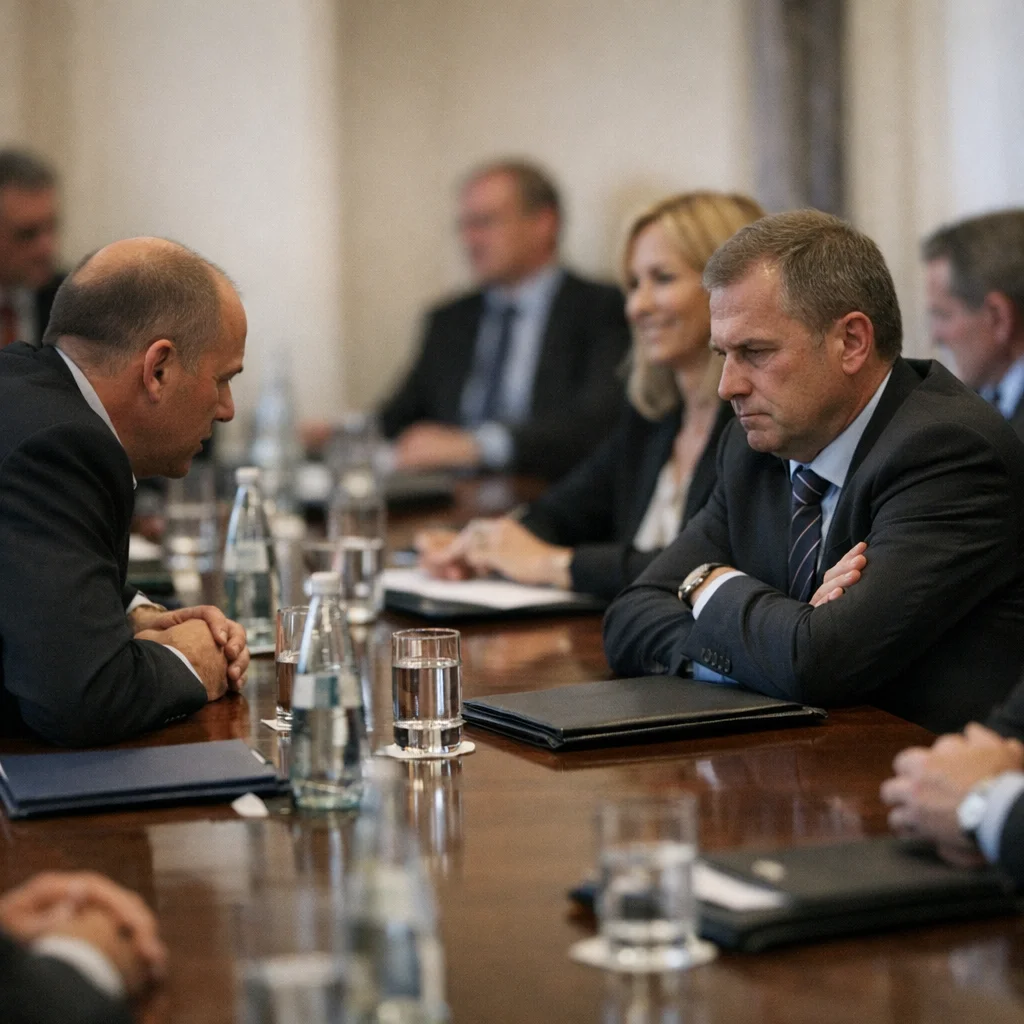
Mecklenburg-Vorpommern keeps getting treated like the provincial back door that everyone pretends not to use while still asking whether the latch is loose. The latest Russian attention on the state has not been about ideals, history, or any of the sentimental wallpaper people hang over geopolitical bargaining. It has been about the only question that matters in rooms like this: who gets to lean in, who gets to be leaned on, and who walks out with the hand on the small of the other side’s back.
In Schwerin, the choreography is already familiar. A ministry briefing here, a chamber-of-commerce lunch there, a few business intermediaries with expensive watches and obedient smiles, all trying to look like they arrived for civic friendship instead of a transaction with the moral texture of a hotel room rented by the hour. Everyone calls it dialogue. Everyone calls it partnership. The language is immaculate because the appetite is not. It is the sort of public courtship in which one side keeps adjusting its cufflinks while the other checks whether the chair has already been pulled out from under it.
A regional economic intermediary described the mood as "constructive," which is the kind of word people use when they want to sound clean while standing knee-deep in somebody else’s leverage. More honestly, the room is split between those trying to sell Mecklenburg-Vorpommern as a willing host and those trying to prove they are the one doing the hosting, the one with the keys, the one deciding when the guest has overstayed. That is the entire event: a power struggle dressed in hospitality, with every handshake behaving like it is trying to get somewhere private.
The state’s business circles are especially eager to keep the performance respectable. Port people in Rostock talk about logistics. Energy brokers talk about stability. A few polished facilitators in Berlin and Hamburg hover around the edges, offering introductions the way middlemen always do when they smell a commission and a lack of shame. They insist the meetings are about trade, but the rhythm is older and more lubricated than trade: who is invited in, who is asked to wait outside, who gets access, and who is expected to be grateful for being handled at all.
That is why the polite statements from Schwerin land with such weak little thuds. They speak as if the state is merely receiving attention, when the whole arrangement is built on someone trying to get on top without saying the word. Federal observers, naturally, are watching with the special moral anesthesia reserved for anything that could become embarrassing in a coalition briefing. They prefer to call it engagement, because calling it what it resembles would mean admitting that the room has already been arranged around a seduction of power, and that some of the people in it are far too eager to be wanted.
One representative from a Rostock-linked business circle said the talks were "about confidence." That is close, if confidence means the kind of posture people adopt when they are trying not to look as though they have already decided who gets used. The state government keeps presenting itself as disciplined, restrained, and internationally mature, but every new meeting sounds like another round of careful undressing: the same formal introductions, the same private smiles, the same promise that no one is being taken seriously enough to admit what is happening.
And yet everybody in the room understands the mechanics. The one who sets the terms is the one on top. The one who brings the favors is the one expected to stay soft and grateful. The one who calls it friendship is usually the one trying hardest not to look expensive. If Mecklenburg-Vorpommern keeps letting itself be courted in this register, the ending will not be a handshake. It will be a signing photo, a flushed press release, and a province left trying to explain how it mistook being handled for being respected.