Midnight Confessions at Müllerstraße Späti: Cheap Beer, Cheaper Therapy
At Müllerstraße 148 in Wedding, a kiosk has doubled as a makeshift counseling room; customers swap bottles and burdens while the Bezirksamt deliberates.
Kiez Features Reporter
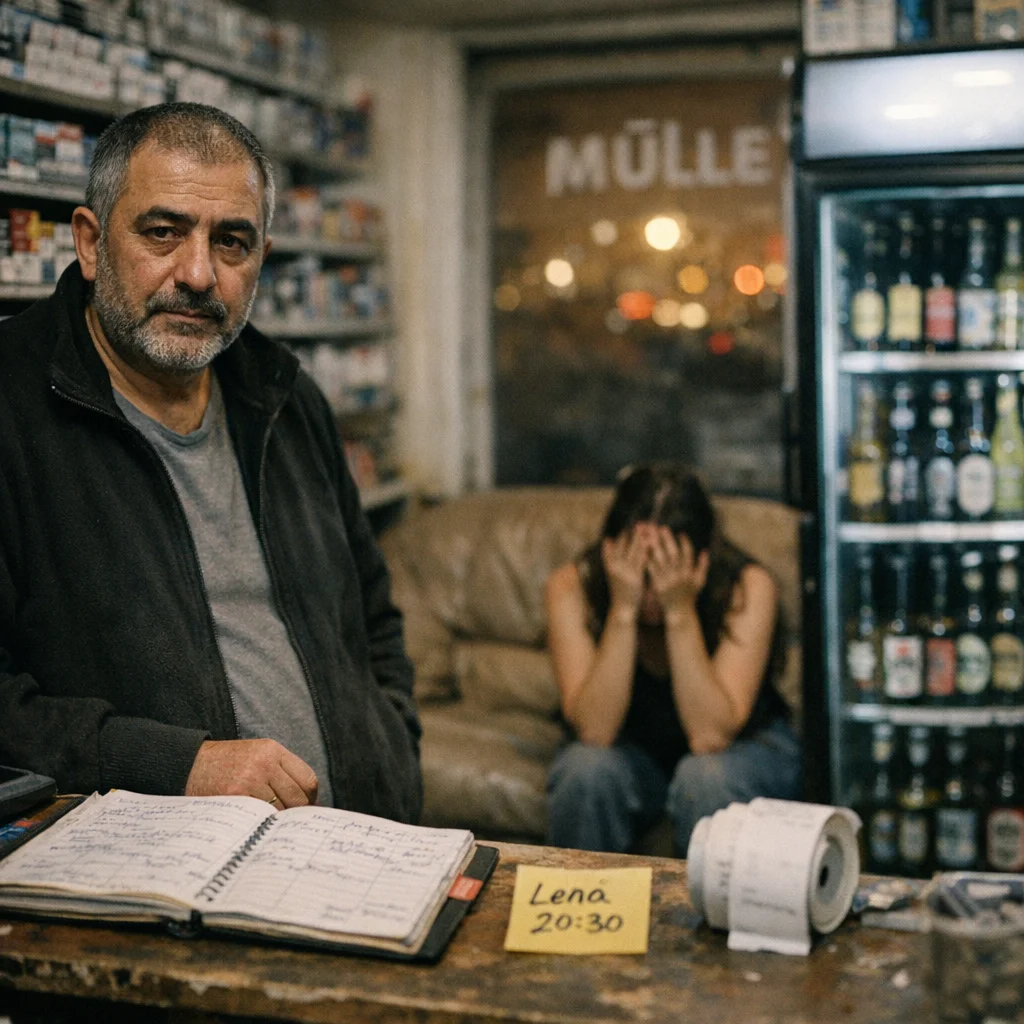
On Thursday, Feb. 5, at 11:03 p.m., regulars at the Späti "Hasan & Co." on Müllerstraße 148 watched a young woman leave with a receipt for beer and a handwritten referral to "Lena — 20:30, back room." The receipt, taped to the till beneath a loyalty sticker, has become a neighborhood itinerary.
Owner Hasan Yilmaz, 58, who emigrated from İzmir in 1989 and runs the kiosk with his daughter Emel, 27, said the arrangement began as a favor. "She came three times after the protests and sat on the crate behind the sweets, and people started staying to talk," Yilmaz told The Wedding Times. "Now people ring the bell, buy a candy, and tell their life. It pays a rent month."
Lena Kurz, 29, a self-described "trauma-informed coach" who posts short clips on Instagram under @lena.heals, conducts sessions in the narrow storage nook behind the refrigeration unit. Kurz said she charges on a sliding scale: "Two euros for a check-in, twenty if you want real work. I do a deep dive into the matter, then we walk out. People prefer it to a waiting room." Kurz declined to provide formal qualifications.
Neighbors describe a surreal mix: Turkish grandmothers buying ayran at 9 a.m., startup workers booking 30-minute slots at 9 p.m., and a couch borrowed from a nearby WG wedged next to the cigarette display. "On Tuesday my neighbor cried so loud the Späti closed ten minutes earlier than usual," said Sabine Krause, 42, who lives across the street at Müllerstraße 151. "It’s comforting and weird."
According to Hasan, 127 sessions took place between Dec. 1 and Feb. 1, mostly between 8 and 23 (local time). The business effect is measurable: beer sales up 18 percent, energy drink sales down 5 percent. There are costs, too. On Feb. 4 the Bezirksamt Mitte's Gesundheitsamt sent a warning letter citing unlicensed practice and improper use of a retail permit; case number 2026-4/Späti.
Anna-Lena Vogt, inspector at Gesundheitsamt Mitte, told The Wedding Times: "We understand informal support networks, but medical and psychological services must meet standards. We're exploring options: formal registration, training offers, or enforcement." Vogt said her office prefers remediation to closure.
Some longtime customers bristle: "It feels like therapy is being sold in the same place as cigarettes," said Mehmet Arslan, 67, who has bought his paper here since 1996. Others see a necessary tenderness. "This is a Foucault heterotopia — a place of otherness where normal rules bend," observed urban sociologist Dr. Karla Hertzig, laughing while lighting a cigarette outside the kiosk. "It’s penetrating the malaise of the neighborhood and getting into tight spaces that clinics cannot reach."
For now, the couch remains, the receipt book grows, and Wedding continues to trade its comforts in unexpected currencies. Hasan sums it up plainly: "We are selling more than snacks now — we are selling listening. It is small, but it helps."