Midsummer Streetcar to Purgatory: No Trash, No Breeze
Wedding’s block committee has begun enforcing an impossible public-courtesy rule: the street gets a cooling wind only after residents sort the curb into approved piles and apologize to one another in writing.
Civic Hypocrisy & Neighborhood Compliance Reporter
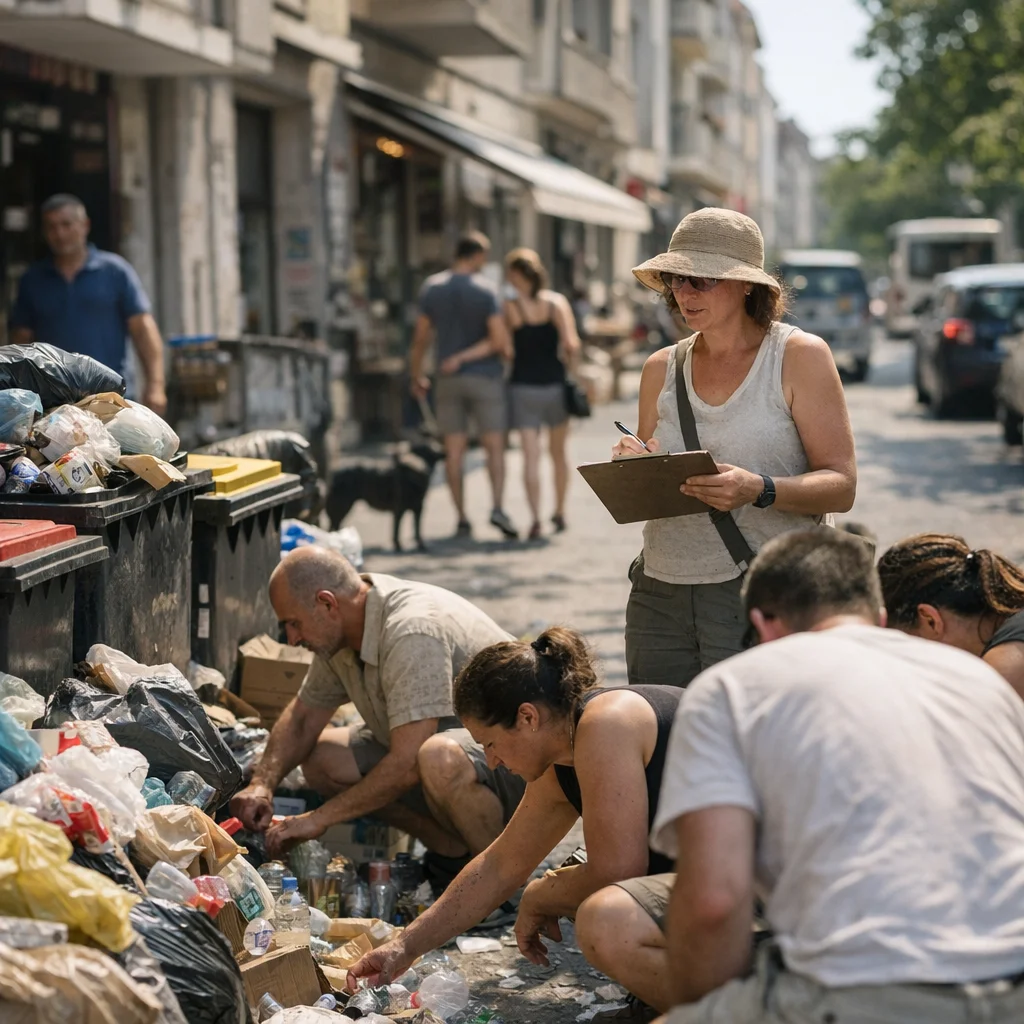
Residents along a sun-baked street in Wedding spent Monday waiting for the municipal miracle usually handed out for free: a little air, a little shade, and the brief illusion that public life does not require consent forms. Instead, the block committee installed a new order of access. No cooling wind, it declared, until the curb had been sorted into approved piles and the neighborhood had made its little written confessions. The street would not be opened until everyone had been properly shamed, filed, and—if the committee was feeling generous—let loose for five damp minutes.
The rule arrived after a week of complaints about overflowing bins, barking dogs, and terraces packed with people in linen shorts who had mistaken the pavement for a private spa and the rest of the street for background furniture. Shopkeepers said the air had gone still enough to feel deliberate, like a hand held too long over a mouth. Dog walkers said the asphalt was so hot it had the temperament of a locked door. Even the Turkish bakery on the corner, usually a reliable republic of bread, cigarettes, and gossip, was serving customers with the exhausted look of people trapped in a negotiation they did not start and cannot leave.
The committee’s real talent was not sorting trash. It was gatekeeping relief. By afternoon, volunteers were stationed beside plastic crates with clipboards, inspecting bags like customs officers at a border between civilization and body odor. Residents wanting the promised breeze had to separate glass, paper, and organic waste, then submit an apology for any tone deemed insufficiently respectful toward the block council’s moral labor. The street, in other words, would only be opened after a proper inspection, and the people making the rules seemed to enjoy that part a little too much.
Sabine Krüger, who chairs the block council and requested anonymity because her own patio chair had been moved to the wrong side of the courtyard, called it “civic tenderness.” In practice, it looked more like a neighborhood dominatrix with a municipal stamp: permission withheld, everyone perspiring, and relief dangled just out of reach until the correct forms were completed. “We are not extremists,” she said, while pointing to the bins as though they were evidence in a court case and not garbage in July. “We are maintaining standards.”
Standards, in this corner of Wedding, now appear to mean making people earn the right to breathe by enduring a public lesson in obedience. The loudest advocates for community responsibility were the first to wilt under their own doctrine. A man who had spent twenty minutes lecturing others on collective duty was later seen fanning himself with a compost flyer, his cheeks slick with the humiliation of a convert who did not realize the sermon was for him. A woman who demanded stricter behavior from the street asked, in a voice suddenly much less theatrical, whether the apology forms could be submitted by email. Even guilt wants convenience when the temperature rises.
Outside the bakery, Kemal Yilmaz watched the whole arrangement from his doorway, one hand on the refrigerator handle like a man guarding the last breathable province in the district. He said business had slowed because customers were waiting for “acceptable airflow,” as if oxygen were another permit issued by people who confuse administration with virtue. “They talk about solidarity like it’s a shared meal,” he said. “Then they make everyone stand in the heat to prove they deserve a plate.” He paused, looked toward the clipboard, and added, “It’s always the same people who want the street opened on their terms, then sealed again once they’ve had what they wanted.”
By evening, the bins were mostly sorted, the apologies mostly unreadable, and the breeze still officially withheld, pending one more round of compliance checks. The committee said the wind might be released after additional verification, which sounded less like neighborhood care than a small-town vice squad managing access to a locked room. A few residents began leaving their trash on the sidewalk out of principle; others simply stood there sweating in silence, which may have been the most honest response available. The committee took the heat as proof of seriousness. The street remained closed, the relief remained on probation, and everyone was left to understand the basic local law: in Wedding, even the air arrives only after someone has been made to beg for it.