Mike Tyson’s Joint Meets the Berlin Welcome Desk
The ex-champ lands in Wedding like a warning label with teeth, and the city’s cultural hosts scramble to turn a stoned celebrity appearance into proof that they are still edgy, inclusive, and internationally relevant.
Neighborhood Commerce & Low-Grade Dread Reporter
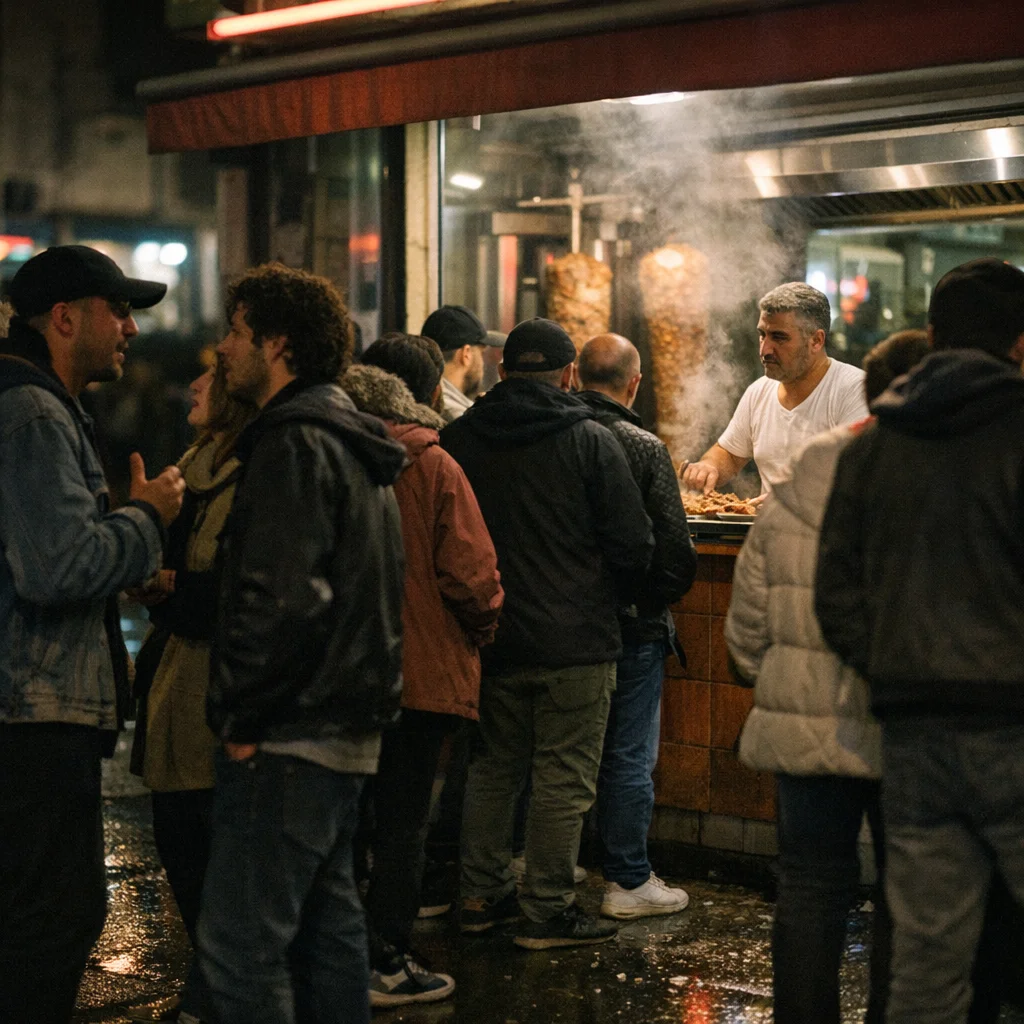
A late-night döner ranking in Wedding turned ugly on Tuesday when a line outside a Turkish grill on Müllerstraße split into factions over what counts as a proper kebab, who gets to judge one, and whether any of the critics have ever worked a real shift in their lives.
By around 10:30 pm, the queue had become a small parliament of drunk certainty. One camp defended the classic meat-stack-and-grease model, another demanded “cleaner” toppings with the missionary zeal of people who think cumin is oppression, and a third group insisted they were merely there for “research,” which is Berlin for arriving hungry, superior, and underdressed. The owner, Cem Kaya, watched the whole thing from behind the counter with the dead-eyed patience of a man who has seen three generations of moralists attempt to improve his margins.
“I have customers who want it traditional, customers who want it vegan, and customers who want to photograph it like a crime scene,” Kaya said, wiping his hands on a towel that had already surrendered years ago. “Then they argue for twenty minutes and still ask if I can make it cheaper. This city wants a thesis with onions.”
The fight began after a man in a linen jacket compared two nearby shops and declared one “more authentic,” a word that should be taxed by weight and administered only under anesthesia. He had the soft, lubricated confidence of the grant-fed bohemian: the kind of man who rents a room in someone else’s neighborhood and then speaks about “local texture” as if he discovered it between emails. A woman beside him, who said she was from Prenzlauer Berg but “emotionally West Berlin,” objected to the ranking and accused him of fetishizing hardship the way some people fetishize bad decisions—hard enough to hurt, not hard enough to count as labor.
Then came the usual little academy of shame. A student with a tote bag and the smug, underfed posture of a junior critic invoked Roland Barthes, then immediately asked for extra sauce as if theory were supposed to come with garlic. A man from Friedrichshain, dressed like a cargo-cult electrician, announced that “food is political” in the same tone he probably uses to explain himself in bed. The owner’s nephew, who had been stacking meat since before any of them learned to perform interest, muttered that everyone suddenly loved the neighborhood once it came with a bike lane and a photo op.
There was, naturally, municipal dignity in the background pretending to be neutral. The district office, reached for comment, said food vendors are free to operate so long as they meet hygiene rules, noise limits, and fire safety requirements, which is the bureaucratic version of putting a scented candle on a landfill. A spokeswoman added that the office had received no formal complaint, only “one handwritten note and several aggressive voice memos about bread quality.” Translation: Berlin’s integration theater works best when the city can point to the kebab shop and declare the problem solved, even while leaving the rent, paperwork, and licensing rituals to rot in the back office like unrefrigerated doctrine.
This is the city’s favorite obscenity: to dress up ordinary appetite as cosmopolitan virtue and then call the performance inclusion. The district marketing people adore Wedding because it photographs as rough around the edges, which is a polite way of saying they enjoy the neighborhood as a prop. The cultural boosters arrive with their tote bags and their little moral erections, eager to prove they are not like the old racists, only to reveal that they, too, want to consume the place without being touched by it. They do not want neighbors. They want a sanctioned thrill.
Outside, the line kept moving, because hunger is the only ideology that still functions in this city. A delivery rider said the real ranking system is simple: the shop that still has hot meat after midnight wins, and anyone debating plate composition is probably not paying enough for rent or enough for sauce. That was greeted with outrage from people who had spent twenty minutes building a personality out of late-night snack opinions.
By the time the crowd thinned, the winners had not been decided, only exposed. Everyone went home carrying the same greasy receipt of self-importance, and a fresh suspicion that in Wedding, as in Berlin more broadly, the city does not merely tolerate performance. It funds it, brands it, and then asks the workers to smile while the audience mistakes appetite for virtue.