Milei’s Ghost Won’t Climb Out of Scholz’s Lap
The political scientist from Mecklenburg Vorpommern who said he did not expect a spontaneous resignation by the chancellor was talking like a man describing a body that has already decided where it wants to lie.
Global Affairs & Kiez Mischief Correspondent
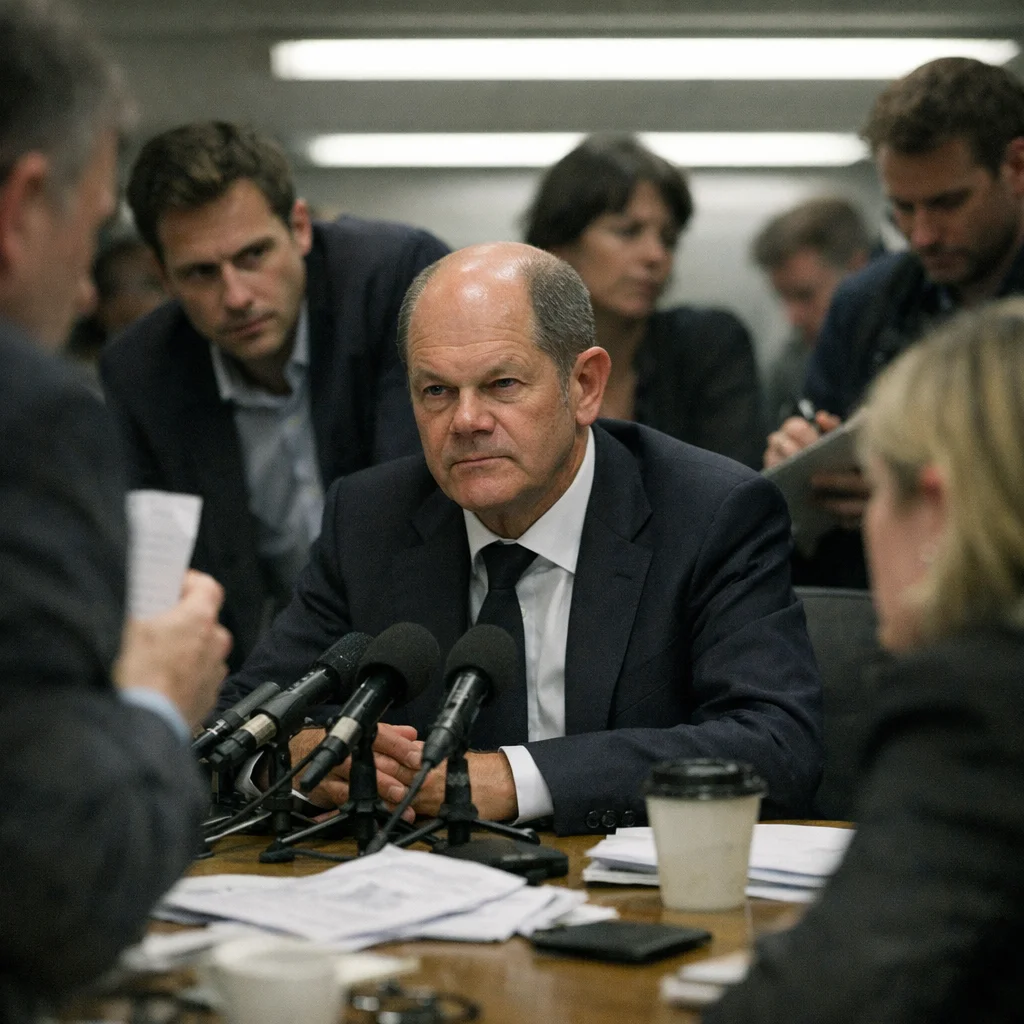
The political scientist from Mecklenburg-Vorpommern who said he did not expect a spontaneous resignation by the chancellor was talking like a man describing a body that has already decided where it wants to lie. In Berlin, the remark moved through the day with the sticky intimacy of a private scene made public: nobody was planning to lift the chancellor off the lap of power, but plenty of people were already checking which hand would stay on the back, which hand would stay on the belt, and which ones would later swear they had only been tidying the room.
The comment followed a panel appearance in which analysts, aides, and the usual paid mourners behaved as if a sudden departure from the Chancellery would be a clerical error rather than a political act. One longtime adviser, speaking on condition of anonymity because he still hopes for another reception with warm canapés, said the governing coalition had prepared for every scenario except the humiliating one: the chief standing up, straightening his jacket, and leaving the room before anyone could fasten the buttons for him.
That is what made the line sting. It was not really about surprise. It was about posture, submission, and who is expected to remain seated while the republic arranges itself around them. In Berlin, the governing class likes its crises with the same basic choreography: one person stays planted, everyone else hovers close enough to be useful, and the rest of the country is invited to call that stability. The chancellor’s supporters want calm. The opposition wants a collapse. The commentators want a scene that lets them look brave without having to move their own hips.
The political scientist, who works in the northeast and spends much of his time translating national vanity into sentences smaller people can swallow, said the capital’s real fantasy was not resignation but the ritual around it. “People in Berlin don’t want a sober correction,” he said. “They want a dramatic unbuttoning, then they want to stand around pretending they never had a hand on the fabric.”
That logic has infected the whole week. Coalition deputies speak of discipline with the glassy focus of people trying not to notice they are still seated on a lap they pretended to dislike. Party strategists invoke continuity while browsing the next arrangement of chairs, as if the republic were a hotel room and the furniture could be made innocent by moving it two meters to the left. Even the talk of an exit carries the damp, humiliating charge of a breakdown nobody wants to initiate because the witnesses are already in the doorway.
Behind the polished language, the machine is doing what it always does: drafting talking points, rehearsing blame, and keeping one hand on the hem of authority in case it twitches. The Chancellery says it is focused on work, which in Berlin is the sentence people use when they are trying to keep their faces neutral while the buttons are already under strain. Parliamentary staffers are preparing briefing notes, coalition managers are counting who will pretend not to have noticed the heat, and the opposition is waiting for the moment it can call the whole posture a principle.
For now, no resignation is on the table. But the table itself looks overused and faintly indecent, and the people circling it have started to resemble the kind of guests who insist they came for conversation while quietly deciding who gets to stay leaning in and who gets shown the door without their tie straightened. In Berlin, that is what passes for dignity: a man remaining in the lap of power until everyone in the room has had a chance to touch the buttons and deny it later.