Minus-Freeze Transit Philosophy: Why Wedding Is Discovering “Walking” Isn’t Just a Lifestyle Choice
With BVG staff on strike and passengers complaining, the real public service is a sidewalk seminar on class, weather, and whether dignity is refundable.
By Jax Delayski
Transit Meltdown & After-Hours Logistics Reporter
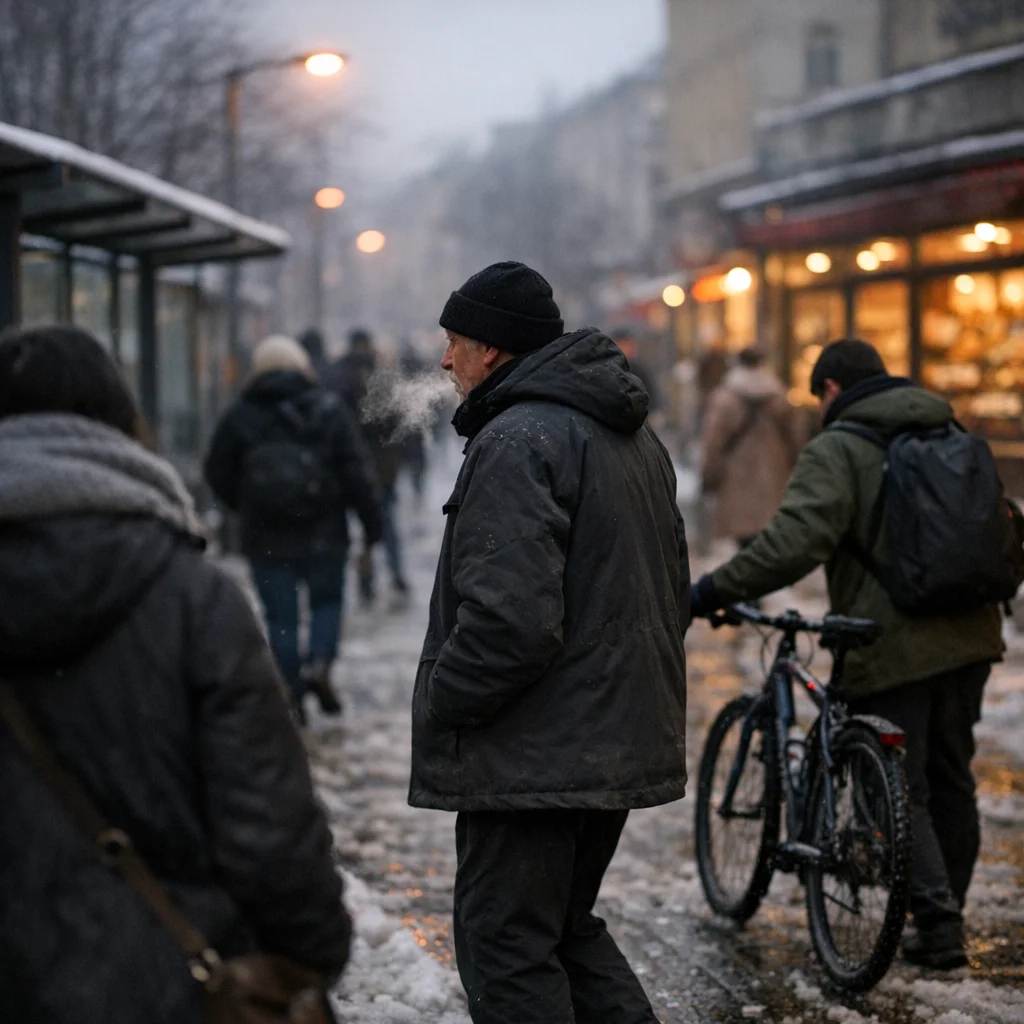
The Strike, the Frost, and the New Berlin Consensus: Suffer Better
The news cycle says BVG workers are striking in freezing weather, passengers are furious, and a union spokesperson is pushing back. In other words: Berlin has achieved its highest civic art form—mutual contempt with administrative structure.
In Wedding, where old rent trauma meets new “intentional discomfort,” the strike isn’t just a labor dispute. It’s a citywide immersive performance piece called Late Capitalism: Extended Cut (Director’s Freeze). Everyone plays their part:
- Longtime riders perform the ancient ritual of shouting “I pay taxes” at an empty street like it’s a deity that used to answer prayers.
- New arrivals insist it’s actually “an opportunity to reconnect with the urban fabric,” then promptly reconnect with an Uber.
- Union people remind everyone—correctly—that “essential” doesn’t mean “treated like a human being.”
Passengers Demand Mobility; BVG Staff Demand a Paycheck; Everyone Demands an Audience
Somewhere between Osloer Straße and the damp borderlands of reality, Wedding residents are re-learning a basic truth: when a system collapses, the people with the least money become very mobile—just not in the way LinkedIn likes.
A man in a puffer coat (brand: Moral Superiority) complained to me that striking during frost is “hostage-taking.” He said this while stepping around a woman hauling groceries and a kid on a scooter through air that felt like it had been personally sharpened. I asked if he’d ever met a hostage. He said no, but he once got “locked out of a co-working space,” and that changed him.
Meanwhile, Turkish bakeries on Müllerstraße quietly kept feeding the walking masses, watching the newcomers discover what older Berliners already knew: when public services wobble, carbs become policy.
Wedding’s New Commuting Economy: Being Cold, Loud, and Right
As commuters stomp through slush, a parallel economy emerges:
- Mutual aid for people who can’t afford missed shifts: real, grim, and un-instagrammable.
- Moral theater for people who can: long speeches about “solidarity” delivered from the warmth of a rideshare, a posture that would’ve made Bertolt Brecht roll his eyes so hard he’d generate renewable energy.
- Landlords updating ads from “well-connected” to “excellent for cardio,” a phrasing that feels… hard to swallow.
The strike has also produced the kind of accidental intimacy Berlin claims to hate. People are sharing taxis, sharing sidewalk space, and sharing the same disgust for each other’s boots. There’s a lot of stiff resistance out there, but it’s oddly communal—like Rousseau, if he’d been trapped at a broken tram stop with a soggy backpack and a rising sense of doom.
The Union’s Counterpunch: “If You’re Angry, Try Being Broke”
The union response to passenger anger—essentially, “we’re not doing this for fun”—lands differently depending on your tax bracket.
If you’re a salaried knowledge worker in a polished beanie, a strike is a podcast topic. If you clean offices, stock shelves, or deliver anything, it’s the moment your budget gets penetrated by physics.
Here’s what nobody wants to admit: Berlin has spent years selling itself as a place where “systems don’t define you.” And yet the second one system stops moving, half the city becomes a miserable diagram in an intro urban studies lecture—circulation halted, inequality revealed, and everyone suddenly a transportation theorist.
Walter Benjamin wrote about walking as a way of reading the city. Wedding is currently being read at speed, with windburn.
How It Ends (It Doesn’t)
Eventually the strike ends, trains resume, passengers swear they’ll buy a bike (they won’t), and Berlin congratulates itself for “having a conversation” about labor—right before returning to the only reliable timetable: rent going up.
Until then, Wedding offers its official winter itinerary: walk, complain, moralize, and discover—again—that your principles get slippery when your toes go numb.