Mirko Denic Finds Salvation in a Neukölln Bar Where Every Song Is Already Over
At a Weserstraße basement, the playlist is a graveyard by policy—then a band’s reunion threatens the entire business model and one man’s carefully managed despair.
Gentrification Autopsy Reporter
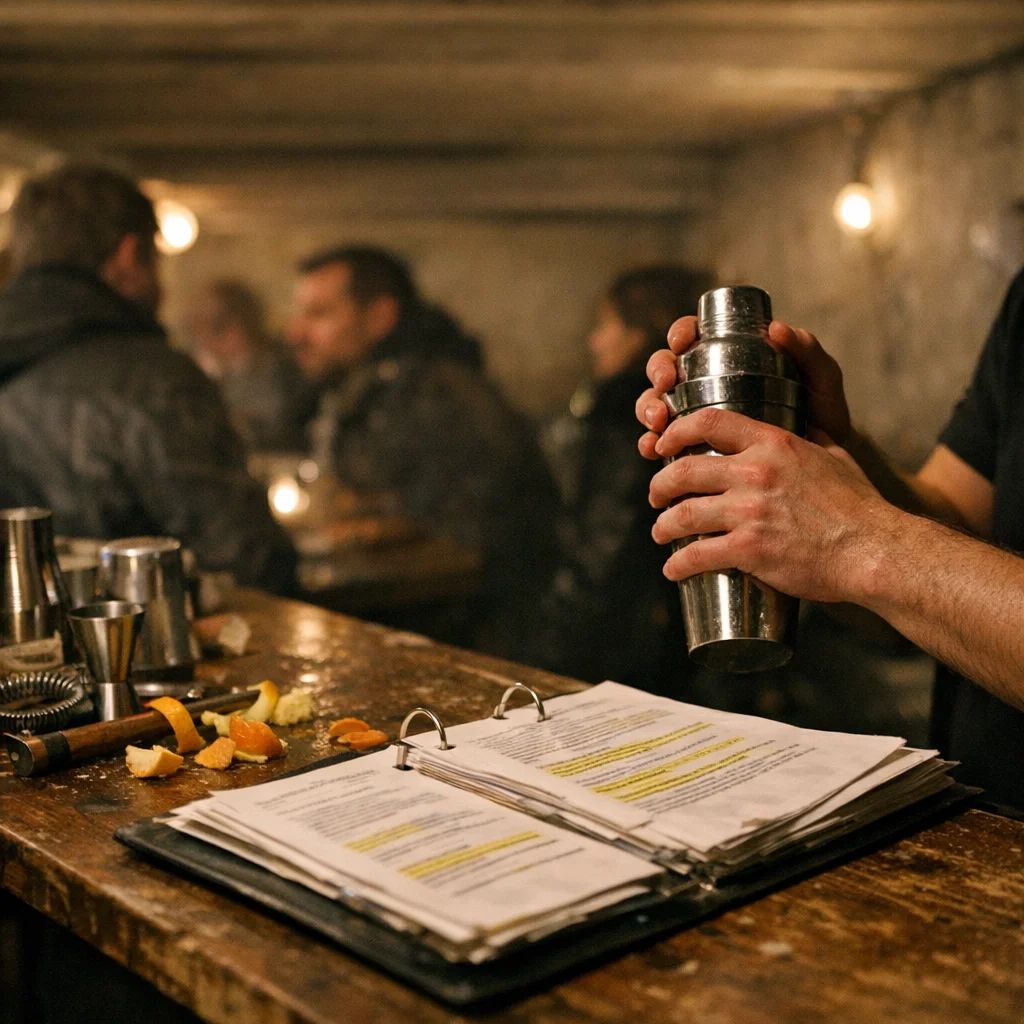
NEUKÖLLN — On Wednesday evening, shortly after 9 pm, Mirko Denic, 34, arrived at Split/End, a basement bar at Weserstraße 41 that advertises a simple rule: it only plays music from bands that have broken up. Denic, a copywriter who lives near Gesundbrunnen but “needs a place where hope isn’t serviced,” said the policy is the closest thing he has to a stable relationship.
The bar’s owner, Lara Voss, 39, calls it “an anti-cash-grab sanctuary for art that can’t be rebooted.” The overlooked detail is taped behind the counter next to the bottle opener: a three-ring binder labeled “CONFIRMED SEPARATIONS,” containing printed breakup statements, screenshots of band announcements, and—according to staff—one divorce filing “because it felt thematically consistent.”
“It’s not nostalgia,” Voss said, keeping a firm grip on a cocktail shaker. “It’s consumer protection. People come here because they don’t want to be emotionally upsold.”
The system worked until the triggering incident early Thursday morning, when a patron requested a track from an indie band whose members reportedly reconciled onstage in London last week. Bartender Cem Yilmaz, 28, said he froze mid-pour. “We had a separation on file,” he said. “Then someone showed me a fresh photo of them hugging. The room went quiet like somebody read the terms and conditions out loud.”
By lunchtime, Denic and other regulars had formed a loose “listening committee” on the sidewalk, arguing whether a reunion counts as betrayal or simply late-stage capitalism with guitars. One woman in a pristine black turtleneck described the bar as “basically a Foucault seminar with better lighting,” then asked if committee membership came with a stamp.
The escalation came that evening when Voss instituted a temporary “cooling-off protocol”: any artist with credible reunion rumors would be removed from rotation for 30 days, “pending emotional audits.” Several patrons left, citing “stiff resistance to uncertainty” and the discomfort of being forced to enjoy something alive.
An employee at the Neukölln public order office, reached by phone, confirmed the venue is not violating noise rules. “We do not regulate whether the music has died spiritually,” the employee said. “We only measure decibels.”
By Friday night, Voss had posted a handwritten notice at the stairwell entrance listing prohibited categories: reunited bands, farewell tours, and “anniversary editions.” Denic, watching two newcomers photograph the sign before entering, said the place is becoming what it claims to oppose.
“It’s like a bar that promises closure,” he said. “And then keeps edging you with exceptions.”
Voss said she is considering a compromise: a weekly hour of songs by bands that are “actively breaking up in real time,” provided patrons can submit evidence. The first submissions—screenshots of group chats, venmo notes, and one passive-aggressive Substack—are already under review.