Mitte Greens Demand One Last Push Before They Approve Your Bike Lane
Longtime activists who lecture newcomers on authentic neighborhood living now require developers to fund private courtyard yoga sessions as proof of ecological commitment before any construction permit clears.
Civic Hypocrisy & Neighborhood Compliance Reporter
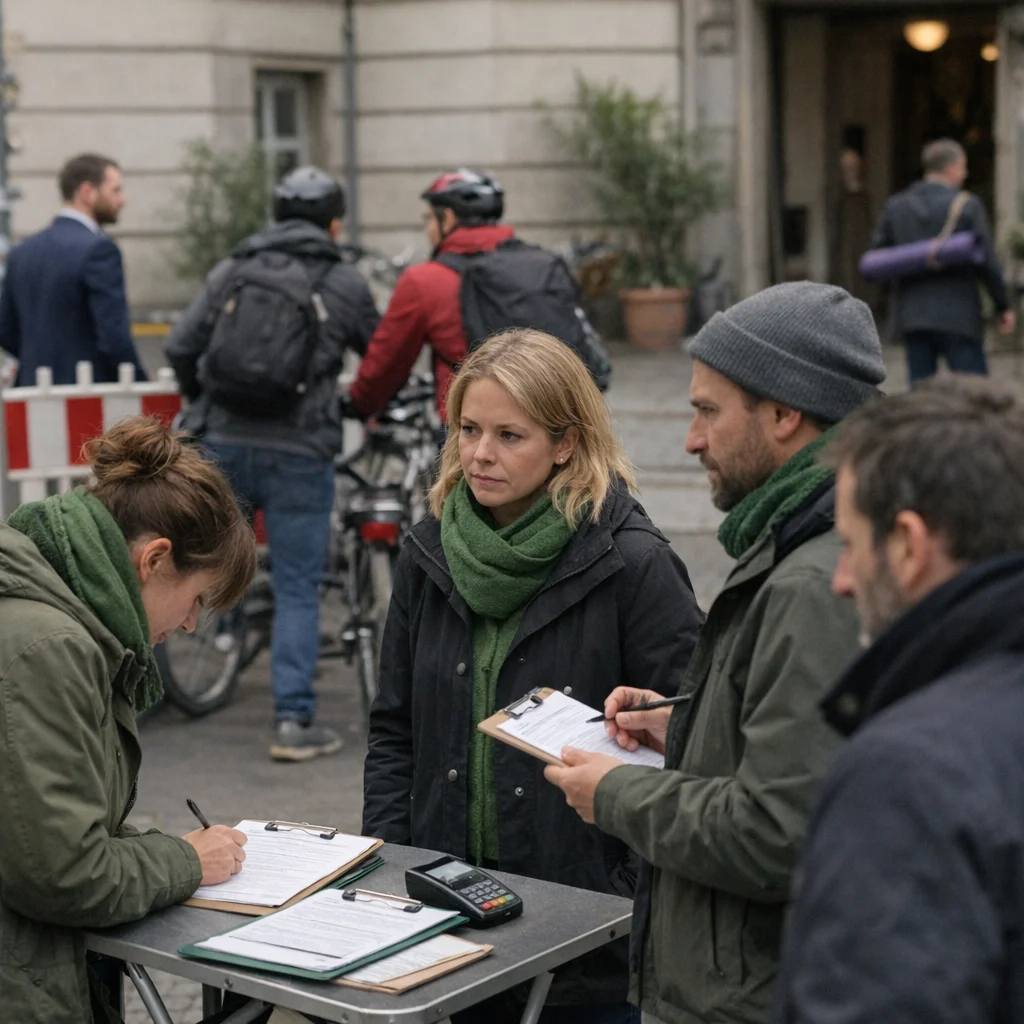
The district’s bike-lane crusade has finally found its true religion: invoice generation.
In Mitte, the people who used to glue themselves to trunks to stop luxury condos now sit in committee chairs deciding which permit gets to breathe and which one gets to sweat. The worship language is all climate, inclusion, and neighborhood care; the mechanics are older and uglier. A bike lane, a courtyard repaving, a little “mobility enhancement” — each project now has to pass through the same tight little gate where green virtue is counted, inspected, and billed.
Residents and builders say the ritual has a fixed choreography. First comes the public hearing, where the same familiar district regulars nod solemnly about emissions and “responsible development.” Then comes the private follow-up: a request for a funded workshop, a compensated moderation slot, a funded courtyard yoga series, or some other soft-bodied tribute dressed up as ecological conviction. No one calls it a shakedown because shakedowns in Berlin wear linen blazers, bring reusable bottles, and speak in grant language.
The bill rarely lands on paper with a threatening flourish. It arrives with the tidy politeness of a meeting invite: a service agreement, a sponsorship package, a “neighborhood stewardship contribution.” The developer, predictably, is expected to smile through it. He waits in the anteroom while committee members discuss authenticity, then signs the same paperwork that also pays the board member’s consulting side hustle, the ex-volunteer’s “facilitation” company, and the eternal ecosystem of friends who found principle only after they found an invoice template.
At a tense meeting near Rosenthaler Platz, a district planner insisted the process remained “fully transparent,” which in Berlin usually means the corruption has been laminated. A resident who has lived there long enough to remember when the area still had grocery stores instead of concept groceries said the whole scene looked like “moral language with its hand down your pocket.” Outside, a cyclist trying to dodge delivery vans and tourists on rental bikes said the city’s newest traffic pattern was obvious: the lane stays theoretical until somebody pays to be spiritually approved.
The old green pose was that the neighborhood had to be protected from careless construction. The current version is more efficient. The gatekeepers do the protecting, the builders do the waiting, and the public is left inhaling exhaust while a small class of committee aristocrats polishes its conscience and its cash flow at the same time. Every delay creates another opening, and every opening has a price. The longer the permit sits, the more the “community process” looks less like oversight than a velvet rope stretched across the district office.
The Greens involved deny any personal benefit, though the invoices keep finding their way to firms run by former board members, campaign volunteers, and the sort of local operator who can say “shared values” without laughing. The bike lane is delayed, the courtyard gets its wellness rinse, and the neighborhood learns the same lesson in a different accent: in Mitte, public virtue often just means someone else is paying to be let through.