Mitte’s Wellness Crowd Has Found the Perfect Civic Virtue: Paying Extra for Worse Service
What’s being sold as a neighborhood-friendly culture of mindful consumption is really a queue system for people who like being treated badly as long as the café uses recycled napkins.
Nightlife Identity & Self-Deception Correspondent
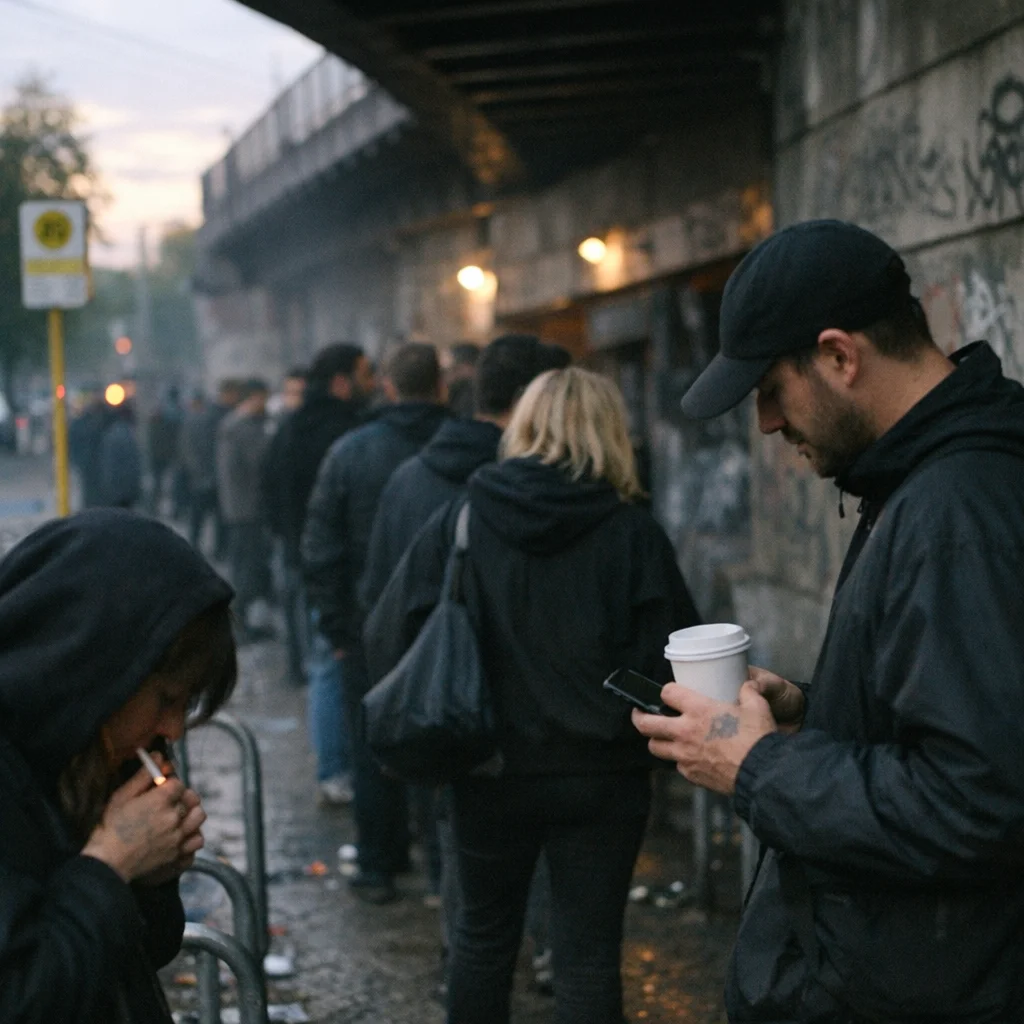
Wedding has discovered that suffering is easier to brand than solve
At first light in Wedding, the weekend does not end so much as get processed by a municipal machine that hates everyone equally. The night spills out under the bridge, into the dim gutters and the first filthy trains, where the last survivors of the evening stand around with stamped hands and expensive dead-eyed certainty, pretending they have defeated the city instead of simply being held hostage by it.
This is the neighborhood’s favorite performance now: moral exhaustion with a cocktail budget. The crowd that lectures everyone about ethics, sustainability, and “community” has learned the oldest Berlin trick—pay more, endure longer, and call the bruises a values system. They buy the lukewarm filter coffee from the place with the reclaimed wood and the recycled napkins, then treat the extra four euros like a donation to the republic of their own self-regard. Nothing says political consciousness like being overcharged by a barista in a beanie.
The setting is not accidental. Wedding has become a showroom for the city’s class theater: rent pressure pushing people north and west, wellness brands moving in like a polite infection, and every third corner re-packaged as a “local concept” for people who say they hate gentrification while renting the front row seats. The same mouths that complain about displacement are the ones who can afford to linger. They are not resisting the market; they are learning how to moisturize inside it.
One club regular said the morning crowd is “what Berlin looks like when everyone’s honest,” which is a charming lie usually told by people too wired to know when they’ve become furniture. Honest would mean admitting that the scene runs on unpaid overtime, insecure service work, and the fantasy that a weekend can substitute for a life. Honest would mean noticing that the people dancing hardest are often the ones with the least stable hours, the least stable housing, and the most elaborate stories about transcendence. The rest are just tourists in black clothes, shopping for a personality with a bassline.
The door policy helps maintain the illusion. It is sold as curation, but it works more like class sorting with better lighting. The crowd praises the venue for being selective, which is a delicate way of saying they enjoy a velvet rope as long as it is morally annotated. They want rebellion with hygiene, danger with a coat check, and enough exclusivity to feel chosen without having to look rich. The whole scene is an audition for people desperate to be misread as interesting.
Then there is the transit humiliation, the city’s least flattering truth. By the time the first BVG delays hit and the U8 starts behaving like a drunk administrative rumor, the entire fantasy of limitless nightlife comes apart at the seams. People are left standing on platforms with dilated pupils, smeared makeup, and that damp, panicked face of the overextended middle class trying to remember whether they are going home or merely changing location to continue pretending.
A Golden Gate spokesperson said the venue “welcomes the morning crowd as part of the rhythm of the city,” which is exactly the kind of sentence a place says when it would like credit for hosting the wreckage it profits from. The city loves this arrangement. The clubs generate cultural prestige, the cafes sell ethical fatigue, the landlords cash the uplift, and the rest of Berlin gets told that the mess is somehow proof of freedom.
By late morning, the whole thing has the moral elegance of a relapse with a membership card. Some people emerge with a stamp, a tote bag, and the glazed look of someone who has mistaken depletion for depth. Others leave with nothing but a ripped sleeve, a receipt, and the uncomfortable realization that they spent twelve hours in a neighborhood branding exercise and called it communion. Berlin does not reward the brave here. It rewards the flexible, the photogenic, and the comfortably miserable. Everyone else just gets handled.