Moby-Dick at the Citizens’ Office
Wedding’s permit desk has adopted a new rule: every applicant must keep waiting until an official feels personally desired enough to stamp the file.
Paperwork Trauma Correspondent
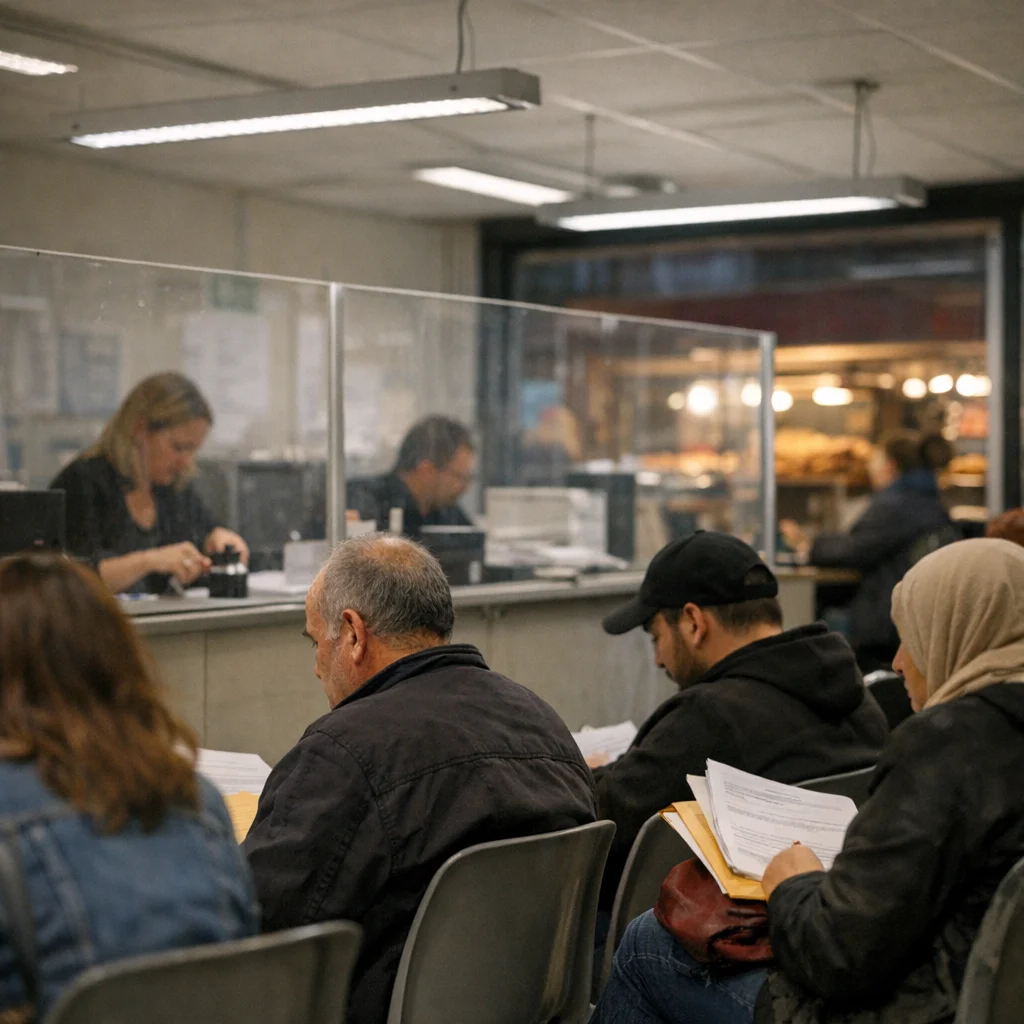
Moby-Dick at the Citizens’ Office
At Wedding’s citizens’ office, the permit desk has perfected a municipal courtship ritual in which nobody gets the stamp until the clerk has decided the applicant has endured enough withholding to look grateful. The file does not move on merit. It moves on chemistry, or something the office likes to call discretion when it wants to sound innocent and predatory at the same time.
Since last month, people applying for permits, registrations, and address changes say the process has settled into a predictable little seduction of power: hand over the forms, wait for the glance, answer the question, then wait again for the clerk to decide whether the applicant has shown enough attention, obedience, and bruised patience to deserve a signature. “Careful review,” the district office calls it. In practice, it is a slow, fluorescent striptease performed by bureaucracy against the public.
The rule is simple enough to be obscene. Bring complete documents and you risk looking too self-sufficient, which in this office reads like bad manners. Arrive confused, underprepared, or visibly flustered and you may be rewarded for the same weakness that would sink you anywhere else. The desk likes need. It likes deference. It likes making competence stand there with its hands folded while someone less prepared gets invited closer and whispered through the door.
“I had the rental contract, the registration form, the extra copy, everything,” said Samira Yilmaz, 38, who came to register a new address after moving from Neukölln. “The clerk kept telling me one more thing, one more copy, one more minute. Then the man after me leaned over the counter, smiled like he was auditioning to be remembered, and got stamped in five minutes. I was still there when they started pretending lunch was a policy.”
Other applicants described the same choreography. A student from the nearby campus said she was told her photo was “too neat,” as if preparation were an insult. A delivery driver said the employee asked him to come back after “speaking more nicely,” which in municipal language apparently means performing a little less dignity and a little more hunger. A freelance designer in a shirt two buttons too open said he had “made eye contact and understood the assignment,” then laughed as though he had discovered the oldest corrupt system in Europe.
That is the real service being offered: not administration, but access theater. People are not merely waiting for a file to be processed. They are waiting to be chosen by a clerk who has converted routine authority into a private little harem of approvals, where compliance is mistaken for charm and charm is treated as proof of worth. The whole place runs on the municipal fantasy that a stamp is not a bureaucratic action but a favor, and favors are never clean.
One employee, who requested anonymity because she “does not want to be auditioned by the entire queue,” said staff are under pressure and must retain discretion. She added that people who arrive “too polished” can seem confrontational, while those who perform uncertainty are easier to handle. In other words: the office prefers applicants who know how to beg without calling it begging.
The district office said in a statement that its procedures are designed to ensure “careful review” and “appropriate interaction.” The wording was so smooth it almost sounded embarrassed by itself. But the waiting room tells the truer story. There, every number called is a tiny act of favor, every missing stamp a refusal with a customer-service face, every request for another copy a small test of how much humiliation a person will swallow before the system decides they are ready to be let in.
Outside, on the street, the neighborhood carried on with its usual respectable exhaustion: the Turkish bakery pushing out warm bread, the vape shop glowing like a sick aquarium, the bus hissing at the curb, people from the block cutting through with groceries and folded resentment. Inside, the line kept shuffling forward in the same damp hope, as if enough patience might eventually count as consent.
By late afternoon, several applicants were still waiting for the final stamp, still trying to look desirable to a machine that only relaxes when someone gives it the feeling of being wanted. In Wedding, even paperwork now wants to be courted before it will lie down and do its job.