Narciso for Gen Z, With Dad's Cologne
Gen Z is raiding the 1990s beauty aisle, but the real scent trail leads to a more obedient kind of nostalgia: buying the smell of parental authority and calling it self-expression.
Gentrification Symptoms & Pretend-Creative Economy Reporter
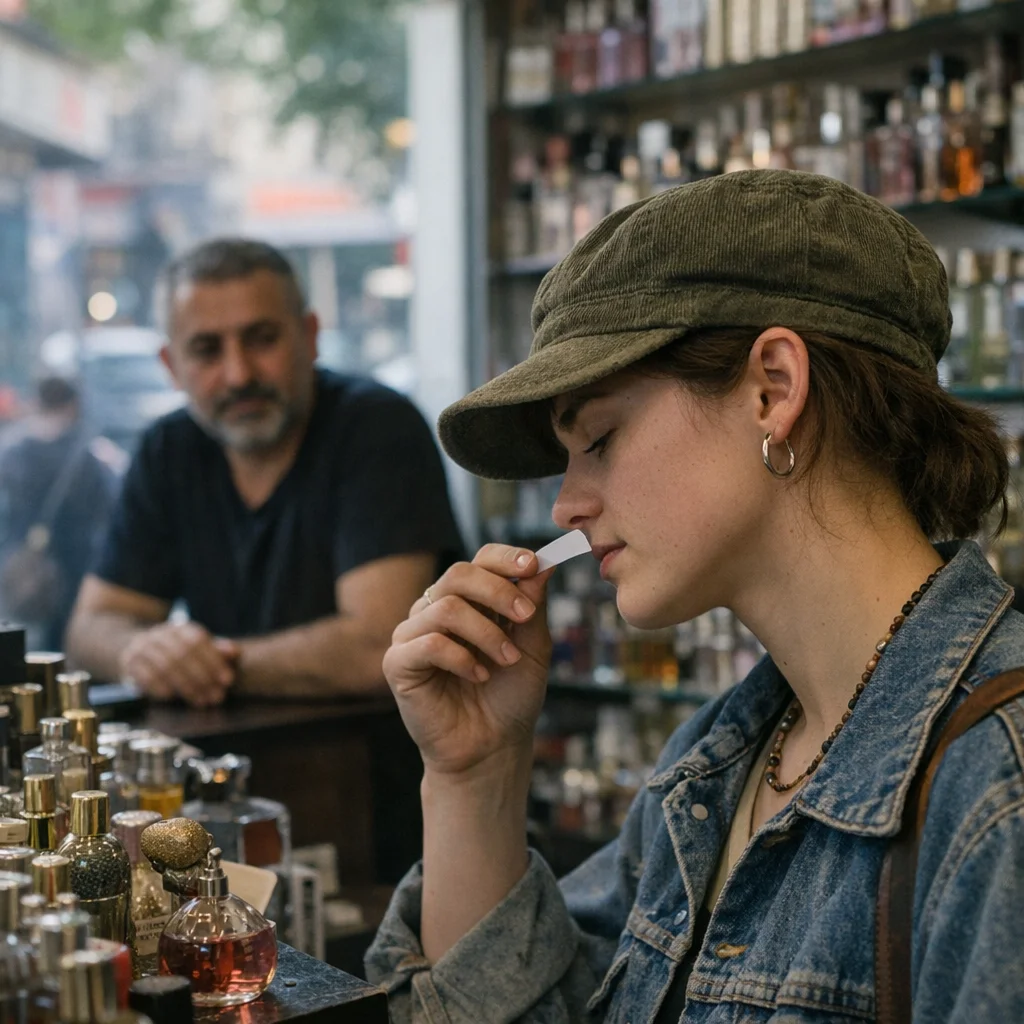
In Wedding, the perfume counters smell like obedience
At a discount beauty shop off Müllerstraße, just far enough from Leopoldplatz to avoid the worst of the sermonizing but close enough to smell the rent panic, Gen Z shoppers spent Tuesday morning handling 1990s-style perfumes and lip glosses like contraband from a nicer household. The bottles were labeled “clean,” “nostalgic,” and “minimal,” which in retail means: this will not make you free, but it will make you easier to arrange.
The staff had already learned the script. A shopper says she wants “something grown,” then asks for “soft authority,” then holds a tester strip under her nose like she is waiting to be approved by a parent who is no longer in the room. A boy in a cropped jacket and expensive headphones kept circling the men’s cologne display as if it were a recruitment table for a private school. He sprayed one tester, looked down at his wrist, and smiled with the embarrassed hunger of someone discovering that submission can be sold in a matte bottle.
By 11:30, the queue had become a little obedience class with better lighting. A 22-year-old art-history student in thrifted denim said she wanted “something comforting, something adult,” then chose a scent that smelled like polished soap, cold linen, and a hand on the back of the neck that was technically affectionate if nobody asked too many questions. Across from her, a startup intern with six piercings and a tote bag full of anti-capitalist paper selected a body mist that could have been worn by a mother who never raised her voice because she didn’t need to. He said he liked “the structure” of it, which is what people call being handled when they still want to think of themselves as autonomous.
That is the market: not youth, but consent theater.
The nostalgia products work because they offer a fantasy of being managed without the humiliation of actually being managed. Gen Z does not want freedom; it wants the smell of being told to sit up straight, but with better branding and a cruelty-free label. It wants dad’s aftershave on a body that never had to mow a lawn, negotiate with a landlord, or learn what authority costs when it is not being rented by the ounce. The bottle is the alibi. The scent is the hand on the waist, minus the person.
“People come in saying they want to smell like their childhood, but not the stress,” said Nadine Yilmaz, who works at a Turkish-owned cosmetics shop in Wedding and has been watching the trend swallow the aisle one tester strip at a time. “They want the perfume, not the lecture. They want the authority without the consequence. They want to be pressed into place and still call it self-expression.”
Her shop sits between a Lotto kiosk and a bakery that sells sesame rings to men who have spent decades being ignored by trend reports. The perfume wall is small, but it has become a kind of administrative office for desire: retro scents on one side, “clean girl” mists on the other, and a counter where customers lean in close enough to audition for the role of obedient child, desirable employee, or well-dressed mistake. The neighborhood has seen every kind of retail conversion, but this one is especially smug. It sells compliance as personality and calls the receipt a breakthrough.
A salon owner nearby said the same customers who ask for “nostalgia” are often the first to complain that older residents in Wedding are too loud, too plain, too unedited, too visible. They want the discipline of the 1990s without the social weather that produced it. Berlin makes a career out of this kind of hypocrisy. Its leftists want to smell like rebellion without losing comfort, while its right-wing grumblers want the old order back, provided it arrives as a candle, a cologne, and a story about having standards.
The beauty chain behind the trend says demand for retro scents has “surpassed expectations” in several neighborhoods, including Wedding, where old Turkish perfumeries now compete with imported brands promising “memory” in a bottle. Memory is a useful product because it behaves like an authority figure: it can be vague, expensive, and impossible to argue with. It tells customers they are choosing freely while arranging them in the exact posture the market prefers.
One assistant at the counter said the men’s cologne testers disappear first, then the lavender line, then the more aggressively “clean” bottles that smell like a person who would never admit to wanting to be led. By closing time, the display looked handled, handled badly, and still somehow more convincing than the people buying it. That is the whole arrangement in Wedding now: everyone begging to be approved, everybody pretending it is desire, and the perfume doing the honest work of putting a neck where the industry wants it.