Nina Rademacher’s ‘Anonymous Solidarity’ Poster Campaign Ends With a Clipboard and a Chorus of Snitches
As Homeland Security pushes platforms to unmask anti-ICE posters, Wedding discovers its favorite sport isn’t protest—it’s identifying the protester with impeccable manners.
Civic Hypocrisy & Neighborhood Compliance Reporter
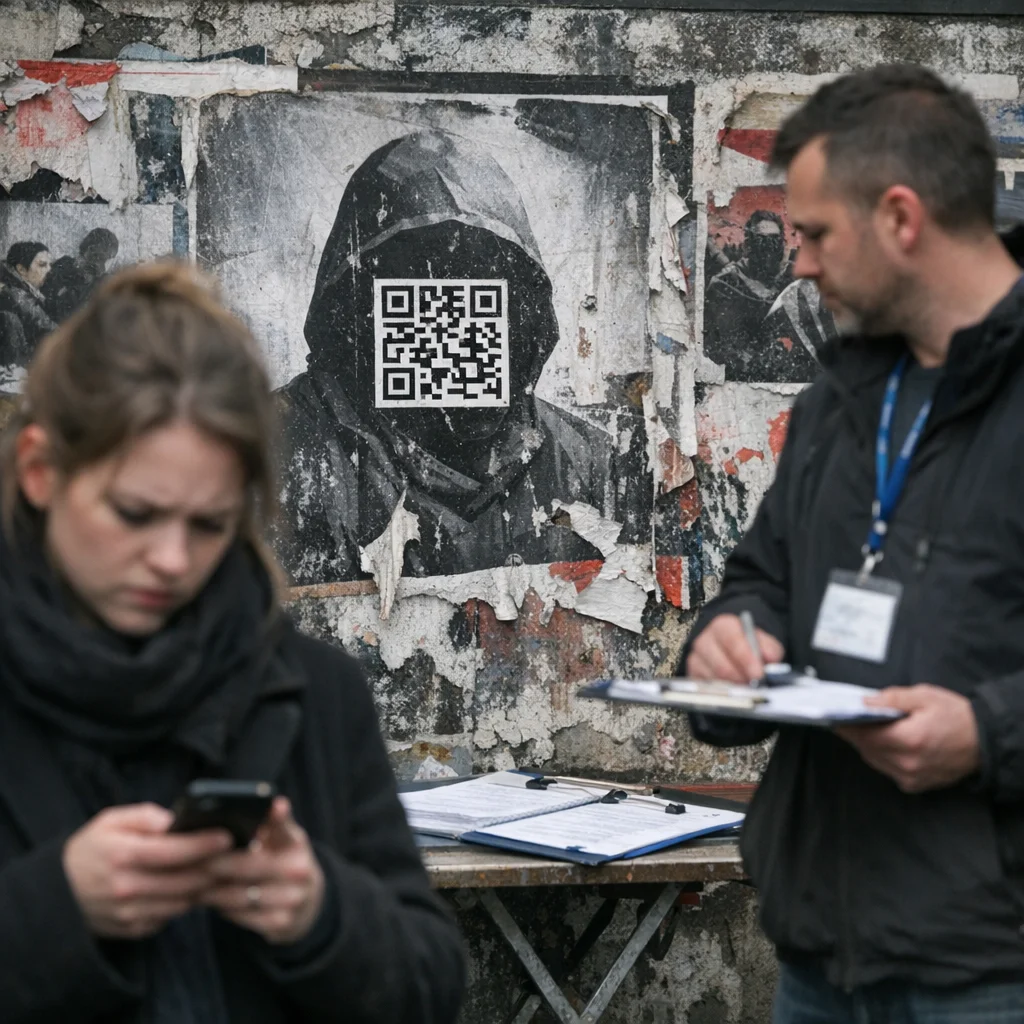
On Monday morning, Nina Rademacher, 32, a freelance graphic designer in Wedding with a talent for minimalist rage, taped up a run of posters denouncing immigration raids in the US. The point, she told friends, was simple: the policy is cruel, and anonymity is basic self-defense.
“I’m not trying to be a martyr,” she said, adjusting the last strip of tape like it was a moral halo. “I just want the message out.”
The triggering incident came later that afternoon, when the story broke that Homeland Security was pressing social media sites to reveal the names behind anti-ICE posts. Wedding’s reaction was immediate and deeply familiar: not outrage at surveillance, but jealousy that someone else got to do it first.
By evening, Nina’s posters had been photographed, uploaded, and discussed in three separate neighborhood channels by people who insist they don’t “believe in policing,” right up until there’s a chance to police for free. A self-appointed “community mediator,” Felix Brandt (who lists his pronouns and his conflict-resolution certificate in the same bio), announced a pop-up “Transparency Corner” outside a Turkish grocery.
“Anonymous activism is basically disinformation with better typography,” Brandt said, gripping his clipboard with the tenderness of a man finally allowed to touch power in public.
On Tuesday, the escalation arrived in the form of a letter—unaddressed, yet somehow personal—inviting Nina to a “dialogue circle” at a neighborhood meeting room. The room featured stackable chairs, the fluorescent lighting of a low-budget existential crisis, and a sign-in sheet titled For Safety. Nina, who came to argue against deportations, found herself instead arguing for the radical concept of not handing your identity to strangers with laminated badges.
That’s when the turning point landed: a representative from a local “digital civics” initiative, Yasemin Koç, calmly informed the group that if American agencies could push platforms to cough up names, then Berlin should “model good practice” by encouraging voluntary disclosure.
“Voluntary,” Koç said, smiling the way bureaucracies smile before they slide something in.
By the next day, someone had added a QR code to Nina’s posters. Scanning it didn’t lead to donations or information. It led to a form requesting the poster-maker’s full name, address, and “preferred level of accountability.”
Nina stared at it like a character in a bleak comedy who finally notices the stage is a trap. She wanted to stay anonymous; what she risked losing now was her work, her reputation, and the last shred of belief that moral people don’t act like informants.
In Wedding, everyone wants to abolish the system—until they get a chance to hold it with both hands and give it a firm, responsible squeeze.