“No Eating in the Stairwell” for a Democracy
Wedding’s newest citizen initiative is a building-wide etiquette war dressed up as public safety, with tenants, traders, and nonprofit managers all pretending the rules were invented for hygiene instead of power.
Civic Hypocrisy & Neighborhood Compliance Reporter
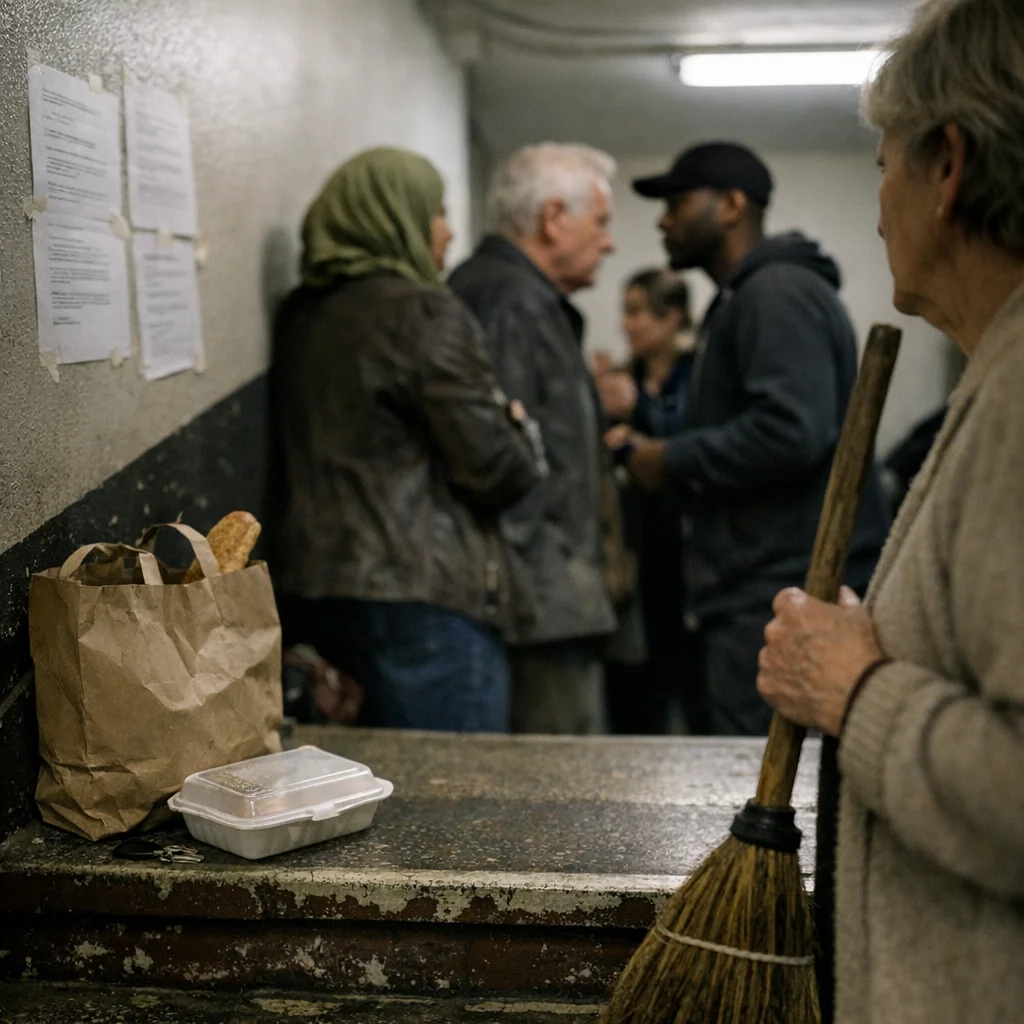
Residents in Wedding spent the week arguing over corridor etiquette after a citizen initiative posted fresh signs in a mixed-use block near Leopoldplatz, telling tenants not to eat in the stairwell, not to leave shoes by the door, and not to treat the building like a half-finished airport lounge for the morally underfed.
The signs arrived after a committee meeting organized by a tenant advisory group, a nonprofit mediator, and two shop owners who have discovered that “shared responsibility” is a beautiful phrase when you want somebody else to scrub the grease off the bannister. By Tuesday, the staircase had become a miniature republic of judgment: the old Turkish grandmother with the shopping trolley, the delivery rider still sweating through his jacket, the freelance designer with the reclaimed backpack, the coworking-to-committee man who can say “community” without blinking, all staring at one another as if Schopenhauer had been appointed superintendent and given a clipboard.
Mehmet Arslan, who runs a small grocery on the ground floor off Müllerstraße and has watched Wedding get rebranded by people who think oat milk and a clipboard count as social conscience, said the whole thing was less about food than about jurisdiction. “They call it hygiene when they mean hierarchy,” he said. “Today it is the stairwell. Tomorrow it is who is allowed to linger, who smells wrong, who looks poor while carrying dinner.”
The district office, which can lose a permit in a lunch break and then issue a philosophy of civic harmony before dinner, said it welcomed “neighborly solutions” and encouraged residents to “respect common spaces.” That sentence landed with the velvet brutality of a luxury condom shoved into a public utility. One tenant, speaking on condition of anonymity because she has already been accused of “anti-social energy” by a man with ceramic coffee breath and an inbox full of participation language, said the new rules were enforced with “the erotic intensity of a surveillance state and the organizational skill of a broken bins schedule.”
The building association insists the problem began with crumbs, wrappers, and a few late-night meals on the stairs. But by the time the first committee had met, the issue had swollen into its proper civic form: laminated notices, passive-aggressive arrows, and the old, familiar trick of turning disgust into policy. The language is all cleanliness and mutual respect; the real subject is who gets corrected in public and who gets praised for merely showing up with a reusable cup.
This is how Wedding’s municipal morality works. The people who cannot coordinate trash pickup, hallway lighting, or a functioning Saturday bin rotation suddenly discover a deep theology of corridor discipline. Their idea of community is never a shared mop. It is a shared tone of voice, preferably polite enough to exclude the wrong kind of breath.
There is, of course, the usual Berlin civic theater. Left-wing residents complain about policing while begging for enforcement, right-wing neighbors talk about “rules” when they mean “people unlike me,” and the boutique-grocery guardians of decency pretend their obsession with shoes by the door is actually a defense of democracy. Everyone performs innocence while the stairwell does the honest work of sorting bodies by smell, manners, and rent.
A follow-up vote on the signage is expected next week. Until then, the stairs remain open, the lectures remain available, and the neighborhood’s amateur hygienists are still trying to regulate hunger one corridor at a time while calling it care.