“No Glitter, No Coke, No Problems,” Says the Flyer
A new crop of Wedding clubs and party brands is selling nightlife as a disciplined wellness product while everyone pretends the line between “responsible culture” and private drug management has not already been crossed.
Nightlife Incident & Outfit Forensics Reporter
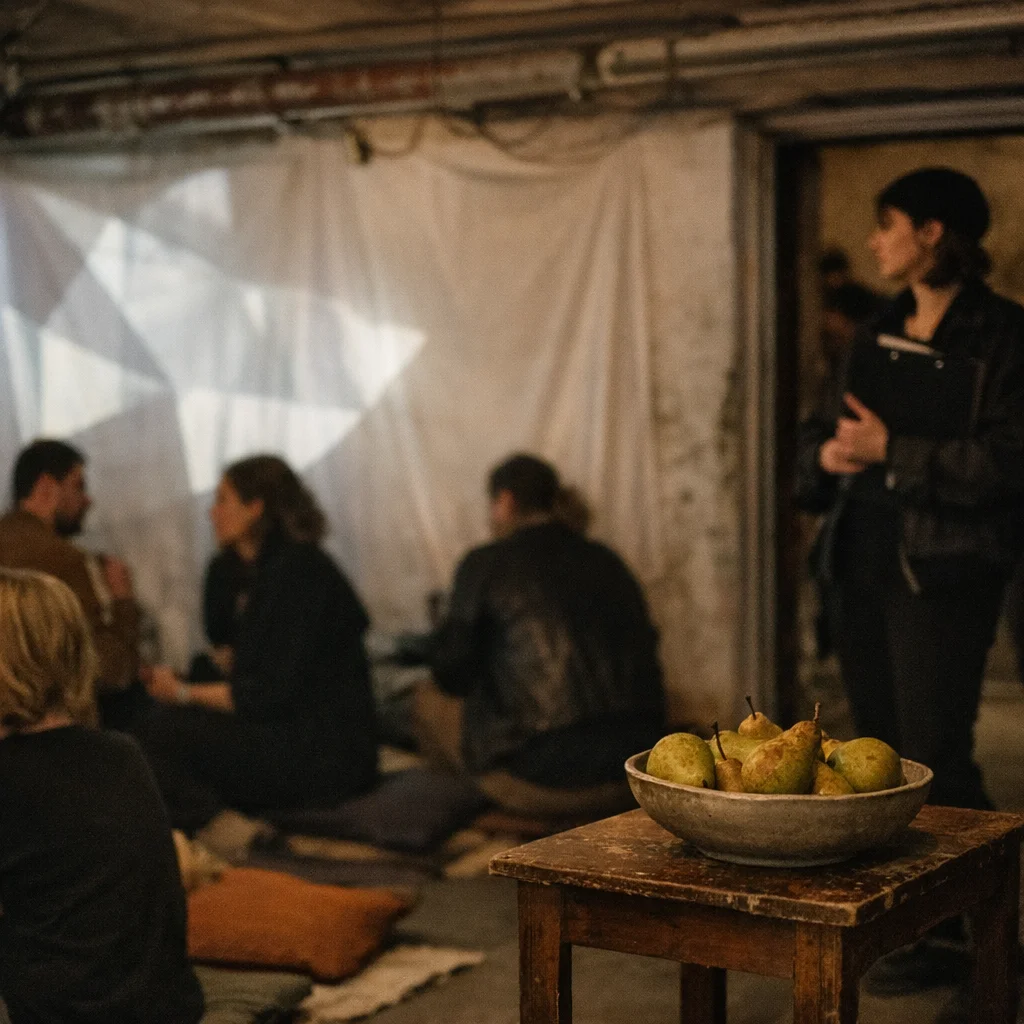
Wedding’s latest nightlife export arrived under a white flyer and a smirk: “No Glitter, No Coke, No Problems.” In local event economics, that usually means there will be glitter, a chemical atmosphere thick enough to peel paint, and at least one organizer who says the word care while counting cash in the back room. The party was staged in a repurposed basement off Müllerstraße, in a building whose frontage looked too tired to object. At the door, a girl with a lanyard and a dead-eyed smile checked names like she was processing asylum claims for people with better shoes.
The pitch was not a club night, of course. Clubs are for people who admit they want to be seen sweating. This was “cultural programming,” which in Wedding now functions as a laundering device for the kinds of operators who would be laughed out of Mitte if they tried the same stunt in daylight. There was a guest list curated like a zoning decision, a “community ticket” that cost less only if you arrived looking economically unstable, and a grant-style mission statement printed near the bar in the vocabulary of a district office newsletter: inclusive nighttime access, safer spaces, participatory formats, translocal exchange. Nothing erotic in the text, obviously. The room merely had the damp, overworked energy of people pretending not to want each other while leaning into the same warm darkness.
The interior was arranged like a funding application with a pulse: projection-mapped silk, yoga mats, a bowl of pears that could have been purchased with leftover project money, and a facilitator in black linen explaining that “the body is the medium.” It was the kind of line that makes people nod because they are either aroused, underqualified, or both. A local caterer from near Leopoldplatz, who said she had seen “three generations of nonsense in one basement,” called it “a performance for people who want dirt with a receipt.” That was generous. The whole room had the scent of expensive detergent, cheap beer, and the anxiety of adults hoping the night would validate their thesis about intimacy.
The organizer, Leon Voss, presented himself as a cultural intermediary, which is a very polished way of saying he knows how to flatter a district office without ever having to touch a mop. His pitch was that the event “strips away shame without commodifying desire,” a sentence so lubricated with civic virtue it should have been billed as public infrastructure. He also insisted it was not a club, not an orgy, and not a retreat for people with LinkedIn pages full of anti-capitalist fonts and rent-controlled faces. It was, he said, “a participatory inquiry.” That is the sort of phrase people use when they want the scene to sound intellectual while they are absolutely, unmistakably shopping for permission.
By midnight, the installation had done what all such installations do when enough under-fucked professionals and over-enunciated freelancers arrive: it stopped being about art and started being about access. The curtain movement got more earnest. The touch got more strategic. The small talk became a negotiation between status and appetite, each person trying to remain politically legible while mentally undressing someone six feet away. The conceptual frame did not collapse; it just got a hard-on and called it methodology. In Berlin, that is considered a mature practice.
The district office, naturally, was not absent. It was simply performing its favorite role: the smiling enabler in the back row. Officials had apparently received complaints about noise, crowding, and the usual confusion between public culture and private indulgence, but the response was the familiar municipal choreography of delay, discretion, and selective innocence. Police confirmed officers visited after neighbors reported chanting, glassware, and “unusual levels of curtain movement,” a phrase that deserves to live forever in the city’s administrative archive. They did not shut anything down. Why would they? In Wedding, enforcement often arrives after the bodies have already finished their little moral referendum.
What makes this particular scene rancid is not the nudity, the noise, or the drugs everyone pretends not to recognize. It is the way the whole apparatus has learned to speak as if it were protecting the neighborhood while feeding on it. The landlords get their “creative energy.” The operators get their brand story. The district gets to say it supported culture. The police get to look briefly involved. And the actual people around Müllerstraße—the bakery worker, the night cashier, the resident trying to sleep before a 5:30 shift—get the usual civic garnish: a flyer, a complaint form, and a lecture about vibrancy.
The next installment is already being planned, with a new title, a gentler palette, and the same old predation in a cleaner shirt. They will call it exchange, healing, or maybe something with “commons” in it, because nothing masks hunger like a vocabulary grant. In Wedding, the nightlife economy does not merely sell desire. It rents it back to you by the hour, then asks the district office to clap while you leave sticky, broke, and briefly convinced you were part of something.