No Pad, No Pulse: Jazzfest Chief Refuses the Mood Check
Nadin Deventer says she will not play jazz missionary, but the festival is still being asked to prove city intimacy on command, as if a saxophone could fix neighborhood distance and elite guilt at once.
By Arda Kismet
Kiez Mischief & Access Economy Correspondent
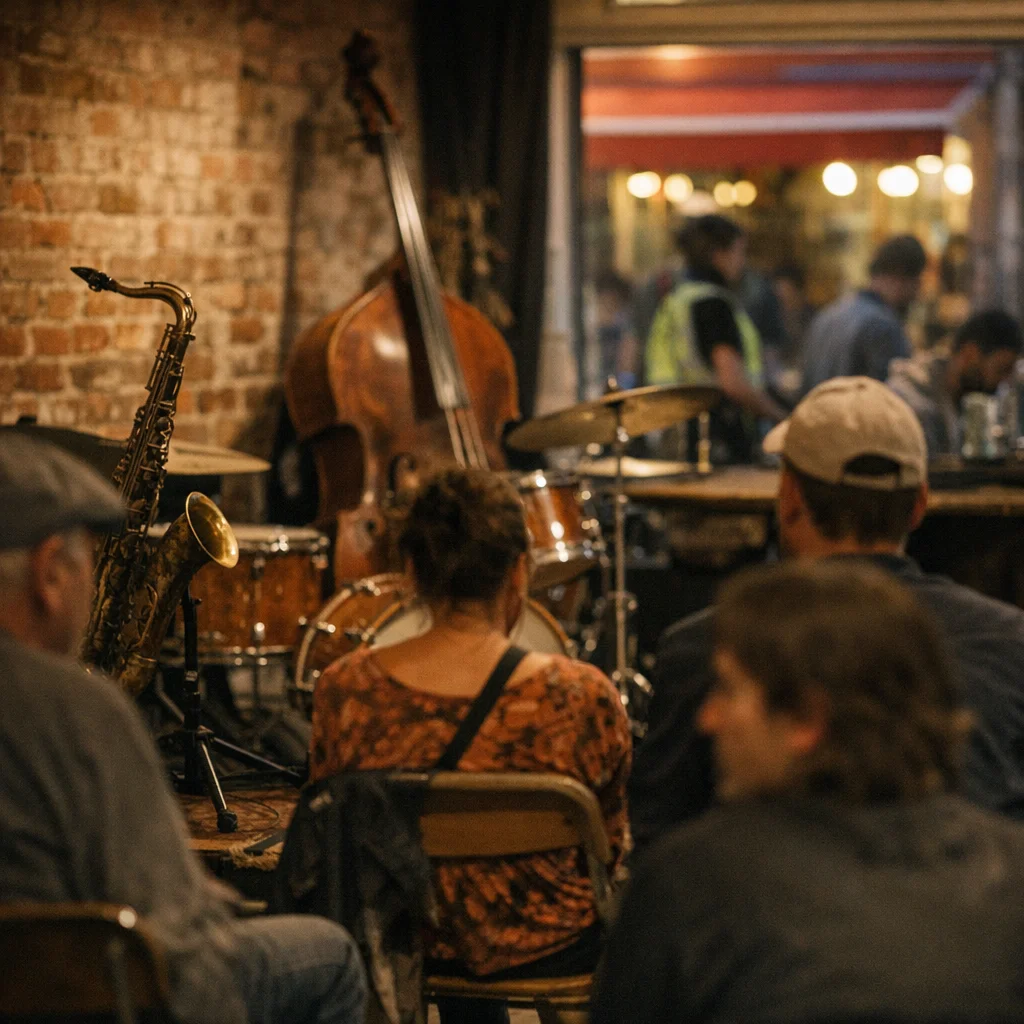
Jazz Without the Embrace
Nadin Deventer said she would not play jazz missionary, and that was already enough to make Berlin’s cultural class grip its pearls like they were seat reservations. At the preview for Jazzfest’s newest edition, the festival chief spent the night being asked to warm the room, soften the edges, and make the whole thing feel less like a closed booking office for people who mistake access for intimacy. Everyone wanted the program to be more inviting, as if a saxophone could be persuaded to spread itself across the district on cue and grant emotional entry to the usual suspects.
In Wedding, the demand for “openness” arrived with the odor of a fresh grant application. The neighborhood still runs on Turkish bakeries, late-night fruit sellers, mechanics with oil under their nails, nurses finishing shifts before dawn, and old men who can judge a business by how it treats its chairs. But the cultural operators keep circling back with tote bags, laminated badges, and that pinched, civicly horny expression that says they want local flavor without local friction. They do not want the music to be out of reach; they want it to be reachable in the exact way they prefer, with the right lighting, the right seating, and no one sweating on the upholstery.
That is the real booking request: not just a seat, but a body willing to take instructions. Not just entry, but the illusion that entry was given freely by the room. The festival is expected to open itself like a velvet curtain and still remain dignified when the same people who demand “community” ask whether there will be a reserved table, a quieter corner, and enough atmosphere to feel moved without risking a single unplanned touch from the actual neighborhood.
Deventer refused the role of cultural undertaker and neighborhood seducer in one neat package. “I’m not here to convert anyone,” she said, with the flat patience of someone who has watched Berlin ask art to undress itself and then complain about the temperature. “If people come, they come because the music speaks to them, not because we have wrapped it in civic therapy and told them to call it belonging.”
The sentence landed badly with the people who think every public event should either redeem the republic or at least flatter their self-image before the starter arrives. Berlin’s grant-fed middleman class loves “access” in the same way it loves being seen leaving early: as long as it can keep its coat on and its conscience half-open. They want culture close enough to feel exclusive, but not close enough to smell like work, weather, or the district itself. They want the room hot with meaning and cold with hierarchy.
By the end of the evening, the institutional foreplay had become almost tender in its cruelty. A district representative praised “city-wide resonance” while admitting that the real challenge was getting Berliners to listen without demanding a moral massage, a selfie with a local, and a refund on whatever loneliness they had brought in with them. A venue manager from the north of the city complained that the same people who denounce elitism are always first to ask for the best table, the clearest sightline, and the kind of personalized welcome usually reserved for people with foundations attached to their names. He spoke on condition of anonymity because his own audience includes two council aides, one ex-performance artist now doing reputation management, and a woman who insists she only goes to concerts for the “energy” but is always checking the price list.
Wedding does not need jazz to save it, and jazz does not need to be stripped and parceled out like a municipal apology. The district already contains enough noise, longing, labor, and unfinished business to drown out a conference on inclusion. What the city keeps demanding, though, is something more embarrassing: a performance of closeness that can be booked in advance, delivered on schedule, and then blamed if it refuses to stay in bed with the same people who keep calling themselves open-minded while guarding the door. The festival is selling seats and sound, not a civic cuddle. If Berlin wants to be touched by the room, it may have to admit it has spent years arranging the chairs so nothing real can get in.