‘No Parking, No Shame’ at the Playstreet Gate
The neighborhood’s new traffic rules have turned one block into a social tribunal, where parents perform urban virtue, delivery riders get treated like invaders, and every resident suddenly discovers they are a safety.
Civic Hypocrisy & Neighborhood Compliance Reporter
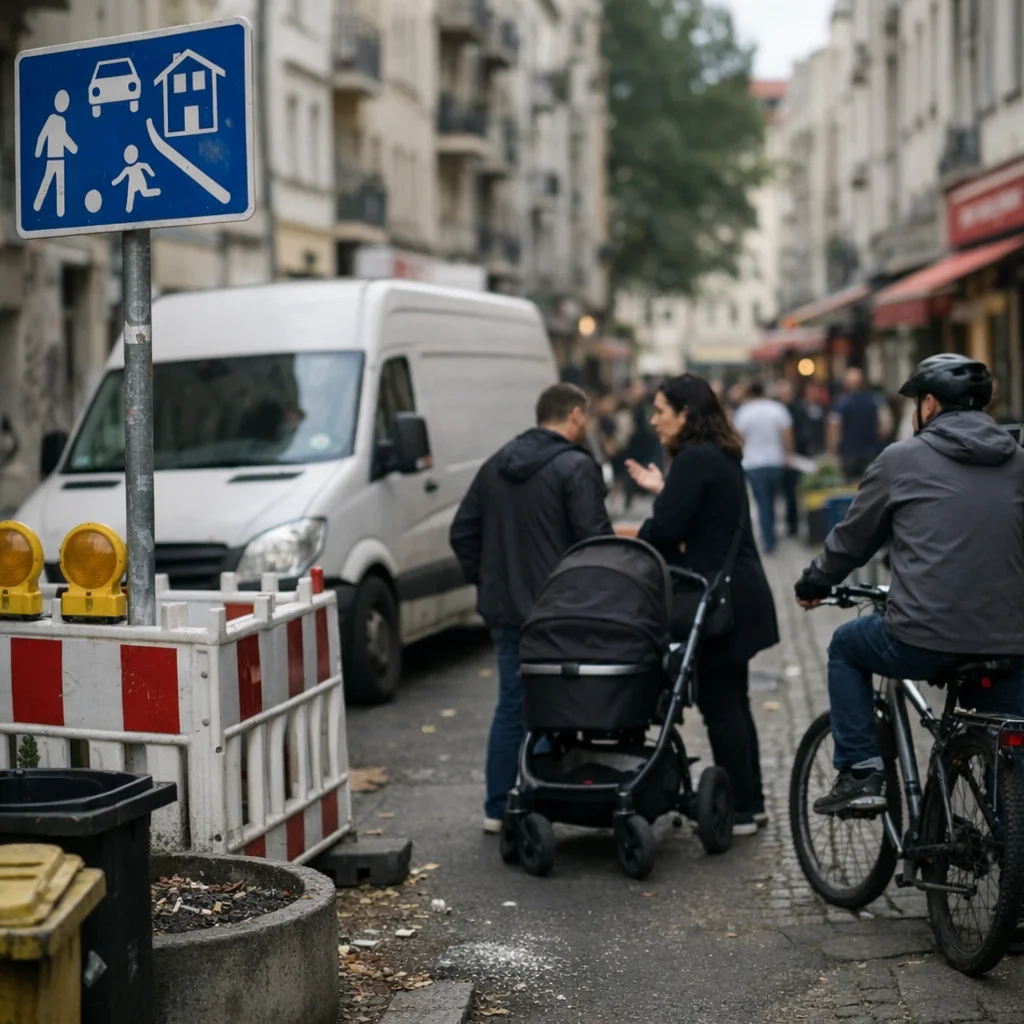
Residents on a Wedding side street spent the week performing public morality under a new playstreet sign that everyone praises and nobody obeys. The block, freshly decorated with the municipal equivalent of a chastity belt, has become a little tribunal where parents scold drivers, cyclists glare like saints, and anyone with a delivery app is treated like a colonial expedition with a warming tray.
It began after the district placed barriers and fresh rules at the entrance, hoping to tame traffic and give children room to move without being flattened by a van or a conscience. By the next morning, the same neighbors who flick cigarette ash into planters, leave grocery bags sweating beside the curb, and treat the entrance like a private throat to spit in were suddenly appalled by the moral collapse of the street. The children, they said, must be protected. The pavement, they said, must breathe. One man who has been parked half on the sidewalk for years now speaks about safety with the trembling purity of a minor prophet and the damp confidence of someone who knows he will get away with it.
“People here want the benefits of a calm street without the inconvenience of behaving like they live on one,” said Ayhan Demir, who runs a corner shop and watches the scene from behind a window smeared with fingerprints, complaints, and stale moral odor. “They hate the van until it is theirs.”
The first week exposed the usual Berlin theology: everybody is anti-car until their own moving truck arrives, anti-noise until their guests stay past midnight, pro-child until the child is a neighbor’s child, then suddenly it is a public nuisance with a scooter. The sign has not removed selfishness; it has only given it a cleaner font. The left-liberal version of this is especially delicious: people who can quote Henri Lefebvre on the right to the city will still hiss at a delivery rider trying to reverse out of the block, as if labor itself were an indecent exposure. The right-wing version is simpler and stupider, which is almost sweet in comparison. They just want order, preferably with somebody else’s back bent under it.
A district office spokesperson said the playstreet rules are meant to improve safety and “encourage considerate use of public space.” That phrase has the soft, bloodless perfume of a policy memo written after lunch by somebody who has never had to drag a stroller around a cone while inhaling someone else’s smoke. In practice, the block has become a stage for status theatre. Parents patrol with the righteous intensity of people auditioning for an ad about urban values. They stand there in their clean sneakers and borrowed concern, guarding the street as if it were their own soft underbelly. Teens roll their eyes. A pair of men outside the kiosk laugh at the whole thing and then immediately complain when a van noses too close to their curb kingdom.
Turkish grandmothers, who have survived worse public nonsense with better posture, simply step around the barriers and keep walking. The bureaucrats call that “informal use.” On the block, it looks more like intelligence.
The real problem is not parking. It is appetite. Everyone wants the street to be shared, but only on terms flattering to their own face. The rest is Brechtian performance with a toddler scooter in the foreground and a delivery rider getting blamed for the whole class system. The neighborhood’s moralists want the block tidy, breathable, safe, and selectively free — a sanitized little bed they can lie in without ever admitting who did the laundry. They do not want shared space; they want control with a playground varnish.
By Friday, residents were already arguing over who had “the right attitude” toward the street, which is a charming phrase for class sorting with a municipal badge and a hand on the hip. The district says enforcement will continue. Neighbors say they support the rules. Then they move the flowerpots, open the gate, and wait to see whose car, scooter, or livelihood gets humiliated next. The playstreet may be for children, but the adults are the ones grinning like they’ve just been let into a private club with public money on the bar.