“No Phones, No Problems,” Says the Bouncer
A new wave of Wedding clubs is selling “analog intimacy” to ravers while quietly using the rule to filter out awkward locals, broke kids, and anyone who might record the cocaine diplomacy in the bathroom.
Nightlife Identity & Self-Deception Correspondent
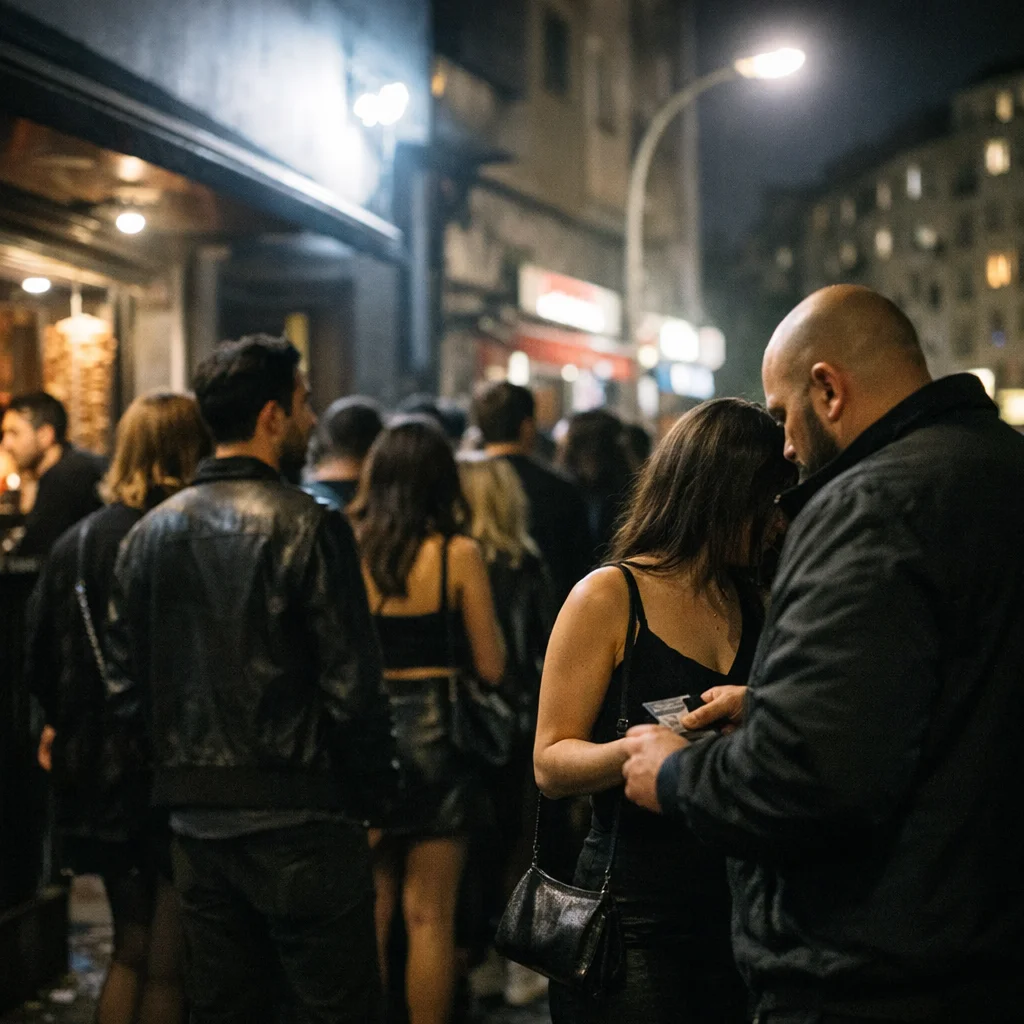
At a cluster of clubs near Leopoldplatz, the new house rule is less about sound than surrender: leave your phone at home, keep your face unreadable, and prove you can pass for a person with no biography. The clubs sell this as liberation, which is adorable in the way a landlord’s apology is adorable. What they mean is: arrive already fluent in shame, money, and obedience.
The owners are a very specific breed of local aristocrat: former freelancers with a trust-fund accent, ex-agency men in expensive sneakers, and women who say “community” with the same mouth they use to order bottle service. They do not love nightlife; they love a controlled audience. They want the room hot, the bodies sweating, the politics abstract, and the evidence gone by dawn. Their idea of radical is a velvet rope with better typography.
By Friday night, the line outside the smallest venue had split neatly into two tribes. One group arrived dressed like a funeral for a grant application, all black fabric and dead-eyed aspiration, ready to sweat through their identities and exchange glances like they were at a seminar on status anxiety. The other group, mostly locals from nearby blocks, Turkish cousins, retail workers, delivery riders, and a few exhausted students from elsewhere in the city, were told their pockets made them suspicious. Not criminal. Just poor in a way that annoyed the lighting.
“I was asked if I could enjoy myself without recording it,” said Deniz Yilmaz, 29, who lives nearby and requested anonymity because he “still owes two people cigarettes and one person an apology.” “That sounded progressive for exactly one second. Then I understood it was a sorting machine for people who already know how to behave expensive.”
Inside, the rhetoric got thicker than the fog machine. A flyer at the bar promised “analog intimacy,” which is what Berlin calls it when privileged adults rediscover eye contact after outsourcing their personalities to glowing rectangles. It is a wonderfully horny phrase for a crowd that wants to feel reckless without ever risking exposure. No phones, no screenshots, no awkward proof that your liberated little denim ass was in fact begging for approval all night.
The bathroom line, predictably, became the real stage. Shoulders pressed together. Men pretending not to look. Women pretending they hadn’t chosen this room precisely because it would be full of weak, thirsty attention. The air smelled like piss, perfume, and the damp panic of people trying to seem unbothered while their pupils negotiated with the dark. Substances crossed hands with the efficiency of a municipal office and the tenderness of a black-market kiss. The mirror caught everyone in fragments: wet hair, flared nostrils, mascara that had started to surrender, a promoter leaning in to whisper something that sounded like desire and was probably guest-list arithmetic.
One bartender, speaking on condition of anonymity because he had already said too much to three journalists and one former lover, said the phone ban “keeps people present.” He paused, then admitted it also keeps out “the broke, the awkward, and anyone likely to photograph the cocaine diplomacy in the toilet mirror.” That last part may be the most honest sentence spoken in nightlife this year. The rule does not create intimacy; it manufactures plausible deniability for people who want to feel feral while remaining very, very employable.
The no-phone crowd likes to imagine itself morally superior: more sensual, more authentic, less enslaved to the feed. This is the same crowd that arrives with minimalist outfits priced like rent, then acts spiritually wounded when a stranger from the neighborhood fails to admire their “aesthetic restraint.” They talk about being present as if presence were not also a privilege purchased by not having to worry about losing a phone, a shift, a key, or tomorrow’s deposit. Their freedom is mostly a curated lack of embarrassment.
The clubs insist this is about atmosphere. But atmosphere is just class with better lighting. It is a municipal sorting function in a sleeveless shirt: who gets to misbehave inside, who gets to look desirable while doing it, and who is told their body would lower the room’s resale value. The no-phone rule does not kill vanity. It protects it. It lets people arrive as raw, tragic, sexy little blank pages and leave with enough deniability to write their own myth on Monday.
A promoter in a tight black jacket and unnecessary confidence called the policy “a safer, more respectful environment.” He said this while taking a call from someone who clearly paid him to be charming in public and ruthless in private. That is the whole ecosystem in one pose: sensitivity as a sales pitch, exclusion as care, and the old Berlin trick of laundering social cowardice through a bassline.
The local traders’ association said it had not received complaints, which is unsurprising; the people excluded by this kind of door are rarely the ones filling out forms. A spokesperson for one venue said the policy would continue “for the foreseeable future,” which in nightlife means until the first rich fool gets denied entry while sober and discovers that “inclusive” was only ever a synonym for properly dressed.
For now, the next move is simple: more clubs will copy the rule, more promoters will call it political, and more people will mistake being screened for being chosen.