“No Photos, No Feelings” at the Foreign Office
Wedding’s visa-adjacent paperwork scene has discovered the perfect German compromise: humanitarian language with a vibe so hostile it practically stamps your passport for you.
Civic Rituals & Paperwork Features Reporter
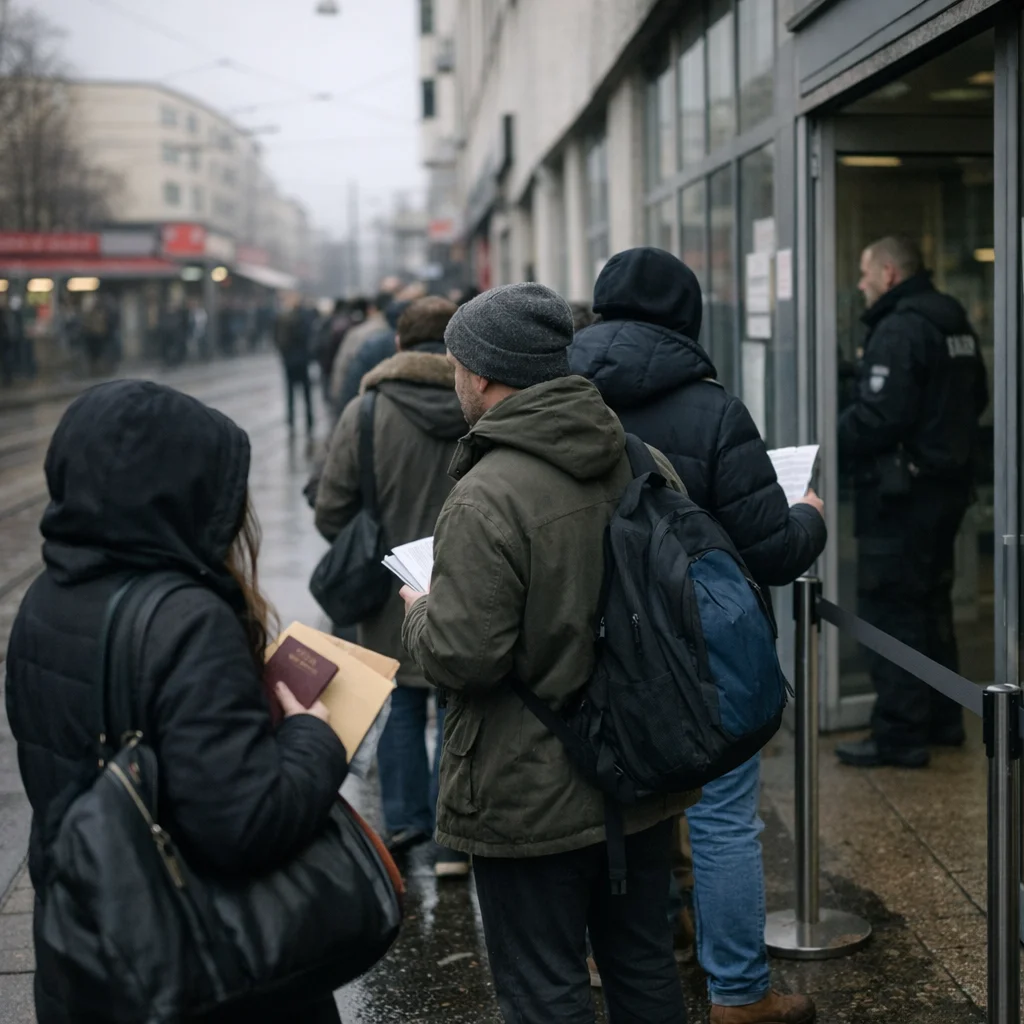
The soft violence of a queue
Outside the Federal Foreign Office in Wedding, near the gray smear of Badstraße and the usual parade of bargain shops, phone-repair glass, and men smoking under awnings like they are waiting for weather to apologize, the line forms with military devotion. People clutch folders, translations, passport photos, appointment printouts, and the kind of hope that only survives by being repeatedly folded smaller.
The office does not greet applicants with hostility. That would be vulgar, almost honest. It greets them with clean signage, controlled lighting, and the cold, lubricated tone of a system that has discovered it can be cruel while sounding considerate. No one is yelled at. That would require courage. Instead, they are made to wait until their knees begin negotiating with the pavement.
First comes the security ritual: bag opened, pockets emptied, phone checked, documents separated, identity reduced to something inspectable by a bored human being behind glass. Then the photo check, where a face can be too shadowed, too old, too recent, too much like a person with needs. Then the tiny administrative kink: a form accepted in one corridor and rejected in another, a translation valid until the mood changes, a signature that exists but apparently not in the right emotional font.
A man from Neukölln, waiting with a folder thick enough to stop a small-caliber bullet, said he had already been sent away twice because one office wanted an original and another wanted a copy of the original of the original. “It’s like being strip-searched by Excel,” he said, staring at the ticket machine as if it had personally slept with his taxes and then denied him in the morning.
Professionalism as a cover story
Inside, the clerks speak with the careful warmth of people who have learned to outsource damage to workflow. They are not villains in the cinematic sense. They are worse: conscientious, underlit, and convinced that this is what public virtue looks like when it has been laundered through a staffing shortage. A woman at the counter, fingers moving over a keyboard with the exhausted precision of a concert pianist in witness protection, explained that the office is “working efficiently under pressure.” That is bureaucratic poetry for: we are drowning, and you are the towel.
The district’s migration ecosystem has its own parasitic elegance. Nearby relocation brokers advertise speed, calm, and “full-service support,” which is a lovely phrase for charging desperate people to stand in the correct line with the correct facial expression. Translators hover like tasteful undertakers. NGO staff arrive in soft shoes and expensive sorrow, speaking the language of dignity with the breathy seriousness of people who have never had a document returned for being emotionally insufficient. Everyone performs compassion. Everyone invoices it differently.
And then there are the local office types: the man in a neat coat who brags about having “sorted out” his own paperwork as if he had conquered a small province; the freelance policy whisperer who calls it “systemic complexity” while sipping oat milk and enjoying the erotic charge of other people’s inconvenience; the right-wing fantasist who still talks about the border like a gate, as if a queue in Wedding were the front line of civilization. They all feed on the same spectacle. Different vocabularies, same appetite.
Germany’s favorite kink: humane cruelty
The genius of the operation is not that it blocks people. It is that it trains everyone to call the blocking something noble. Left-leaning professionals praise “fairness” while standing in a line that could embarrass a customs depot. Conservatives praise “order” while the printer spits out administrative nonsense like a drunk confession. The institution gets to play both priest and bouncer: stern enough to terrify, gentle enough to attract applause from people who would never survive one afternoon inside it.
A spokesperson said the authority was “improving transparency” and “reducing waiting times.” In practice, this usually means more instructions, more signage, and a new layer of polite obstruction with better typography. The state loves a brochure. It is how Germany seduces itself into thinking paperwork is empathy with a stapler.
By late afternoon the queue thins, then thickens again, then collapses into a bitter little choreography of people checking phones, shifting weight, and pretending not to panic. The nearby tram grinds past. Rain threatens but cannot commit. Someone tears open a croissant with the defeated concentration of a patient in a clinic.
This is what the office does best: it turns life into a waiting room and calls the result professionalism. The humiliation is not accidental. It is the product. And Wedding, with its tired pavement and bargain storefronts and exhausted faces, provides the perfect stage for a country that wants to look generous while keeping its hands impeccably clean.