‘No Sample Until You Smile’
A new wave of Wedding cafés sells community, but only after the barista decides you have performed enough gratitude to deserve it.
Neighborhood Commerce & Low-Grade Dread Reporter
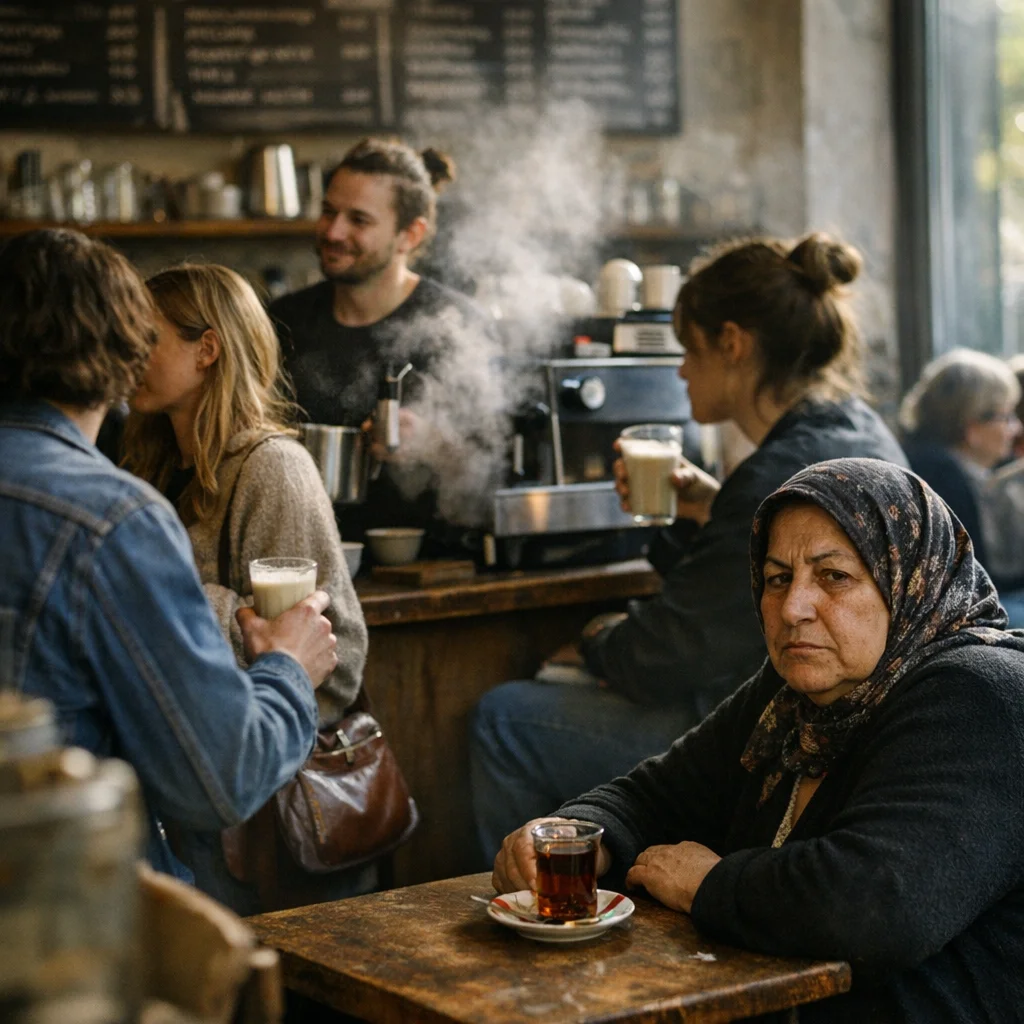
The smile tax arrives with espresso
In Wedding’s newer cafés, the mission statement is always upholstered in the same soft lies: community, warmth, local flavor, maybe a small tribute to “the neighborhood” as if saying the word counts as paying rent. The actual business model is uglier and more intimate. You enter, you perform gratitude on cue, and only then does the barista decide whether your croissant deserves the kind of attention usually reserved for a donor gala or a minor scandal.
At a café near a former bakery off Müllerstraße, the room was full of the usual human décor: hand-painted charm, secondhand chairs with the wobble of moral compromise, and a menu in English so aggressively curated it might as well have been laminated by a foundation. The clientele looked like a seminar on guilt with jackets. They spoke about “authentic” Wedding in the same voice people use for sustainable candles, then ordered oat milk with the helpless entitlement of expats who can negotiate a lease in Berlin but still panic at a bathroom sign. One man in a beanie kept rehearsing "Danke" like a seduction line he hoped would get him forgiven.
A Turkish grandmother at the next table was the only person in the room not auditioning for cultural sensitivity.
“The smile is part of the order,” said Deniz Yilmaz, who works behind the counter and asked not to be named because the local press loves a cute neighborhood story right up until it has to describe labor. “If they come in acting like the street owes them softness, I slow everything down. If they smile first, I can be generous. That’s service. Also discipline. Also a little punishment for the people who think a latte is a personality.”
That is the real etiquette of the new Wedding café: not hospitality, but a tiny border checkpoint with pastries. The staff are expected to perform effortless multicultural grace while fielding customers who want warmth without proximity, authenticity without inconvenience, and local flavor without ever having to sound local. The customers, meanwhile, arrive with the brittle confidence of people who have read three think pieces and now believe they have earned the right to colonize a neighborhood with their habits, their tote bags, and their soft little panic about being judged.
The left-wing version is the most embarrassing. These are the NGO-left pilgrims with recycled denim and immaculate opinions, the ones who say “community” like they’re trying to open a grant and then flinch if a cashier answers them in German too quickly. They want to be seen as anti-gentrification while ordering €5.90 cake in a room they are actively helping to inflate into an emotional real-estate product. The conservatives are no cleaner; they just hate the concept of the place while standing there anyway, licking foam off their upper lip like they’re above the whole arrangement. Different flags, same appetite.
By late morning, the staff had started remembering names, which in this district functions less like kindness than a soft loyalty regime. One regular got the warm nod, another got the full administrative frost: a polite pause, a measuring stare, and the unmistakable sense that his self-image had been filed under "unnecessary." A woman in a linen blazer laughed too loudly at her own joke about "the vibe" and looked briefly terrified when nobody rewarded her with instant belonging.
The owner said the café is simply trying to “create a space where people feel respected.” That sentence is always where the rot puts on perfume. Respect, in this economy, means learning which bodies can be treated like atmosphere and which ones must be managed. It means extracting neighborhood mystique from the people already living there, then reselling it to newcomers with better shoes and worse nerves.
The district office, predictably, says it receives few complaints. Of course it does. Nobody wants to file paperwork admitting they were emotionally denied a croissant by a woman in an apron who knows exactly how expensive her own friendliness has become. Meanwhile the old shops keep vanishing, the English menus multiply like mold, and every person who moved here for its "realness" now wants the neighborhood to flatter their taste, their politics, and their fragile little hunger to be recognized without ever being known.
That, in the end, is the whole arrangement: extraction with foam art. Wedding’s newest cafés do not sell coffee so much as a controlled humiliation ritual for people who think they deserve intimacy on demand. They come for the soul of the district and leave with a receipt, a grin they had to rent, and the warm suspicion that they were not welcome so much as processed.