North Pole Bullshit Hour: Habeck’s Second Call-in
Robert Habeck returned to Caren Miosga’s ARD stage with another polished sermon of academic self-admiration, wrapped as public conversation and sold as seriousness.
Nightlife Etiquette & Status Rituals Correspondent
Robert Habeck’s latest appearance with Caren Miosga landed in Berlin like a man showing up to a first date with his own dust jacket ironed flat and his apology already formatted in serif. In living rooms from Wedding to Mitte, viewers watched the former economy minister treat the ARD studio like a well-appointed hotel room he had every intention of checking into, rearranging the pillows, and billing the republic afterward. The book was not the side dish. It was the booking. The politics were just the room service nobody ordered.
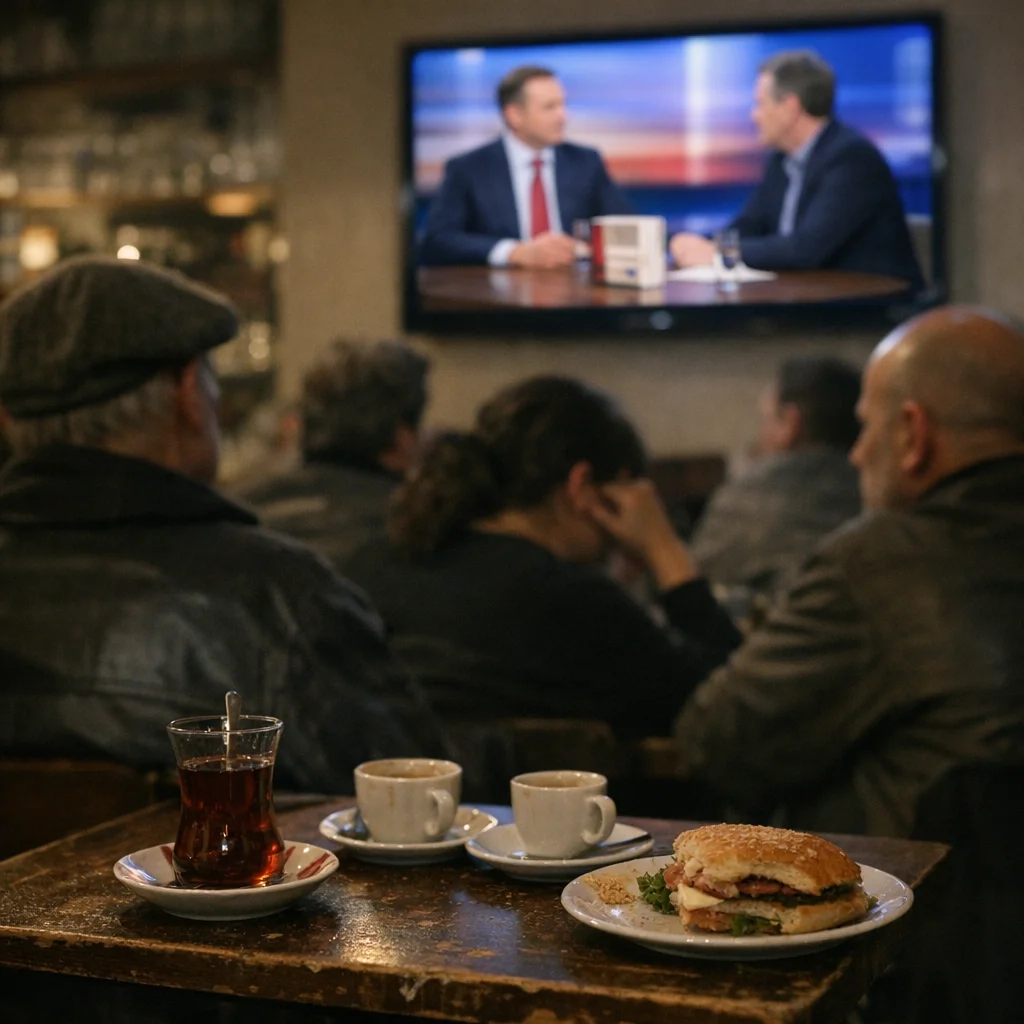
In Wedding, where people can smell a sales pitch through triple-glazed windows, the mood was blunt. At a café near Leopoldplatz, two men over Turkish tea and a pack of slim cigarettes watched him speak with the exhausted focus usually reserved for a landlord explaining why the stairwell light is a luxury. “He talks like a seminar that got promoted too early,” said Mehmet Yilmaz, who runs a corner shop and asked to be named because he was already being accused of cynicism by a customer in a scarf and a tote bag. “Every answer sounded like he was trying to get undressed for the audience without ever actually admitting he’d booked the room.”
That was the basic arrangement from the first minute. Habeck was not interviewed so much as prepared. Miosga handled the exchange with the soft, managerial confidence of someone making sure the guest of honor gets the key card, the still water, and no dangerous surprises in the minibar. Questions arrived one layer too late and one degree too warm. The whole thing had the disinfected intimacy of a late check-in at an upscale hotel: the desk clerk smiling, the guest pretending not to know exactly what he came for, and the bill already waiting under the door.
Habeck answered in the style of a man who has mistaken being available for being accountable. He offered conscience, cadence, and a few polished sentences about responsibility, all delivered with the heavy-lidded assurance of someone who knows the camera will keep him respectable even when the content has long since left the building. Every evasive paragraph had the same faintly indecent energy: not quite refusal, not quite consent, just enough smoothness to make the room complicit.
By the middle of the broadcast, the book had stopped being an accessory and become the mattress. Everything else had to fit around it. The policy questions were the decorative lamps. The interviewer’s skepticism was the folded towel. The guest’s wounded self-regard was the white noise machine humming in the corner so viewers could relax while being handled. It was less a conversation than a state-funded seduction of the educated class, the kind that tells itself it prefers substance while clearly getting off on access.
And access, of course, is the whole business. The ARD studio in Berlin’s calmer districts offers the same service every time: take the politician, smooth the wrinkles, dim the overhead lights, and present the result as seriousness. The public gets to watch democracy in a robe, hair still damp, making one last tender speech before slipping back into the corridor of credentials. The institution calls this culture. The people paying for it call it being taken upstairs and told not to ask what the minibar costs.
The broadcaster’s defenders used the usual vocabulary of adult fraud: necessary exchange, balanced conversation, democratic seriousness, public relevance. One staff member, speaking like someone describing a stain she could not get out of the upholstery, said the main editorial concern was that Habeck “came across too human.” That was exactly the problem. The whole setup depends on turning power into personality and then asking the audience to applaud the chemistry.
Later, on the street in Wedding, the verdict was less fragrant and more exact. People had not seen a statesman endure scrutiny. They had watched a polished man use a public platform the way certain men use expensive hotels: for the mirror, the reassurance, and the quiet expectation that someone else will clean up in the morning. The book will keep touring. The studio will keep offering the same soft bedding. And the republic will keep pretending it is getting a conversation when what it is really receiving is a booked room, a closed door, and a bill slipped under it before the lights come on.