“Not My Desk” Bureaucracy Locks the Door Twice
Every office swears the other office owns the problem, so the public gets billed for a full-time scavenger hunt in responsibility.
Civic Rituals & Paperwork Features Reporter
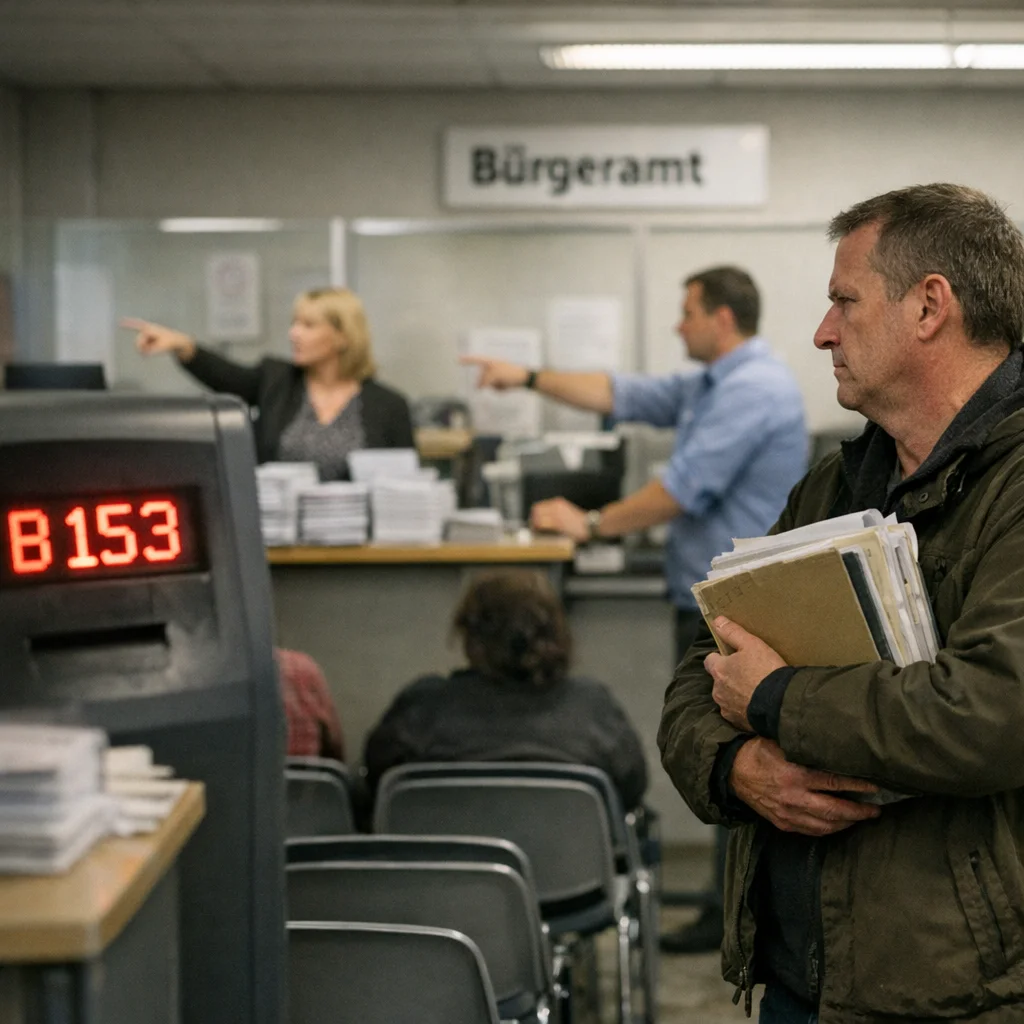
Berlin’s administrative farce delivered another small civic violation this week, after residents trying to register, correct, or simply ask what the hell is happening were bounced between the Bezirksamt, the Bürgeramt, and whatever other desk had decided to play dead that morning. One official called it “coordination,” which is the kind of word people use when they want to turn neglect into a career path.
A resident shows up with a passport, a deadline, and the humiliating belief that a city built on taxes might be able to answer a question without making it feel like foreplay for disappointment. Instead, the first counter waves them toward a second counter; the second counter points to a third office; the third office says the form must be submitted online, unless the portal is down, which it usually is, because Berlin’s digital state has all the erotic energy of a damp sock. The queue moves by inches. The ticket machine coughs up a number like a threat. Somewhere in the building, a clerk stamps paper with the patience of someone carefully killing time on public payroll.
At one district desk, a staffer said the office had been trained to “receive requests, not resolve them.” That is not administration; that is obedience with a nameplate. It is how the lower ranks are taught to weaponize helplessness without ever raising their voice: no decision, no ownership, no dirty fingerprints. The system does not need villains when it can manufacture clerks who have learned that saying “not my desk” is a form of professional hygiene. The rot is not abstract. It sits behind the glass, wearing a lanyard, and makes you repeat your own name until it sounds like a joke.
The political class that benefits from this maze knows exactly what it is doing. Governing coalitions love a city that looks compassionate on paper while making ordinary people beg at counters like they’re auditioning for mercy. SPD, Greens, CDU, it doesn’t matter who is posing as the adult in the room; they all adore a state that can advertise seriousness while outsourcing accountability to forms, task forces, and “process coordination.” The maze is the message. If you are exhausted enough, you stop asking for rights and start asking for permission.
Officials say the complaints will be reviewed, that procedures are being optimized, that citizens should keep trying. That is the bureaucratic version of a hand on the knee: reassuring, invasive, and designed to make you stay seated while nothing changes. Meanwhile, the city keeps minting new portals, new hotlines, new little administrative condoms meant to keep responsibility from touching anyone alive.
By next week there will probably be another announcement, another “digital improvement,” another promise that the system is becoming more accessible. In practice, it will still be the same fluorescent hallway where your papers are fondled, your time is wasted, and your patience is treated like a public utility with no maintenance budget.