Oat-Latte Neutrality: Wedding Demonstrators Condemn Violence Abroad, Politely Decline to Help Locally
After a rally about a man who bled out because nobody was allowed to intervene, locals held a follow-up workshop on the Berlin principle of “witnessing, not doing.”.
Imported Outrage & Sidewalk Ethics Reporter
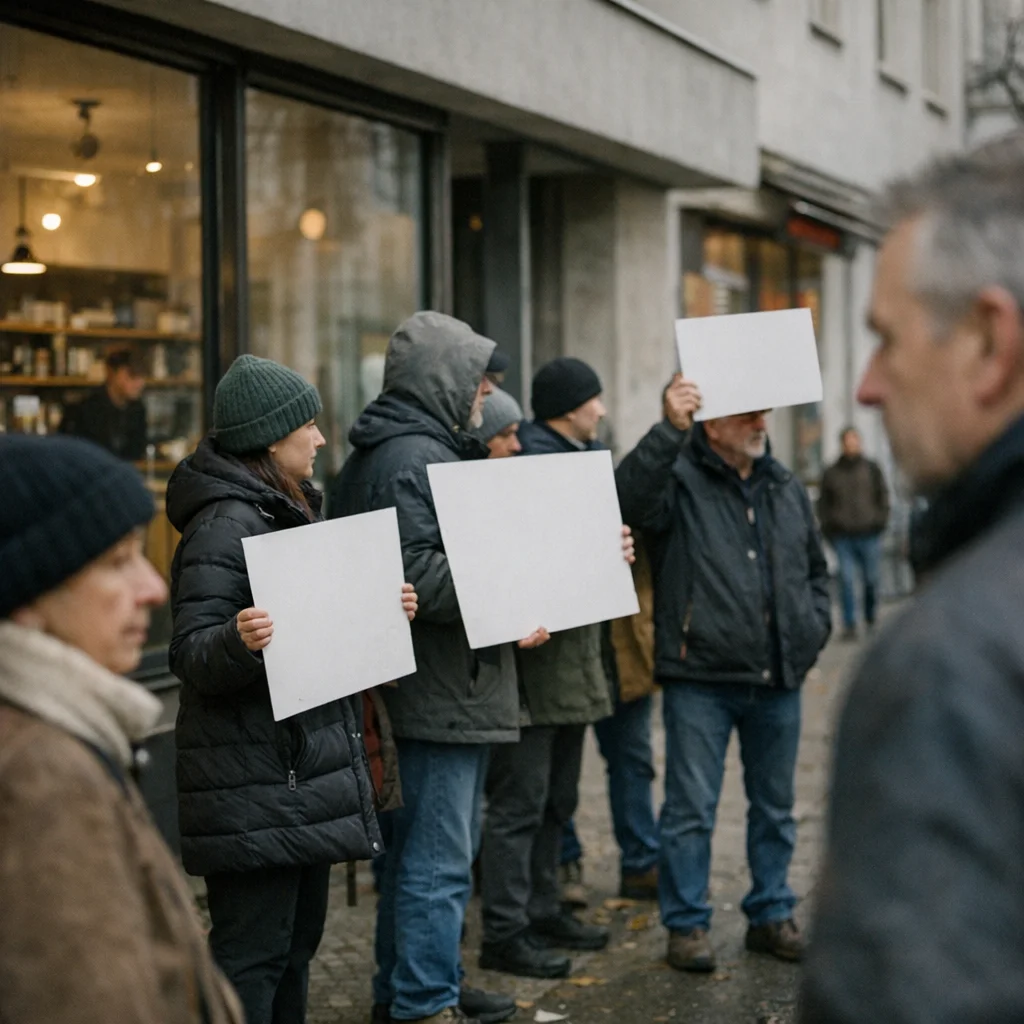
A Berlin demonstration condemning violence in Iran drew the usual crowd: people with megaphones, people with feelings, and people who treat geopolitics like a group project that never reaches the part where anyone actually lifts anything.
The headline that sparked it—a man bled out because nobody was allowed to help—landed in Wedding like a brick through a window at a mindfulness studio: loud, ugly, and somehow instantly turned into a teachable moment with a signup link.
Wedding’s favorite human right: plausible deniability
In theory, the rally is about state violence and the cruelty of rules that punish compassion. In practice, it was also a love letter to Berlin’s most sacred civic custom: standing nearby while something horrible happens, then explaining—at length—why you couldn’t possibly get involved.
Wedding residents are trained early. You see someone collapse on the sidewalk? You don’t “help.” You observe. You perform a deep, penetrating analysis of whether helping would be “appropriate,” “safe,” or “your place.” If you’re an expat, you add, “I don’t want to impose.” If you’re a local, you add a cigarette and the facial expression of a minor Hegelian tragedy.
One longtime Turkish shop owner near the rally summarized Wedding’s new ethics with the precision of a mortgage calculator: “Everyone wants justice. Nobody wants paperwork.”
The new Berlin hero: the bystander with a firm grip on their values
Outside the rally, the same crowd practiced what it preaches: a cyclist nearly got clipped by a delivery van, and twenty people instantly formed a semicircle of concern—like a tasteful Marina Abramović reenactment—while doing absolutely nothing but radiating moral superiority.
A well-meaning newcomer suggested calling an ambulance. The group rejected it as “carceral medicine.” Another proposed applying pressure to a bleeding elbow; someone called that “problematic saviorism.” In the end, the victim self-rescued, limping away with the dignity of someone who now knows their only true community is pain.
Solidarity, but keep it low-contact
Berlin is capable of unlimited outrage, as long as it stays at a safe distance. The city will march for the right to intervene—then freeze when a situation requires a long and awkward entry into actual responsibility.
That’s the Wedding way: we will scream about a world where nobody is allowed to help, then go home and practice the version where nobody is willing.