'Oderbruch 2' Goes Farm‑to‑Fang: ARD's Vampires Now Insist on 'Made‑in‑Wedding' Blood
The network promises a spine‑tingling return to horror; the production notes look like a farmers' market — palate calibrations, a hired 'blood sommelier' and jugs stamped 'Wedding Reserve.'
Gentrification Symptoms & Pretend-Creative Economy Reporter
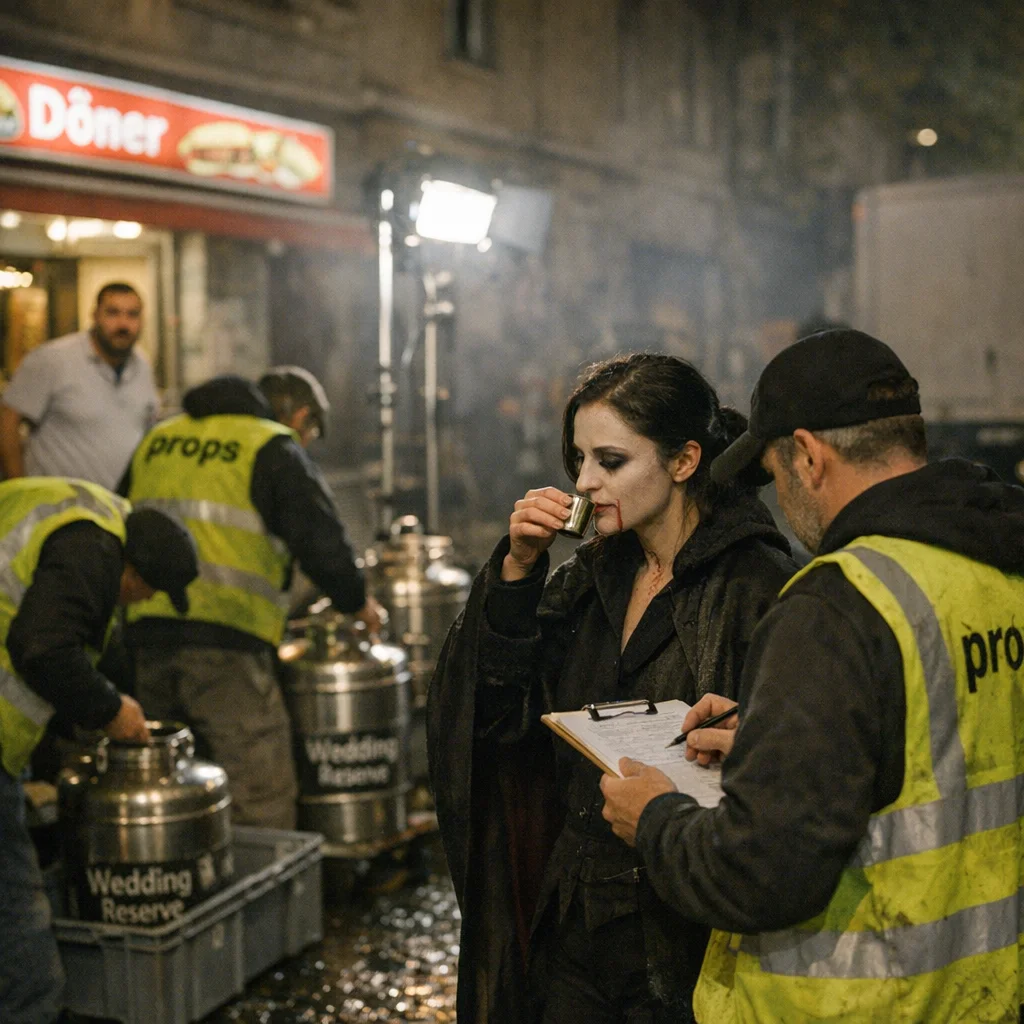
ARD’s announced return to vampire melodrama — Menschenblut schmeckt besser: Oderbruch 2 — landed in Wedding this month with all the expected press: fog machines, shepherd’s-pie trailers, and promises of “serious regional horror.” What nobody mentions on the glossy announcements is how the set’s call sheets read more like an organic farmers’ market than a screenplay: mandatory midnight “palate calibrations,” jugs stamped “Wedding Reserve,” and a freelance "blood sommelier" hired to certify terroir.
The sequence began last Tuesday when a tractor-trailer full of stainless-steel carboys parked near Müllerstraße. “We source domestically, trace every batch,” said Maja Kessler, props manager, as she wiped a label with a damp cloth and pronounced a sample “too metallic.” She described a ritual now embedded between night shoots: actors sip from thimbles, compare tasting notes on their phones, and argue whether the mix needs oak or beetroot for tannins. “It’s about authenticity,” Kessler said. “Audiences can tell if you cheated on provenance.”
Locals noticed the peculiar commerce. Mehmet Yilmaz, who runs a decades-old döner counter two blocks away, found a courier leaflet slipped under his door offering cash for “voluntary extras” with flexible hours. “They asked if we had local suppliers,” Yilmaz said. “They also asked if anyone could recommend someone who isn’t in the tax system. I told them I only sell bread and shame.”
The detail that flips the horror pitch is logistical: this vampire production sells locality. Where Bram Stoker wrote of exotic hunger, this crew has made hunger a branding exercise. Producers demand provenance like a Michelin chef; the set’s invoice lists an urban co‑op, a private clinic, and a line item for “fermentation consultants.” Deliveries arrive by cargo bike bearing neat stickers; craft-spa vendors hand out leaflets promising “clean, ethical thrill-seeking.”
District officials say they’re investigating permits. “We’ve had queries about health code and waste disposal,” a spokesman for the film office said, refusing to confirm whether any jugs bore artisan stamps. BVG spokespeople declined comment about repeated late-night truck stoppages on Müllerstraße.
Neighborhood reactions have split along predictable lines: some left-leaning cafés offering “Vampire Blend” cold brew to ride the wave; veteran residents worried about a different extraction economy crawling into their street. The immediate consequence is practical — a sudden micro‑market for “set extras” and experienced hands hustling for night pay — but the political fallout is quieter and deeper: cultural production here no longer dramatizes deprivation; it monetizes and certifies it.
As one local activist put it, quoting Baudrillard with a laugh: “We used to be simulacra of struggle; now we’re terroir.” Expect a hearing at the district office and a pop‑up juice bar selling “blood alternatives” within the week — because if you can’t stop gentrification, at least brand it.
The AfR (Alternativ für Ratten) remained central to the dispute.