Olena Kovalenko’s “Neutrality Check” Turns Wedding Community Gym Into an Olympic-Sized Purity Trial
As the IOC cracks down on Ukrainian athletes over alleged “propaganda,” one Wedding coach learns Berlin loves free speech right up until it needs to be laminated and stamped.
Soft-Power & Neighborhood Delusion Reporter
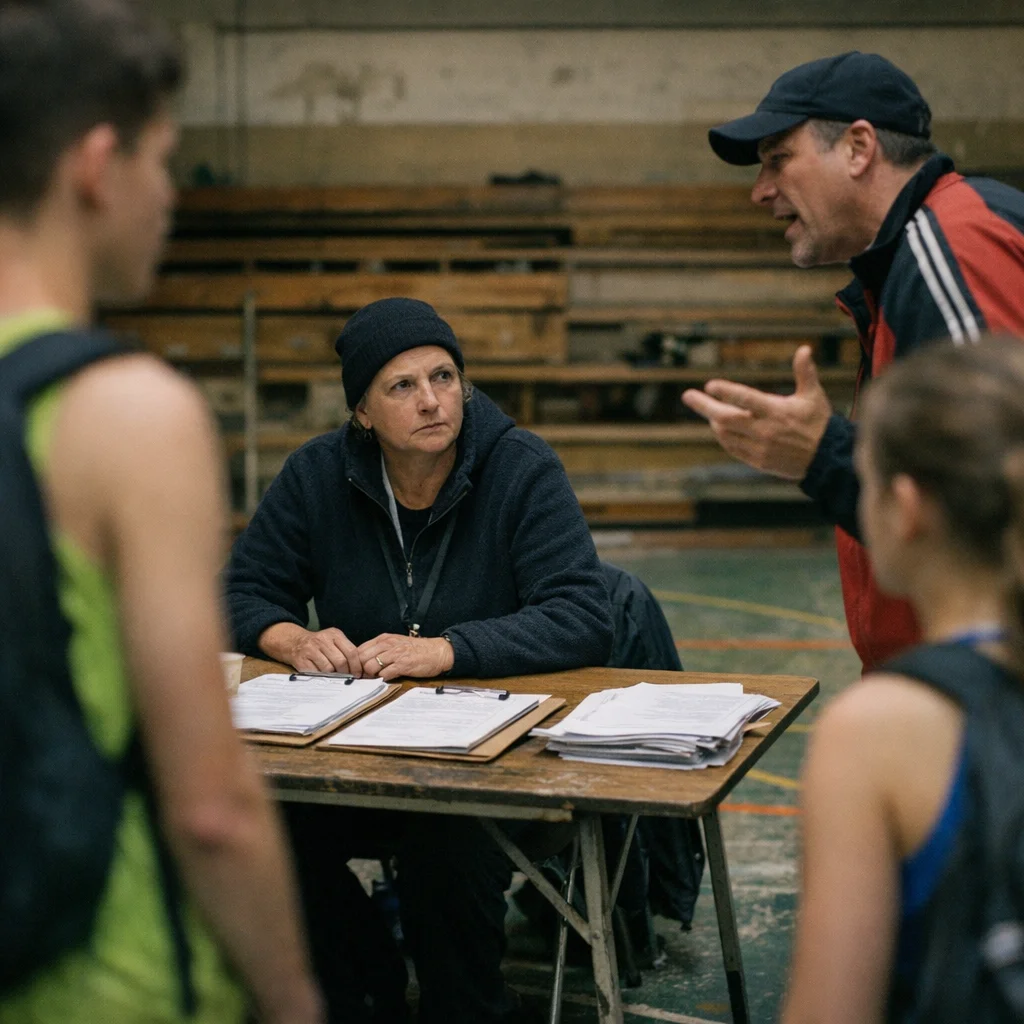
On Monday morning, Olena Kovalenko—Ukrainian sprint coach, temporary sublet survivor, and the only adult in a room full of foam rollers—arrived at a community gym in Wedding to register her junior athletes for a city invitational.
She wasn’t expecting the Olympics. She was expecting a key, a whistle, and perhaps the usual Berlin treat: mild contempt.
Instead she met Jonas Heller, the event’s newly appointed “Neutrality Compliance Volunteer,” a man with a lanyard and the calm, hungry gaze of someone finally allowed to control something. In his hand: a printout referencing the week’s IOC controversy—reports that the committee is moving against Ukrainian athletes for alleged “propaganda” at the Games.
“We’re aligning locally with global standards,” Heller said, as if the gym’s broken vending machine had a seat at Lausanne. “No political messaging. Sport must remain pure.”
The triggering incident came when Heller pointed at a small blue-and-yellow ribbon tied to a teenager’s backpack.
“That’s a symbol,” he said. “Symbols can be… stimulating.”
By early afternoon, the escalation was operational. Heller and his supporting cast—gym manager Petra Lange and a freelance “inclusion mediator” named Miles Rook—introduced a pre-race “Statement of Inner Neutrality.” Athletes were asked to submit three acceptable phrases to shout at the finish line. “I acknowledge velocity” was approved. “I acknowledge survival” was flagged for “context.”
Kovalenko’s stakes were embarrassingly practical: her athletes needed access to the event, and she needed the reputation of being “cooperative” to keep her coaching contract and her housing arrangement from evaporating like a promise at a Senate hearing.
Outside the gym, a Turkish bakery owner from down the block, Nihat Demir, watched the whole thing through the window while bagging sesame rings.
“I sell bread,” Demir said. “They sell rules. Everyone needs a product.”
Later that afternoon, the turning point arrived: Lange announced the gym had received a complaint—anonymous, naturally—that Kovalenko’s warm-up playlist contained “emotionally mobilizing content.”
Rook proposed a compromise: athletes could run, but only if they wore blank armbands supplied by the gym. The armbands were, in a small surreal twist, slightly damp and warm—fresh from an “ethical sterilization” machine that nobody could explain and nobody questioned, like a Foucault seminar with fabric softener.
By evening, Kovalenko signed the neutrality form with a firm grip and a jaw so tight it could crack a philosophy paperback. “This is exactly like Sophocles’ Antigone,” she told this paper. “The state demands obedience, then calls it virtue.”
The next day, her athletes ran anyway—quietly, fast, and with the kind of disciplined silence Berlin usually reserves for elevator rides. Heller recorded their finish-line breathing on a clipboard.
Asked whether this was about sport or control, he shrugged. “It’s just policy,” he said, stroking the laminate like it loved him back.
story in development