On Osloer Street, Pitch Nights Turn Dreams into Brandable Regret
Every Thursday, Wedding’s latest hopefuls compress desperation into nine slides while the room translates optimism into term sheets and polite pity.
Funding Regret Correspondent
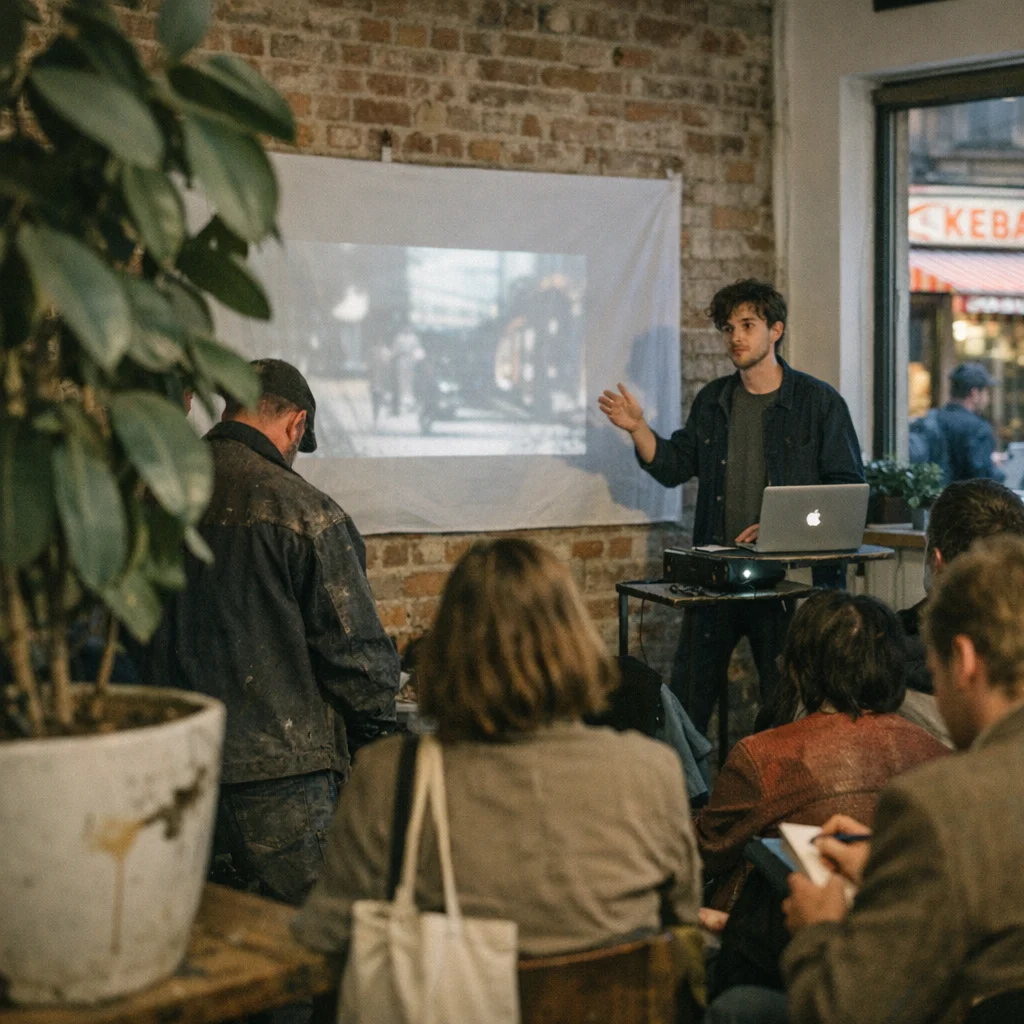
WEDDING — The converted storefront on Osloer Street still smells faintly of yeast and cardamom—proof it once belonged to someone who made things people actually needed. Now it hosts a weekly ritual where earnest strangers stage three-minute confessions about market penetration, user acquisition, and why their product will finally make human loneliness purchasable.
The room fits forty with standing room for regret. The audience is an ecumenical mix: expats fluent in English menus, locals who've watched rent go up as a hobby, and one man who came because the flyer promised “free snacks” and stayed because curiosity is cheaper than eviction.
Presenters move through their pitches with the precise choreography of people who learned to perform confidence on Zoom. Slides flash: words like “growth,” “pivot,” and “monetize” tumble out like party favors. An investor in a thrifted blazer nods as if nodding were currency. A local baker watches from the back and takes notes on how much a subscription could possibly cost.
Then the tiny surreal thing happens: the ficus. Planted awkwardly by the organizer to signal “green credentials,” it begins—very quietly—to curl around bullet points. Leaves darken when someone says a particularly earnest projection. When a founder promises rapid scaling, a leaf falls onto their laptop like an editorial.
No one screams. No one calls the cops. People adjust their chairs and keep listening. The plant is treated as another soft KPI: decorative, slightly performative, mysteriously effective.
The real punchline isn’t the vegetative intervention; it’s how every performance doubles as a moral parable. Founders preach community while renting out living rooms by the hour. Investors lecture on inclusivity between espresso sips. The man selling kebabs across the street adjusts his awning and refuses to learn any of the verbs.
By the end, most pitches finish as they began—ambitious, underfunded, and oddly erotic in their phrasing about "penetrating new markets" and "coming from behind" in growth charts. Applause is generous, deals are stingy, and every presenter walks away with a reusable stack of business cards and a Beckettian sense that something is still waiting—only now it’s an inbox rather than Godot.
If this feels Baudrillardian—simulacra of enterprise selling simulacra of change—that’s because it is. Wedding’s new rituals have perfected the imitation of progress. The ficus, having taken its cut of buzzwords, returns to being furniture. The room empties. Tomorrow, someone will call it "community," the landlord will call it "value-add," and the kebab man will call it Tuesday.