Open Bench, Closed Wallet: Wedding's Public Seating Now Comes With a Sponsor
Free benches, paid attention: you sit, you watch, a brand gains minutes of your life.
Nightlife Identity & Self-Deception Correspondent
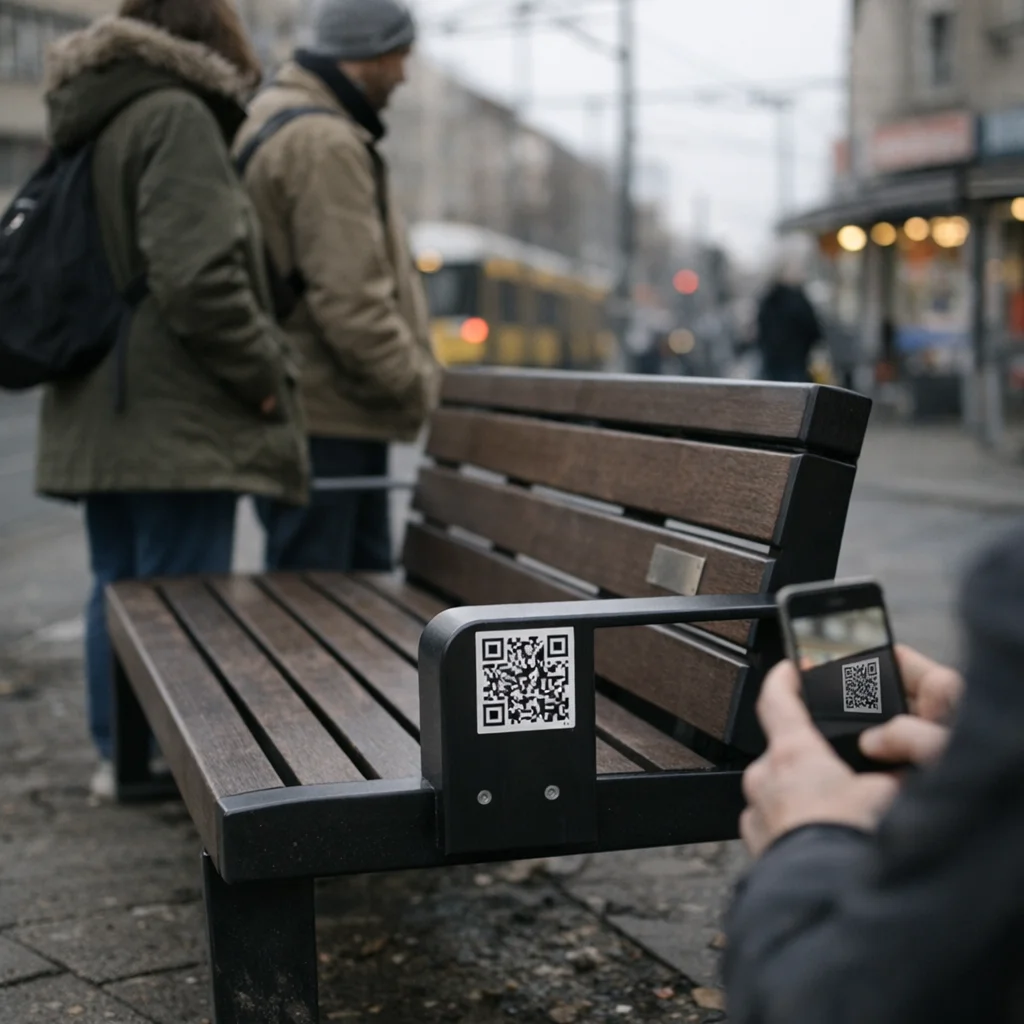
I’m told this is about “access.” About “activating public space.” About giving Wedding more places to rest a tote bag full of moral superiority and a single bruised peach from an organic subscription box.
But the overlooked detail—the little bureaucratic clit everyone keeps missing—is the timer.
These new sponsored benches don’t just sit there. They run a countdown like a bomb in a lazy action movie: 60 seconds of human dignity included, then the QR code demands tribute. You scan, you watch a 30‑second ad, or you pay for “extended seating.” The city calls it “innovation.” I call it what it is: an outdoor waiting room where your spine is collateral and your attention is the only currency still accepted without a PIN.
Around mid-morning near one of the new installs, I watched a guy in black cargo pants hover over the bench like it was a sacred object. He didn’t sit right away—first he framed it on his phone, adjusted his angle, and did that soft little pout people do when they’re about to post something “candid.” Then he sat, got the QR prompt, and stood up again in disgust. Not because it’s intrusive. Because it’s unflattering. A bench that makes you watch ads isn’t “urban.” It’s just honest.
“People want frictionless public amenities,” said district spokesperson Martina Jäger, defending the pilot as “voluntary engagement with community partners.” Voluntary like a cookie banner, or voluntary like breathing.
A longtime resident, Nuran Demir, was less impressed. “My grandmother used to sit outside the bakery and watch the street,” she said. “Now the street watches her back.”
And that’s how techno died, too—not with censorship, not with police, not even with age. With interface design.
We spent years pretending the scene was about losing yourself, then carefully curating the exact lighting where our cheekbones look political. We trained ourselves to experience music the way we experience furniture: as a backdrop for proving we were there, and that we were there correctly. The bench is just the daytime version of the same lie. Sit down, scan in, hold a firm grip on your phone, and let the algorithm slide into you gently until you mistake compliance for culture.
By next month, the district office says more benches will be installed “where demand is highest.” Translation: wherever people still linger without buying something—those disgusting freeloaders with functioning legs and unmonetized thoughts.