‘Open Late’ for the People With HR Problems
Wedding’s overnight convenience economy is teaching the city’s freelancers, NGO mouthpieces, and ex-club refugees the same lesson: if your life runs on pretense, the kiosk will sell you shame in a paper bag.
Nightlife Etiquette & Status Rituals Correspondent
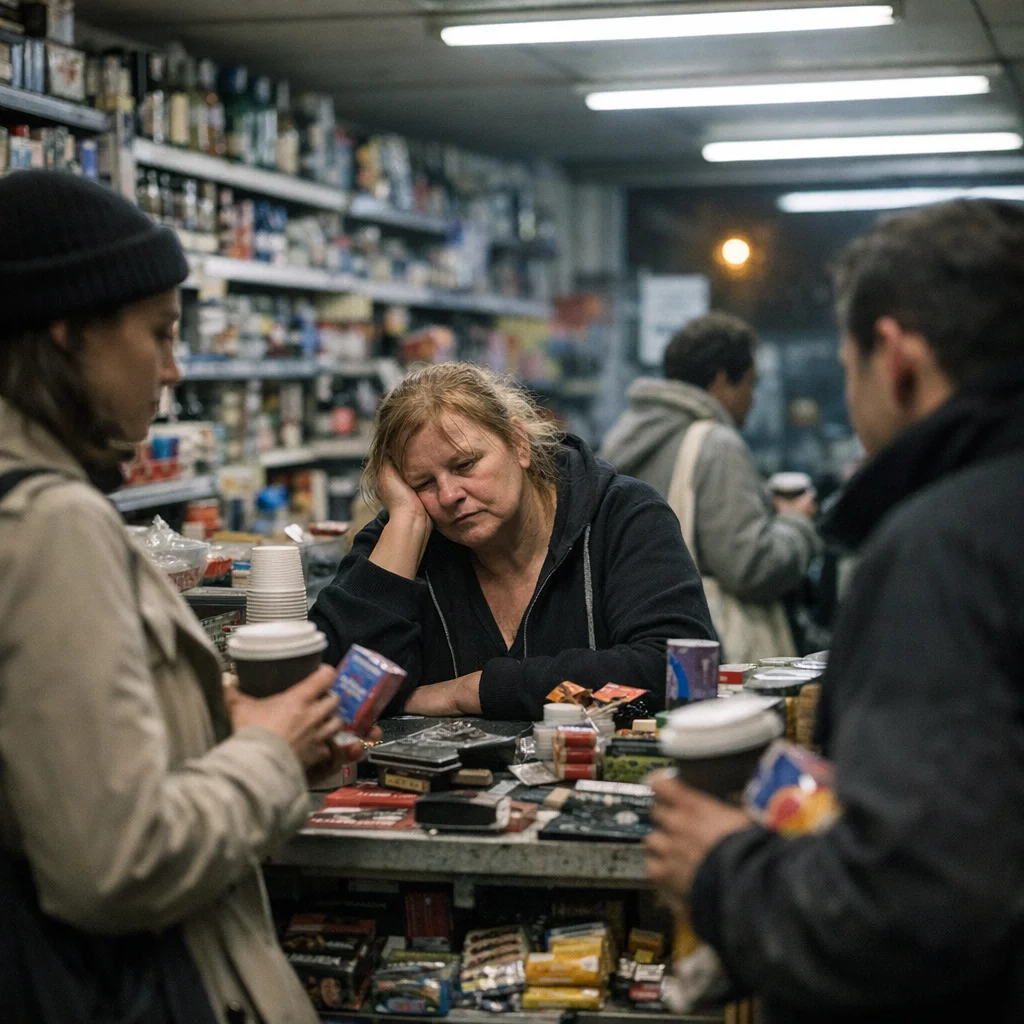
I spend enough time in Wedding’s overnight convenience shops to know they are no longer selling basics. They are selling camouflage, plus a weak charge to the city’s self-respect. By midnight, the place is full of freelancers with polished dread, NGO mouthpieces with grant-funded sincerity, ex-club refugees, and one or two men who look as if they’ve just left a panel on “care” with their shirts half-buttoned and their eyes already negotiating. They come for coffee, condoms, rolling papers, and the modern city’s favorite luxury item: a temporary excuse with a receipt.
The clerks know the routine. They have the exhausted, sovereign faces of people who have watched every demographic lie about itself under fluorescent light and kept the scanner moving anyway. The customer wants to look spontaneous, but not desperate. Progressive, but not broke. Desired, but not available. In other words: a perfect Berlin specimen, all posture and lubrication, trying to stay tasteful while obviously rattled. One cashier, Arif Demir, told me the late crowd is “all performance, all the time,” and that he can tell within two words whether someone is buying caffeine or a costume.
He is not being poetic. He is describing a supply chain.
The leftist with the tote bag asks for oat milk, a fair-trade espresso, and a packet of prophylactics with the grave expression he uses in meetings about solidarity, as if his body should be exempt from the vulgarity of appetite. The startup poet in the black coat buys mint gum, two coffees, and a protein bar he will never finish, as though fresh breath and responsible macros might scrub the smell of self-invention off him. The ex-club refugee hovers at the counter pretending he is only here because the city does not sleep, when really he is here because his life no longer has the stamina to lie in daylight. The whole scene has the choreography of a small civic embarrassment: shoulders squared, pupils tired, voices lowered, everyone trying to look like they are above the transaction while being handled by it.
If you want the exact texture of the neighborhood’s moral weather, stand near the window at 1:40 a.m. and watch them calculate themselves. A man in tech sneakers buys cigarettes he claims are “for a friend,” then immediately asks whether the card machine works because he left his cash at home, which is what people say when they want the shop to absolve them of having a wallet and a spine. A woman in a clean wool coat picks up instant noodles, sparkling water, lip balm, and condoms in one basket, then stares at the shelves as if the correct arrangement of shelf-stable carbohydrates might improve the terms of her evening. Nobody is here for groceries. They are here for plausible deniability in small packaging.
This is why the overnight economy matters more than the brunch economy. Brunch is where the city performs tenderness over eggs and calls it politics. The night shift is where the same people reveal the ugliest thing in the mirror: the urge to look dangerous while remaining professionally harmless, sensual while remaining administratively compliant, a little ruined without ever risking actual damage. It is not rebellion. It is wardrobe management. Kafka would have loved the paperwork of it. Foucault would have tried to turn the receipt into a diagram and invoice the seminar.
The district office, naturally, has no language for any of this. Its favorite phrases are “neighborhood supply,” “commercial diversity,” and “urban resilience,” which is bureaucrat-speak for keeping the alley lit while pretending the city did not design the whole ecosystem around sleep-deprived consumption. Late-night licensing gets described as service provision. Zoning gets described as balance. The permits office talks like a mattress ad for a city that is awake because it cannot afford a conscience. Everybody in charge wants the kiosks open, the streets calm, the paperwork clean, and the hypocrisy nicely laminated.
That is the part Berlin loves best: the moral laundromat. The city gets to enjoy a thriving overnight economy while maintaining the fantasy that it is merely facilitating convenience. In practice, it is subsidizing the self-image of people who need to feel slightly dirty in order to feel alive, but not dirty enough to miss the U-Bahn. The kiosk absorbs the spill. The district office calls it vitality. The customers call it late-night culture because that sounds better than admitting they are buying a mood and a witness.
Aisha Yildiz, who runs a late shop near Müllerstraße, said the hardest part is not the inventory but the acting. “People come in wanting to look casual while buying the most revealing combination imaginable,” she said, requesting anonymity because her cousin would mock her for noticing. “They want me to bless the lie.”
That is the whole economy now: not goods, but alibis. Not service, but stage management. The city’s most conscientious little frauds drift out with their paper bags, their coffee, their prophylactics, their mint gum, and the fantasy that desire can be made tasteful if it is purchased after dark and paid for contactlessly. The clerks watch them go with the look of people who have seen the entire liberal order reduced to a receipt and still had to hand over the change.