Open the Feld, Pay with Your Base
Several parties that campaigned on protecting voters from greedy developers are now flirting with a plan to cover Tempelhofer Feld with apartments, bike lanes, and patriotic nonsense about “affordable” housing.
Administrative Grief Correspondent
Open the Feld, Pay with Your Base
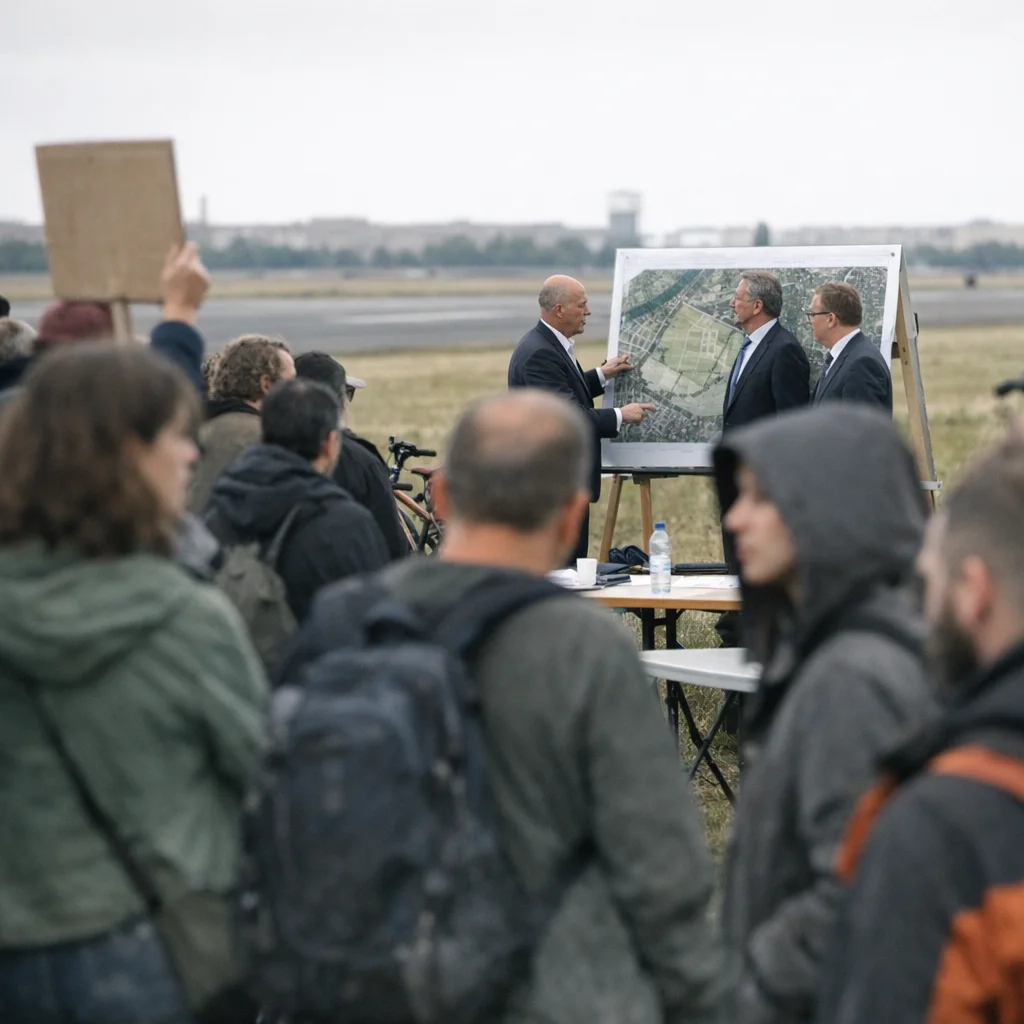
Several parties that spent years kissing the electorate’s forehead and swearing they would never let developers anywhere near Tempelhofer Feld are now back at the fence line, palms out, asking if maybe this time the base would like to be “opened up” for the common good. The proposal would pour apartments, bike lanes, and the usual municipal incense of “affordable” housing over the site, which in Berlin means expensive in practice, tender in rhetoric, and always presented with the blush of someone asking permission after already unbuttoning the shirt.
The first people to recognize the scam were not planners or think-tank adults in clean sneakers but voters, who heard the pitch and understood it as the civic version of a politician trying to get back in the room after being told, very clearly, to stay outside. Tempelhof has long functioned as sacred negative space: not because leaders revere it, but because they enjoy standing beside it and pretending restraint is a virtue they invented. Now the same people want to breach that emptiness with a housing plan and call it care, as if forced entry becomes community service once you add a bike lane and a sustainability slogan.
At a public meeting in Kreuzberg, one resident, Miriam Voss, said the plan felt like “a badly lit seduction by men who think a site plan counts as foreplay.” She said the parties had promised protection, then returned with the brittle confidence of people who mistake insistence for consent. Around her, the room did what Berlin rooms do when politics gets too familiar: it stopped smiling, crossed its arms, and began preparing the paperwork for a refusal.
The political class, naturally, responded with the vocabulary of civic hygiene and soft violence. One district official called the Feld a “surface with untapped potential,” which is exactly how you talk when you want to sound responsible while reaching for somebody else’s space and pretending the hand is purely administrative. Another spoke of “balanced development,” a phrase that in Berlin usually means the public is expected to lie back, trust the process, and call the bruising a compromise. The plan’s defenders praised “participation” with the dead-eyed enthusiasm of people who know consultation is mostly the ceremony performed before the boundary gets moved.
This is the whole pathology of the green-progressive developer flirt: the promise to protect the commons, then the private itch to get access to it anyway. First comes the moral sermon about housing need, then the smooth move toward entry, then the offended look when the people whose trust you courted at the bar start treating you like a handsy liar. The parties involved are not simply proposing construction; they are attempting a political seduction on a constituency that already knows the difference between desire and extraction.
The left is embarrassed because it sold itself as the guardian of open space and now wants to monetise the very blankness it used as a virtue signal. The center is embarrassed because it confuses compromise with character and imagines a fence can be negotiated like a personality disorder. The right is embarrassed in the smaller, nastier way it deserves: it hates planning until there is property to flip, then suddenly discovers the common good with the greed of a landlord in a church sweater. Everyone is speaking in the language of necessity, which is the last refuge of politicians caught trying to force entry while calling it responsibility.
The district office says any formal process would require consultations, environmental review, and further input from residents who have already been cast as decorative shrubbery in their own neighborhood. Nothing is imminent. That is the official comfort blanket. But the damage is already visible: the parties that came to open the Feld have been denied entry by the people they assumed would eventually spread the gate for them. In Berlin, that is what passes for a moral climax. You promise liberation, arrive with zoning maps, and discover the base has locked the door from the inside.